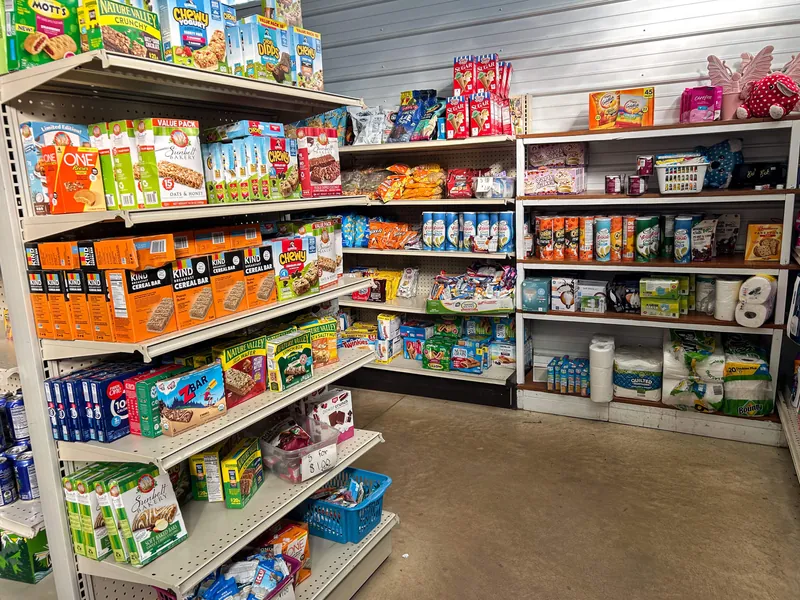
Salvage Grocery Stores: The Rising Popularity of Affordable Food Solutions
You're standing in a grocery store aisle, staring at a box of pasta that costs 40% more than it did two years ago, and you're doing mental math that just doesn't add up. Sound familiar? Millions of American shoppers are having that exact moment right now, and a growing number of them are finding a real solution in salvage grocery stores, also called bent-n-dent stores, scratch and dent grocery shops, or discount food stores, depending on where you live. These aren't the sketchy clearance bins of decades past. They're a legitimate, fast-growing segment of the food retail industry, and the numbers back that up.
Right now, 3,183 salvage and discount grocery businesses are listed in our directory across the United States. Average customer rating across those businesses sits at 4.3 stars. That's not the profile of a fringe shopping trend. That's a real industry with real customers who keep coming back. This article breaks down what these stores actually are, why they're growing, what it's like to shop at one, and how to find a discounted grocery store near you without much hassle.
Myth #1: Salvage Grocery Stores Sell Food That Isn't Safe to Eat
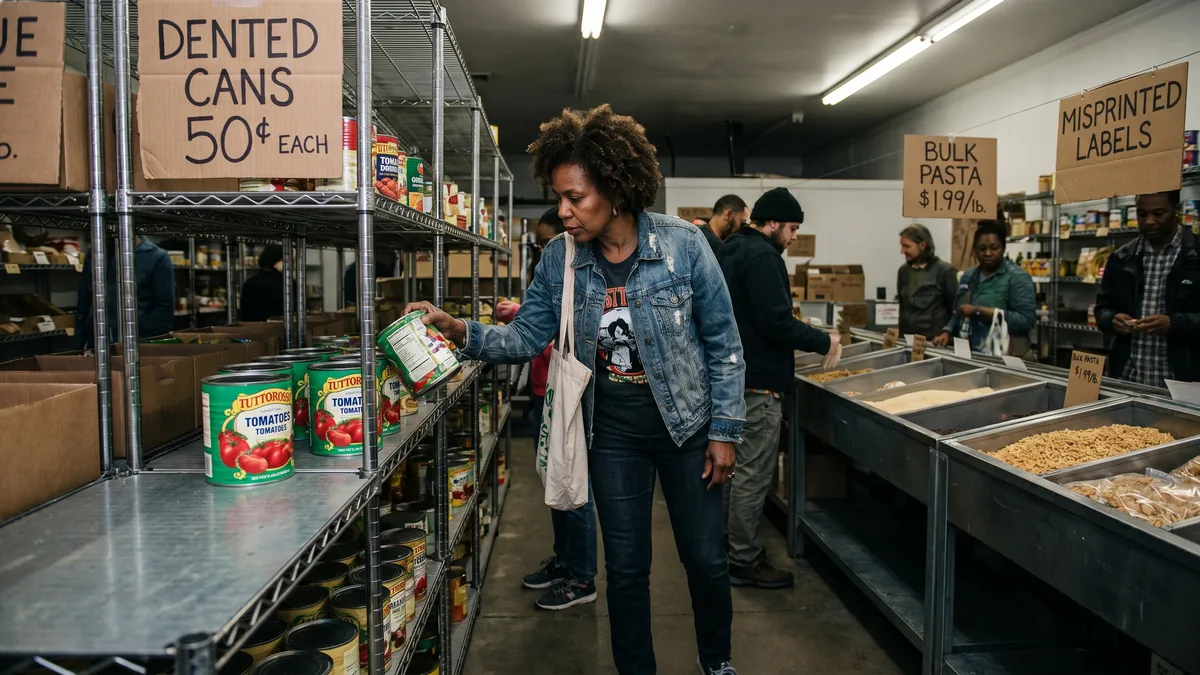
This is probably the most common thing people assume, and the data tells a different story. A 4.3-star average rating across more than 3,000 businesses doesn't happen when customers are getting sick or finding rotten food. Salvage grocery stores source their inventory from manufacturers, distributors, and retailers in a few specific ways: overstock that never sold, discontinued product lines, items with cosmetically damaged packaging (a dented can, a torn label), short-dated goods approaching their best-by dates, and sometimes insurance claim inventory from warehouse incidents or transport damage.
None of that means unsafe. A dented can of black beans is still black beans. A cereal box with a crumpled corner still has perfectly edible cereal inside. "Best by" dates, which most people misread as expiration dates, typically indicate peak quality, not a hard safety cutoff. The FDA has said for years that most shelf-stable foods remain safe well past their printed dates, assuming the packaging hasn't been compromised in a way that allows contamination.
Salvage Saviors in Katy, Texas holds a 5.0-star rating across 718 reviews. That's not a fluke. Shoppers aren't accidentally giving five stars to a store that makes them sick. Re_ Grocery in both Studio City and Los Angeles, California also holds 5.0 stars (224 and 191 reviews respectively). High-volume, high-rating businesses like these are operating food-safe products at a discount, full stop.
In salvage grocery terms, "damaged" almost always refers to the packaging, not the food inside. A bent lid, a torn label, a slightly squished box. Before buying any can or jar, press the lid to check for a proper seal, and avoid anything with rust, deep punctures, or swelling. Those rules apply at any grocery store, not just salvage ones.
Inspecting products carefully is smart shopping practice anywhere. At a scratch and dent grocery store, you're just doing it more consciously. That's actually a habit most dietitians would tell you is worth building regardless of where you shop.
Myth #2: These Stores Are Only for People Struggling Financially
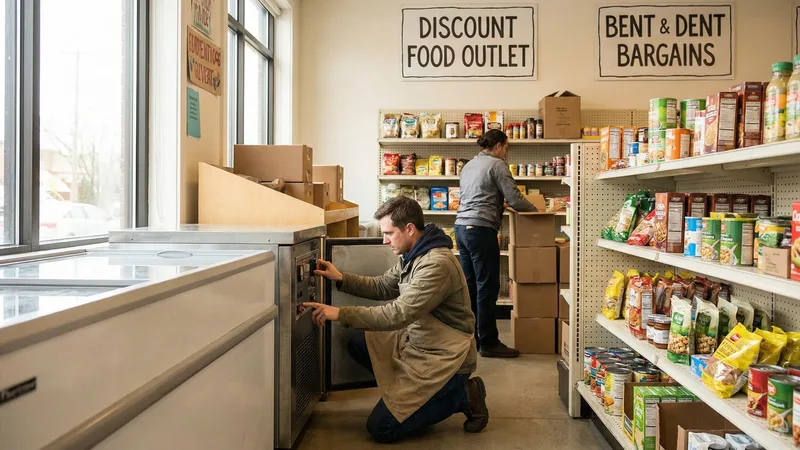
Contrary to popular belief, the customer base at discount food stores spans income levels pretty evenly. Yes, rising food costs are driving budget-conscious shoppers through the doors. Grocery prices in the U.S. rose roughly 25% between 2020 and 2024, and household food budgets haven't kept pace with wages for a large portion of working families. That economic pressure is real and it's sending people looking for groceries on a budget in ways they weren't three years ago.
But there's a second, entirely separate group showing up at these stores: environmentally motivated shoppers. Food waste is a massive problem. Estimates consistently put U.S. food waste at somewhere between 30% and 40% of the total food supply, much of it happening at the retail and manufacturing level before it ever reaches a consumer's plate. Buying overstock and near-date products diverts food from landfills. That framing resonates with a very different consumer demographic than the budget shopper, and salvage grocery stores are getting both.
And then there's a third group that doesn't get talked about enough: the treasure hunters.
Rotating, unpredictable inventory is a feature, not a flaw. You might walk into a damaged goods grocery store one week and find six cases of a high-end olive oil at 70% off because a distributor had a warehouse overstock. Come back two weeks later and that olive oil is gone, replaced by something entirely different. That unpredictability has built a surprisingly loyal customer base of people who treat these stores the way others treat thrift shops. You go often, you go with an open mind, and occasionally you score something remarkable.
This is fundamentally different from a traditional discount grocery chain like Aldi or Lidl, which carries a curated but consistent product lineup at lower prices. Salvage and bent-n-dent stores don't promise consistency. They promise deals, and the inventory that delivers those deals changes constantly.
Myth #3: You Can't Find These Stores Outside of Major Cities
Urban concentration is real, but it doesn't tell the whole story. Houston leads the directory with 83 listings, followed by Brooklyn at 61, Philadelphia at 46, and Los Angeles at 41. Those numbers reflect genuine urban demand and population density, nothing surprising there. Big cities have more food distribution infrastructure, more retail turnover, and more customers who need affordable options.
Suburban and rural communities, though, often have strong salvage grocery presences too, sometimes stronger on a per-capita basis than people expect. Katy, Texas (a Houston suburb) is home to Salvage Saviors, currently one of the highest-rated discount food stores in the entire country at 5.0 stars across 718 reviews. Brandon, Mississippi shows up in the data too, with Hegwood's Towing LLC pulling a 5.0-star rating across 277 reviews in what's more of a mid-size Southern town than a major metro.
Wait, Hegwood's Towing LLC? That name stood out in the dataset and it's worth a note: business directories sometimes capture businesses with overlapping services or unusual names that don't immediately signal their category. The ratings data is still valid, but always confirm what a specific business actually sells before making a trip.
Rural areas often support salvage stores because transportation costs mean more overstock accumulates in regional distribution hubs, and smaller communities actively support local discount operations. If you're searching for where to find discounted groceries outside a major city, online directory searches filtered by your zip code or region will surface options that aren't obvious from the headline city data.
Houston: 83 listings | Brooklyn: 61 listings | Philadelphia: 46 listings | Los Angeles: 41 listings. These four cities alone account for a substantial share of directory listings, but thousands of other listings are spread across smaller cities and towns nationwide.
Myth #4: Low Prices Mean a Bad Shopping Experience
People expect salvage stores to feel like a chaotic mess, and sometimes the first visit does feel that way. Shelves aren't always organized the way a conventional supermarket would be. Signage can be sparse. Products are grouped loosely, and brand consistency doesn't exist because what's in stock changes week to week. That part is accurate.
But a bad shopping experience? The data does not support that conclusion. A 4.3-star average across 3,183 businesses is genuinely good. For context, that's comparable to or better than the average ratings for many national grocery chains. Shoppers are clearly getting what they came for and then some.
Walking into a food salvage store for the first time, the immediate impression can be a bit overwhelming. Products stacked in ways that look informal, mix of brand names you recognize alongside regional items you've never seen, pricing labels that are handwritten or printed on simple stickers. But spend 20 minutes in there and a rhythm starts to emerge. You get a feel for how these places are organized, which usually follows some functional logic even if it doesn't mirror what you're used to from a conventional supermarket.
Practical tips that actually help on your first visit:
- Check expiration dates on everything. Not because the food is dangerous, but because you want to know how quickly you need to use it. Buy short-dated items only if you'll realistically eat them in time.
- Inspect cans and jars before buying. Look for a proper seal on lids. Skip anything with deep rust, punctures, or visible swelling.
- Bring cash or ask about payment methods ahead of time. Some smaller discount food stores don't accept all card types. Calling ahead saves a frustrating trip.
- Buy in bulk when you find something good. That 12-pack of your favorite pasta sauce at 60% off might not be there next week. If you've got storage space and it's shelf-stable, stock up.
- Go with flexibility. Don't shop at a grocery outlet with a rigid list of specific brands. Go knowing what types of food you need and stay open to what you find.
Flexibility is the single most important mindset shift for getting value from these stores. Shoppers who go in expecting a conventional supermarket experience leave disappointed. Shoppers who go in with an open list and genuine curiosity leave with bags full of food at prices that feel almost unreasonable.
Myth #5: These Stores Are Hard to Find and Not Well Organized as an Industry
3,183 listed businesses suggests otherwise. This is a real, documented industry with a national footprint and enough customer volume to generate thousands of reviews, average ratings above 4 stars, and multiple businesses achieving perfect 5.0 scores at scale.
Finding a discounted grocery store near you is genuinely easier now than it's ever been. Online directories let you search by location, filter by rating, and read recent reviews before you drive anywhere. A search for "salvage grocery store near me" or "bent-n-dent stores in [city]" will surface directory results pretty quickly. For people in the top markets, Houston, Brooklyn, Philadelphia, and Los Angeles, there are dozens of options within reasonable distance. For everyone else, the directory still covers suburban and rural areas with meaningful density.
| Business Name | Location | Rating | Reviews |
|---|---|---|---|
| Salvage Saviors | Katy, Texas | 5.0 ★ | 718 |
| House of Milner Jewelers | Philadelphia, Pennsylvania | 5.0 ★ | 531 |
| Hegwood's Towing LLC | Brandon, Mississippi | 5.0 ★ | 277 |
| Re_ Grocery | Studio City, California | 5.0 ★ | 224 |
| Re_ Grocery | Los Angeles, California | 5.0 ★ | 191 |
Re_ Grocery showing up twice (Studio City and Los Angeles locations) with perfect scores across 400+ combined reviews is interesting. Multi-location salvage grocery operations with consistent quality across stores are still relatively rare, which makes that kind of performance stand out. That kind of consistency at two separate locations is worth paying attention to if you're in the LA area.
For most people, the process of finding these stores is now just a few search terms away. Type "scratch and dent grocery near me" or "discount food store" plus your city into any directory search, sort by rating, read a few reviews to get a feel for what a specific store carries, and go. Start with the highest-rated option in your area. If it clicks, you'll be back the following week.
Call ahead or check recent reviews to confirm current hours and what's in stock. Inventory at salvage stores changes fast, and some shoppers post updates about what they found that week. Those community-sourced tips can help you time your visit when something specific is available.
What This Means For You
Food costs aren't coming down dramatically anytime soon. Wage growth hasn't kept pace with grocery inflation for most households. And somewhere between 30% and 40% of all food produced in this country gets wasted before it reaches a plate. Salvage grocery stores, discount food stores, bent-n-dent operations, call them what you want, sit at the intersection of all three of those problems and offer a concrete, practical answer to each one.
A 4.3-star average across 3,183 businesses is not a niche phenomenon. It's a mainstream consumer option that a lot of people haven't tried yet mostly because of myths about safety and quality that the actual data doesn't support.
Go find one near you. Bring cash just in case. Check the dates, inspect the cans, and buy more than you planned when you find something worth stocking up on. Most people who try a food salvage store once become regulars. In practice, the savings are real, the food is safe, and the unpredictability of the inventory ends up being part of what keeps it interesting. Hard to say that about a conventional supermarket.
Find a Salvage Grocery Store Near You
Browse our directory of 3,183+ discount grocery and salvage food businesses across the United States. Search by city, filter by rating, and find the best deals near you.
Search the DirectoryWhat is a salvage grocery store?
A salvage grocery store (also called a bent-n-dent store, scratch and dent grocery, or discount food store) sells food products that were removed from regular retail for reasons like damaged packaging, overstock, discontinued lines, or approaching best-by dates. Products are typically inspected and fully safe to eat, just sold at a significant discount compared to conventional grocery prices.
Are the products at salvage grocery stores safe?
Yes, in the vast majority of cases. "Damaged" usually means cosmetic damage to packaging, not the food itself. Check cans for a proper seal and avoid anything with deep rust, punctures, or swelling. Best-by dates indicate peak quality, not a hard safety cutoff for most shelf-stable products. The 4.3-star average across 3,183 listed businesses reflects strong customer satisfaction, not widespread food safety complaints.
How do I find a discount food store near me?
Search online directories using terms like "salvage grocery store near me," "bent-n-dent stores," or "scratch and dent grocery" plus your city. Major metro areas like Houston (83 listings), Brooklyn (61 listings), Philadelphia (46 listings), and Los Angeles (41 listings) have the highest concentrations, but stores are listed in smaller cities and rural communities across the country as well.
What should I bring to a salvage grocery store?
Bring cash or call ahead to confirm accepted payment methods. Bring a flexible shopping list organized by food type rather than specific brands. Bring a bag or box if you plan to buy in bulk. Most importantly, bring some patience for a different kind of shopping experience than a conventional supermarket. Typically, the layout and organization will be different, but the savings make it worth the adjustment.
How is a salvage grocery store different from Aldi or Lidl?
Aldi and Lidl are discount grocery chains with curated, consistent product lineups. You know what you're going to find on a typical visit. Salvage and bent-n-dent stores carry rotating, unpredictable inventory sourced from overstock, discontinued products, and cosmetically damaged goods. Every visit is different. That's a feature for shoppers who enjoy the treasure-hunt element, but it means you can't rely on finding a specific brand or product every time.