The Nutritional Value of Products at Salvage Grocery Stores
https://pub-9a4dedcce6dc4846a9c4647f79a2e5fc.r2.dev/salvage-grocery-stores/blog/the-nutritional-value-of-products-at-salvage-grocery-stores/hero-1771905135.webp
Most people assume a dented can means compromised food. That assumption is costing them money, and the data tells a different story. Research from food scientists and the USDA consistently shows that the vast majority of shelf-stable products sold at salvage grocery stores retain their full nutritional value, even when packaging looks rough or dates have passed. The food is not broken. The label is.
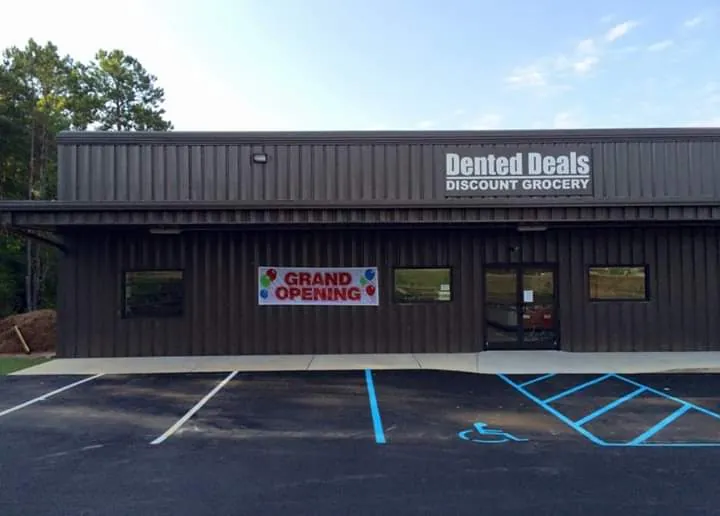
Salvage grocery stores, also called bent-n-dent stores, scratch and dent grocery shops, damaged goods grocery outlets, or just discount food stores, are retail businesses that buy surplus, overstock, cosmetically damaged, or near-date food products from manufacturers and distributors, then resell them to consumers at steep discounts. We are talking 30% to 70% off standard retail prices in many cases. And with 3,183 such businesses listed across the country and an average customer rating of 4.3 stars, it is clear that shoppers who actually use these places are satisfied with what they get.
This article looks at what kinds of products these stores carry, what the food science actually says about nutrient retention, how to shop smart for nutrition on a budget, and which cities have the most options if you are trying to find discounted groceries near you.
What Actually Ends Up on These Shelves
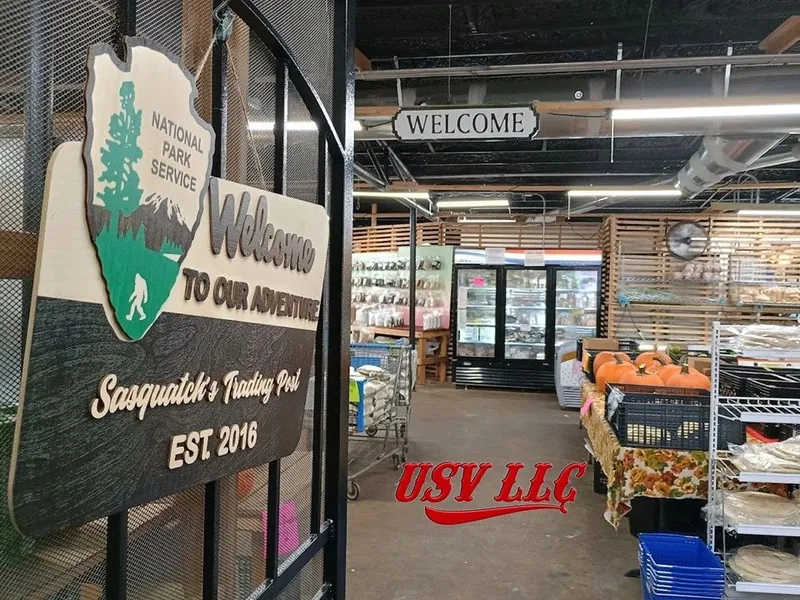
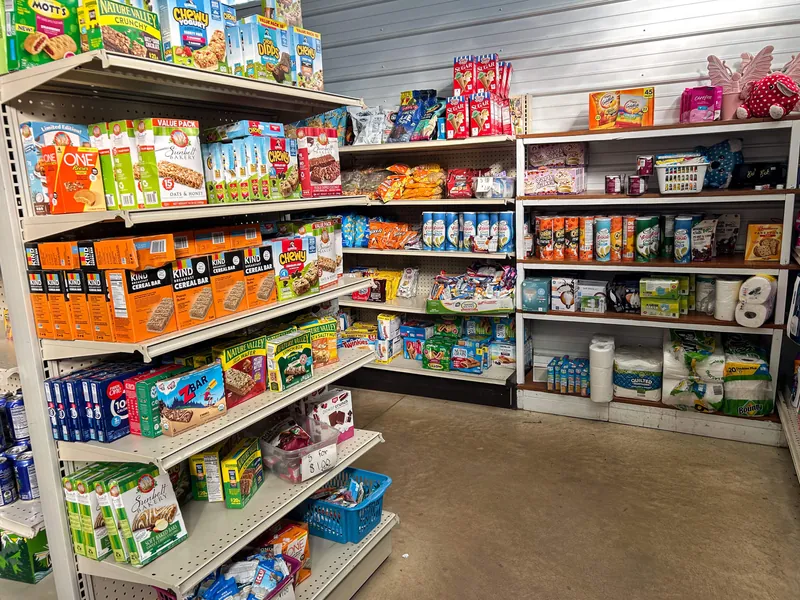
Walking into one of these stores for the first time, you might expect a chaotic jumble of mystery products with no labels. That is rarely what you find. Most salvage grocery stores are organized by category, carry recognizable brands, and stock a surprisingly consistent range of products. Canned vegetables, beans, and soups make up a huge portion of inventory. Dry goods like pasta, rice, oats, and lentils are common. You will usually find boxed cereals, condiments, cooking oils, nut butters, canned fish, and shelf-stable snacks. Some locations carry frozen items too, though that depends on their equipment.
Products end up here for several reasons, and most of them have nothing to do with the food itself. Overstocked inventory from a manufacturer that produced too much. Seasonal items that did not sell through before the holiday passed. Packaging redesigns that made the old version unsellable at regular retail even though the product inside is identical. And yes, cosmetically damaged goods, a box that got crunched in transit, a label that tore, a can with a surface dent on the side.
That last category is where the most confusion happens.
A surface dent on a can, the kind that comes from being dropped or bumped, does not breach the seal. A can is only a problem if it has a deep crease along the seam, if it is bulging, if it is leaking, or if it shows rust penetrating the metal. Cosmetic damage is not nutritional damage. These are very different things, and conflating them is one of the main reasons people avoid discount grocery stores when they probably shouldn't.
Safe to buy: Surface dents on the body of the can, minor label damage, slight scuffing.
Do not buy: Bulging lids, seam dents (along the top or bottom ridge), visible rust, leaking, or cans that hiss when opened.
Best By Dates Don't Mean What You Think They Mean
Here is where a lot of conventional wisdom falls apart under scrutiny. Most people treat a "best by" date like an expiration date, a hard cutoff after which the food is unsafe. But that is not what the label means, legally or scientifically.
The USDA and FDA are pretty clear on this. "Best by" and "best if used by" dates are manufacturer estimates of peak quality, not safety thresholds. "Sell by" dates are inventory management tools for retailers. Only "use by" dates on certain products, notably baby formula, carry a stronger safety implication. For the huge majority of shelf-stable products you'd find at a scratch and dent grocery or discount food store, the printed date tells you when the manufacturer thinks flavor and texture are at their best, not when the food becomes dangerous or nutritionally void.
Practically, this matters a lot. Canned vegetables can retain most of their nutrient content for two to five years past the printed date when stored properly, according to USDA data. Dried pasta, white rice, and oats have shelf stability measured in years to decades under good storage conditions. Nut butters and many packaged snacks remain nutritionally sound for months past their printed dates. In practice, the nutrient profile doesn't fall off a cliff on day one after the date printed on the box.
That said, some nutrients do degrade faster than others, and it's worth knowing which ones. Vitamin C breaks down relatively quickly over time, especially with heat or light exposure. B vitamins, particularly thiamine and folate, also degrade more noticeably in long-term storage. On the other hand, protein content stays essentially stable. Fiber doesn't go anywhere. Minerals like iron, calcium, and zinc are highly stable. Fat-soluble vitamins (A, D, E, K) hold up well in sealed packaging. So buying a can of black beans six months past its "best by" date at a bent-n-dent store? You are probably getting 95%+ of the nutritional value listed on the label.
Stays stable long-term: Protein, fiber, minerals (iron, calcium, zinc), fat-soluble vitamins (A, D, E, K)
Degrades more over time: Vitamin C, B vitamins (thiamine, folate, B6)
Bottom line: Most nutrients in canned and dry goods survive well beyond printed dates in sealed, undamaged packaging.
What Food Science Actually Says About Nutrients in Packaged Foods
Food science research on nutrient retention in sealed, shelf-stable products is actually pretty reassuring. Studies published in the Journal of Food Science and by USDA research teams have shown that hermetically sealed containers, like metal cans, do an excellent job of protecting nutrients from the two main threats: oxygen and light. A factory-sealed can of chickpeas sitting on a shelf at a discount grocery store is protected from both of those. Typically, the dent on the outside doesn't change that equation.
Physical damage to packaging affects nutrition in only two real scenarios. First, if the seal is actually broken, allowing air in, which creates oxidation and potential contamination. Second, if the damage is severe enough to compromise the container's barrier properties over an extended period. A bent corner on a cereal box, a torn label on a pasta bag, a scuffed lid on a jar of peanut butter? None of those breach the product's protective seal.
One thing that doesn't get mentioned enough: the processing that creates these shelf-stable foods in the first place already accounts for some nutrient loss. Canning involves heat, which degrades some heat-sensitive vitamins at the point of manufacturing. So by the time a canned product hits the shelf, whether at a regular grocery or a food salvage store, it has already gone through its biggest nutritional change. Post-processing storage affects things far less dramatically than the canning process itself.
Frozen products, for stores that carry them, are actually among the best nutritional values anywhere, discount or not. Freezing essentially pauses nutrient degradation. A bag of frozen broccoli at a grocery outlet or damaged goods grocery store that's been properly stored is nutritionally equivalent to fresh broccoli in most respects, often more so if the fresh broccoli sat in a truck for a week before hitting the produce aisle.
How to Shop for Nutrition at a Discount Grocery Store Near You
Smart shopping at these places isn't complicated, but it does require a few minutes of attention you wouldn't need at a regular supermarket.
Start with a visual inspection before you buy anything. For cans: check the seams (top and bottom ridges) for sharp dents or creases. Check for bulging, which indicates gas from bacterial activity. Check for rust, especially around seams. If any of these are present, put it back. For soft packaging: check that seals are intact and bags haven't been punctured. For boxed goods: make sure the inner bag or liner is undamaged even if the outer box is beat up.
- Best nutritional buys at these stores: Canned legumes (lentils, chickpeas, black beans, kidney beans), canned fish (tuna, sardines, salmon), nut butters, whole grain pasta and oats, canned tomatoes, dried lentils and rice, shelf-stable plant milks
- Buy with more caution: Anything in damaged soft packaging, cans with seam damage, products where the inner seal is broken
- Skip entirely: Swollen cans, leaking containers, anything with an off smell when opened, products past "use by" dates (especially dairy and meat, if a store carries them)
Supplement your salvage grocery haul with fresh produce from a farmers market or regular grocery store. Bent-n-dent stores and scratch and dent grocery shops rarely carry fresh produce, so you'll need another source for fruits and vegetables. Building a week's meals around a base of shelf-stable proteins, grains, and legumes from a discount food store, then adding fresh vegetables from elsewhere, is a genuinely effective way to eat well without spending much.
Canned legumes, by the way, are probably the single best value item at any of these stores. High protein, high fiber, low cost, nutritionally stable, and they show up constantly at salvage stores because manufacturers overproduce them. A can of chickpeas at 30 cents instead of $1.19 is just math.
Build your pantry around canned beans and lentils, whole grain oats or pasta, nut butters, and canned fish from a discount grocery store. Add fresh or frozen vegetables from a secondary source. This combination covers protein, fiber, complex carbs, and healthy fats at a fraction of standard retail cost.
The Industry by the Numbers: Growth and Real Store Data
3,183 salvage and discount grocery businesses are listed in our directory, and they're not evenly distributed. Houston leads all cities with 83 listings, which makes sense given its size and its strong culture of independent retail. Brooklyn comes in second at 61 listings, which is interesting because Brooklyn's cost of living creates real demand for groceries on a budget. Philadelphia has 46 listings, Los Angeles 41.
Those numbers point to something the broader grocery industry doesn't talk about much. Urban density drives demand for these stores, but so does a specific kind of consumer awareness. In cities where people are already thinking about food waste, budget shopping, and alternative retail, salvage grocery stores thrive. The 4.3-star average rating across 3,183 businesses is not a fluke. Shoppers who actually use these places are happy with what they get.
Some stores have built genuinely strong reputations. Here's a look at top-rated businesses in the directory:
| Business Name | Location | Rating | Reviews |
|---|---|---|---|
| Salvage Saviors | Katy, Texas | 5.0 ★ | 718 |
| Re_ Grocery | Studio City, California | 5.0 ★ | 224 |
| Re_ Grocery | Los Angeles, California | 5.0 ★ | 191 |
Salvage Saviors in Katy, Texas has 718 reviews at 5.0 stars. That's not a handful of enthusiastic regulars leaving five stars. That's a sustained volume of satisfied customers across a long period. Re_ Grocery in Studio City and Los Angeles, both at 5.0 stars with 224 and 191 reviews respectively, seems to have built a following among shoppers who care about both food quality and food waste reduction. Those are meaningful signals about how these stores actually operate in practice.
(Worth noting: a couple of the top-rated entries in the directory are not grocery stores at all. A jeweler and a towing company somehow made the top-five by rating. Directory data is what it is.)
Frequently Asked Questions
Are products at salvage grocery stores actually safe to eat?
Yes, in the vast majority of cases. Products with intact seals, no rust on seams, no bulging, and no leaking are safe. Surface dents on cans, torn box labels, and past "best by" dates do not indicate unsafe food. Follow the visual inspection checklist above and you'll be fine.
Do foods at discount grocery stores lose nutritional value after the "best by" date?
Some slow degradation happens over time, mainly with Vitamin C and certain B vitamins. But protein, fiber, minerals, and fat-soluble vitamins stay stable for well beyond the printed date in sealed, shelf-stable products. A can of lentils six months past its "best by" date is still an excellent source of plant protein and fiber.
What should I not buy at a bent-n-dent or scratch and dent grocery store?
Skip anything with a swollen or bulging can, seam damage, visible rust through the metal, broken inner seals on soft-packaged goods, or any product with an off smell when opened. Also avoid products past their "use by" date, which is a stricter safety marker than "best by."
Which cities have the most salvage grocery store options?
Based on directory data: Houston leads with 83 listings, followed by Brooklyn (61), Philadelphia (46), and Los Angeles (41). If you're searching for a discounted grocery store near you, those cities have the densest concentration of options.
What are the best nutritional buys at a food salvage store?
Canned legumes (beans, lentils, chickpeas), canned fish (tuna, sardines), whole grain oats and pasta, nut butters, and canned tomatoes offer the best combination of nutritional value and typical discount pricing. These products are also the most stable over time, so buying them slightly past their printed date is low-risk.
How much can I actually save at a discount food store versus a regular grocery?
Savings vary by product and store, but discounts of 30% to 70% off standard retail prices are common at salvage grocery stores. Staple items like canned goods, pasta, and nut butters are often where the biggest savings appear. Seasonal or discontinued items can be even more deeply discounted.
Bottom Line
Salvage grocery stores are not a compromise. They're a smart choice for shoppers who understand what food dating labels actually mean and what a dented can actually indicates. With 3,183 businesses nationwide averaging 4.3 stars, the industry is built on genuine value, not just desperation shopping.
Canned legumes, whole grains, nut butters, and canned fish at 50% off are nutritionally the same as the same products at full price. Science backs that up. Millions of shoppers already know it. As a rule, the data tells a different story than the stigma around these stores would suggest.
Go inspect some cans. Read the seams, not the dates.
Find Salvage Grocery Stores Near You
Browse our directory of 3,183+ salvage, bent-n-dent, and discount grocery businesses across the country. Filter by city, read real reviews, and find the best discounted groceries in your area.
Search the Directory