How Salvage Grocery Stores Can Help You Fight Rising Grocery Prices
https://pub-9a4dedcce6dc4846a9c4647f79a2e5fc.r2.dev/salvage-grocery-stores/blog/how-salvage-grocery-stores-can-help-you-fight-rising-grocery-prices/hero-1771884830.webp
You're standing in a regular supermarket checkout line, watching the total climb past $180 for what feels like a half-full cart. A box of name-brand cereal that used to cost $4 is now $7.50. Eggs. Butter. Even the store-brand soup feels expensive. You put the crackers back. Again.
Grocery prices have gone up dramatically over the past few years, and most households are feeling it. According to USDA data, food-at-home prices have risen over 25% since 2020. That's not a small shift. That's real money missing from real budgets every single week.
But there's a category of store that millions of shoppers walk right past, or simply never hear about, that can genuinely cut your grocery bill in a serious way. Salvage grocery stores, also called bent-n-dent stores, scratch and dent grocery shops, or discount food stores, buy up overstock, discontinued products, slightly dented cans, and short-dated goods at steep discounts, then pass those savings directly to shoppers. This article breaks down exactly what these places are, what you can expect to find inside, how much you can realistically save, and how to find one near you.
What Is a Salvage Grocery Store?
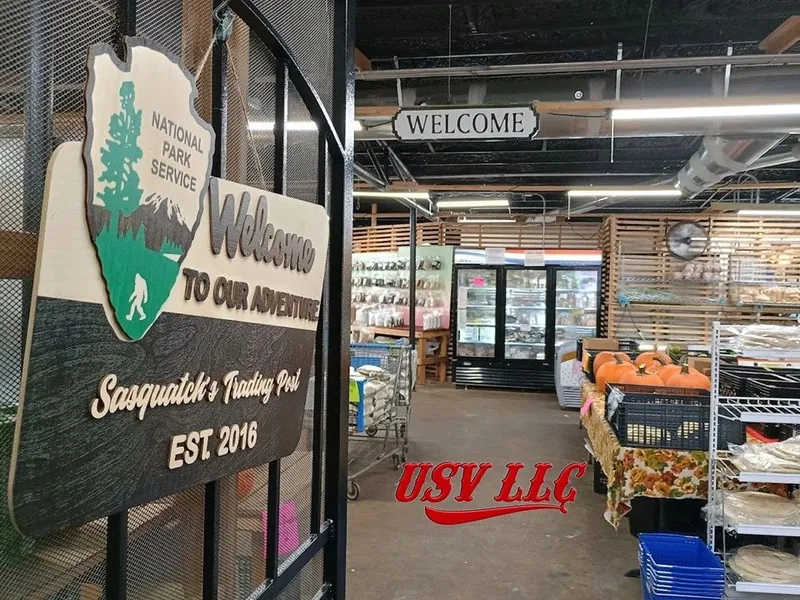
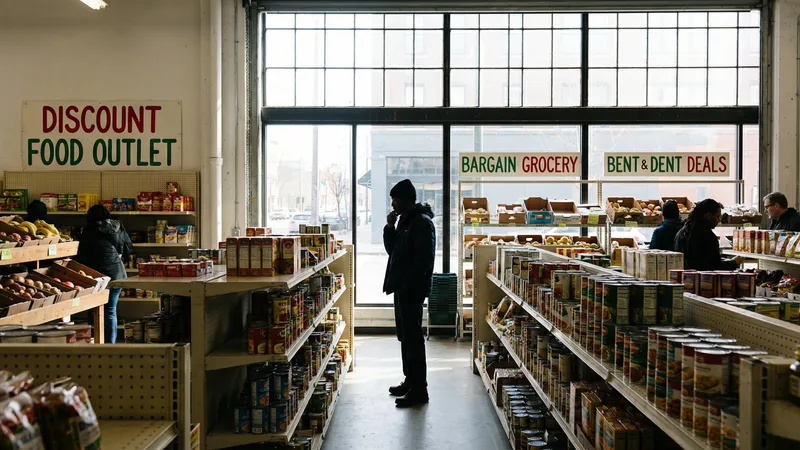
Picture a warehouse-style room, sometimes a little dim, shelves that aren't quite as neat as your local chain supermarket, and prices written in marker on handmade tags. That's the vibe at a lot of salvage grocery stores, and honestly, it's part of the charm.
These stores source their inventory in ways that traditional supermarkets do not. When a manufacturer overproduces a product and can't move it, a salvage grocer buys it. When a retailer discontinues a line, when a shipment gets damaged in transit (not the food, just the boxes), or when goods are approaching their best-by dates, salvage grocery stores step in and buy that inventory for a fraction of the normal wholesale price. Some even buy insurance claim merchandise from warehouses that had minor flooding or fire damage, where the packaging got wet but the sealed product inside is perfectly fine.
This is the part where a lot of people get nervous. And fair enough. But there's a real difference between cosmetically damaged packaging and food that's actually unsafe. A can with a dent on the rim, near the seam? That's a legitimate safety concern, and reputable stores know not to sell those. A can with a dent on the side of the body? That's cosmetic. A cereal box that's been crushed on one corner? The cereal inside is fine. Good salvage grocery stores make these distinctions. Shoppers just need to know to look.
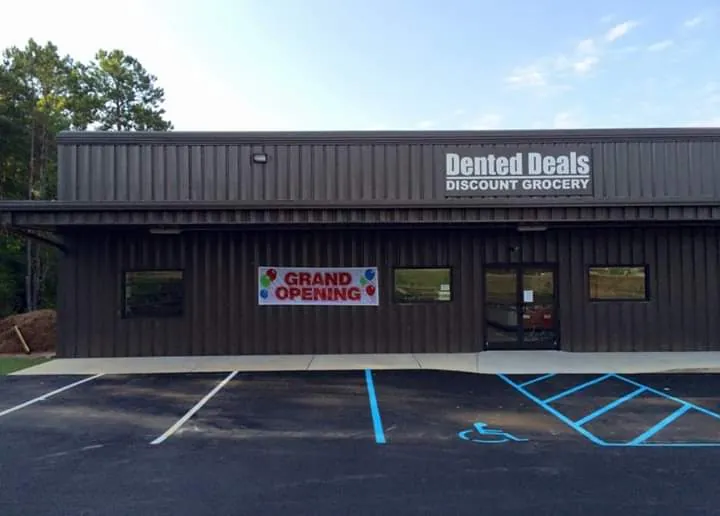
You might find these places listed under a lot of different names depending on where you live. Bent-n-dent stores is probably the most colorful term. Others go by damaged goods grocery, discount food store, food salvage store, or just grocery outlet. Some don't have any signage that signals what they are at all, they just look like a small independent market until you get inside and see the prices.
Salvage grocery store, bent-n-dent store, scratch and dent grocery, discount food store, damaged goods grocery, food salvage store, these all describe essentially the same type of business. If you're searching online for discounted grocery store near me or where to find discounted groceries, any of these terms will help you find what you're looking for.
What Can You Buy at a Salvage Grocery Store?
Walking into one for the first time, you might expect a sparse, picked-over selection. What most people actually find is pretty surprising.
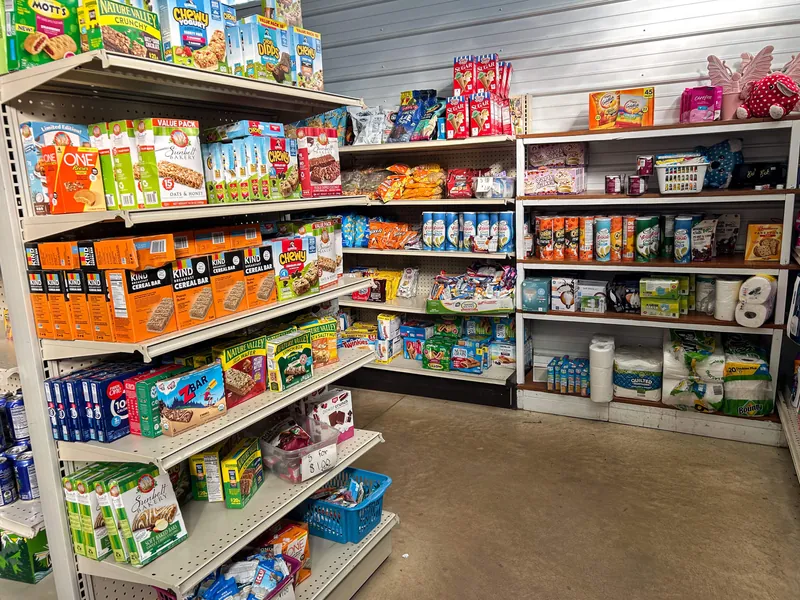
Canned goods are almost always the backbone of a salvage grocery store. Soups, beans, tomatoes, fruit, vegetables, often name-brand stuff from companies like Campbell's, Del Monte, or Green Giant, stacked in quantity and priced far below what you'd pay at a chain. Dry goods are usually well-represented too: pasta, rice, flour, sugar, oatmeal, boxed mac and cheese. Snacks are a big draw for a lot of shoppers. You'll find chips, crackers, cookies, granola bars, and sometimes candy in bulk quantities. Beverages show up regularly as well, bottled water, juice, soda, sports drinks, coffee.
Many salvage grocery stores carry cleaning supplies and personal care items alongside food. Dish soap, laundry detergent, shampoo, paper towels. These categories don't expire the same way food does, so they're often incredible deals.
Frozen foods vary a lot by location. Some stores have full freezer sections with frozen meals, meat, and vegetables. Others have nothing frozen at all. It depends on the store's infrastructure and what inventory they happened to acquire that week.
And that's the key thing to understand about shopping at a discount food store: the inventory rotates constantly and you can't always predict what will be there. This week there might be six cases of a really good organic pasta sauce. Next week it's gone and there's a pallet of flavored almonds instead. Some people find this frustrating. A lot of people absolutely love it. It creates a genuine treasure-hunt feeling, which is fun, and also means you sometimes score things you'd never normally splurge on at full price.
What you should not expect to find consistently is fresh produce. Some salvage stores carry it occasionally, but it's not reliable. Same goes for fresh meat and dairy, occasionally yes, but don't plan your weekly menu around it. These places work best as a complement to your regular grocery run, not a total replacement.
How Much Money Can You Actually Save?
Realistically, shoppers save anywhere from 30% to 70% off standard retail prices at salvage grocery stores. That range is wide because it depends on what you're buying and what happened to land at that store that week.
Here's what that looks like in practice. A box of name-brand cereal that costs $6.99 at a regular supermarket might be $2.50 at a bent-n-dent store. A 12-pack of canned soup that retails for $14 could be $5. Bottled water, which seems cheap until you buy it every week, can drop from $7 or $8 for a 24-pack down to $2 or $3. Cleaning products are sometimes 80% off retail. And there are moments, when a store gets a big overstock shipment of something, where prices get almost absurd in the best way.
The real savings, though, come from consistency over time.
Say you spend $300 a month on groceries for a family of four. If you shift even 40% of your non-perishable buying to a salvage grocery store and save 50% on those items, you're cutting $60 off your monthly bill. That's $720 a year. Without coupons, without apps, without driving to five different stores. Just one extra stop every week or two at a discount grocery store stocked with the same name-brand products you already buy.
Bulk buying makes the math even better. When you find a great deal on something you actually use, canned tomatoes, coffee, laundry detergent, buy more than you need right now. Stock your pantry. In practice, the price won't be that low at your regular store, and it might not be that low at this store next month either.
Combine salvage grocery shopping with a single regular supermarket run each week. Use the salvage store for canned goods, dry goods, snacks, and cleaning supplies. Use your regular store for fresh produce, meat, and dairy. You'll cover everything you need and cut your total bill significantly without giving up convenience.
Salvage Grocery Stores by the Numbers
This category is bigger than most people realize. Across the country, there are over 3,183 salvage and discount grocery businesses listed in our directory. That's not a fringe market. That is a well-established segment of the food retail industry with real presence in cities and small towns alike.
Urban shoppers have especially strong access. Houston leads all cities with 83 listings. Brooklyn comes in second with 61. Philadelphia has 46 listed businesses, and Los Angeles has 41. If you live in or near any major metro area, there's a very good chance a salvage grocery store is closer than you think.
And here's the thing that probably surprises people most: customer satisfaction at these stores is consistently high. Across all listed businesses, the average rating is 4.3 stars. That's not "decent for a discount store", that's just good, full stop. Shoppers are happy. Typically, the idea that buying groceries on a budget means accepting lower quality or worse service is largely a myth.
Top-Rated Salvage & Discount Grocery Businesses
| Business Name | Location | Rating | Reviews |
|---|---|---|---|
| Salvage Saviors | Katy, Texas | ⭐ 5.0 | 718 reviews |
| Re_ Grocery | Studio City, California | ⭐ 5.0 | 224 reviews |
| Re_ Grocery | Los Angeles, California | ⭐ 5.0 | 191 reviews |
Salvage Saviors in Katy, Texas is worth calling out specifically. A 5.0-star rating across 718 reviews is not a fluke. That's a store that has genuinely figured out how to serve its customers well, consistently, at a lower price point. That kind of reputation takes real work to build and maintain.
Re_ Grocery, which has locations in both Studio City and Los Angeles, also sits at a perfect 5.0 rating and has built a loyal following in the LA area. You have to check out Re_ Grocery if you're anywhere near the San Fernando Valley, shoppers there describe the experience as almost addictive, the same way good thrift stores get their regulars.
Tips for Shopping at a Salvage Grocery Store for the First Time
Go in with curiosity, not a rigid shopping list. Seriously, if you walk in needing exactly one brand of one specific pasta shape, you'll probably leave disappointed. But if you walk in thinking "I need pasta, and I need canned tomatoes, and I'm open to whatever else looks like a good deal," you're going to have a great time.
Check packaging carefully. Look at every can. Dents on the body of a can are usually fine. Dents near the seam or on the rim are not, skip those. Bulging lids are a hard no regardless of price. Check that bags and boxes are fully sealed. This is not paranoia; it's just smart shopping, the same way you'd check produce for bruising at any grocery store.
Best-by dates are not expiration dates. This matters. A "best by" date means the manufacturer believes the product is at peak quality until that point. It does not mean the food becomes dangerous on that date. Canned goods in particular can be perfectly safe and good to eat well past their best-by dates. That said, use your judgment. Something that's six months past its date and tastes off? Just don't eat it. Something that's two weeks past its date and smells and tastes fine? You're good.
Bring cash if you can. A lot of smaller salvage grocery and bent-n-dent stores are cash-only or cash-preferred. Some take cards, but it's not guaranteed. Call ahead or just bring both.
Try to visit early in the week. Many stores get new inventory on Mondays or Tuesdays, so earlier in the week means more selection and fresher stock. By Friday afternoon, the good stuff has usually been picked through pretty thoroughly. As a rule, the parking lots at some of these places, especially the busier ones, can get genuinely crowded on weekends, more crowded than you'd expect, honestly, which tells you something about how many people have already figured this out.
Bring reusable bags. A lot of these stores don't offer bags at all, or charge for them. And since you might end up buying in bulk, you'll want something sturdy anyway.
Before you go: Bring cash (some stores are cash-only), grab your reusable bags, and go earlier in the week for the best selection.
While you shop: Check cans for rim/seam dents, verify packaging is fully sealed, and read best-by dates with context.
Big picture: Stay flexible on brands and specific items, you're shopping the deals, not a fixed list.
Frequently Asked Questions
Are salvage grocery stores safe to shop at?
Yes, for the most part. Reputable salvage grocery stores inspect their inventory and do not sell products with compromised packaging. Shoppers should still check cans for dents near seams and rims, verify bags are sealed, and pay attention to best-by dates with some common sense about what those dates actually mean. A dented box or a label in rough shape does not make food unsafe.
What's the difference between a best-by date and an expiration date?
Best-by and sell-by dates are quality indicators set by manufacturers, not safety deadlines. Food does not automatically become unsafe on those dates. Actual expiration dates (which say "expires" rather than "best by") are more strict, but even those are often conservative estimates. Use your senses: if something smells right and looks right, it's generally fine.
How do I find a salvage grocery store near me?
Our directory lists over 3,183 salvage and discount grocery businesses across the country. You can search by city or zip code to find options near you. You can also search online for terms like "bent-n-dent store near me," "scratch and dent grocery," or "discount food store" in your area. Houston, Brooklyn, Philadelphia, and Los Angeles have the highest concentrations of listings, but these stores exist in smaller cities and rural areas too.
Do salvage grocery stores take credit cards?
Some do and some don't. Larger, more established grocery outlet stores usually accept cards. Smaller independent bent-n-dent stores often prefer or require cash. Call ahead if you can, or just bring both to be safe on your first visit.
Can I do all my grocery shopping at a salvage store?
Probably not entirely. Fresh produce, meat, and dairy are inconsistent or unavailable at most salvage grocery stores. These places work best as a supplement to your regular grocery run, covering non-perishables, canned goods, dry goods, snacks, and cleaning supplies at much lower prices while you get fresh items elsewhere.
Why are prices so much lower at these stores?
Salvage grocery stores buy inventory that normal retail channels cannot easily sell: overstock that a manufacturer produced too much of, discontinued products, items with damaged packaging, short-dated goods, and insurance claim merchandise. Because they buy at steep discounts, they can sell at steep discounts. Products are not lower quality, they are the same products, just acquired through a different supply chain path.
Find a Salvage Grocery Store Near You
Browse our directory of 3,183+ salvage, bent-n-dent, and discount grocery businesses across the country. Search by city or zip code and start saving on your next grocery run.
Search the Directory