Salvage Grocery Stores vs. Traditional Supermarkets: Which One Is Actually Worth Your Time?
https://pub-9a4dedcce6dc4846a9c4647f79a2e5fc.r2.dev/salvage-grocery-stores/blog/salvage-grocery-stores-vs-traditional-supermarkets-which-one-is-actually-worth-your-time/hero-1771905496.webp
You're standing in a regular supermarket, cart half-full, and you're already doing the math in your head. A box of cereal: $6.49. A case of sparkling water: $12. A bag of pasta that used to be $1.89 is now $3.29 for no reason anyone can explain. By the time you hit the checkout line, a "quick trip" has turned into a $180 afternoon you weren't planning on. Sound familiar?
That frustration is exactly why so many people are now searching for a discounted grocery store near me, wondering if there's a smarter way to fill the pantry without feeling robbed every single week. And there is. Salvage grocery stores, also called bent-n-dent stores, scratch and dent grocery shops, or just discount food stores, have been quietly operating in cities across the country for decades. They're not new. They're just finally getting the attention they deserve.
This guide breaks down exactly how these stores compare to traditional supermarkets across four things that actually matter: price, product selection, quality, and the overall shopping experience. By the end, you'll know whether adding a food salvage store to your routine makes sense for your household.
What Are Salvage Grocery Stores?
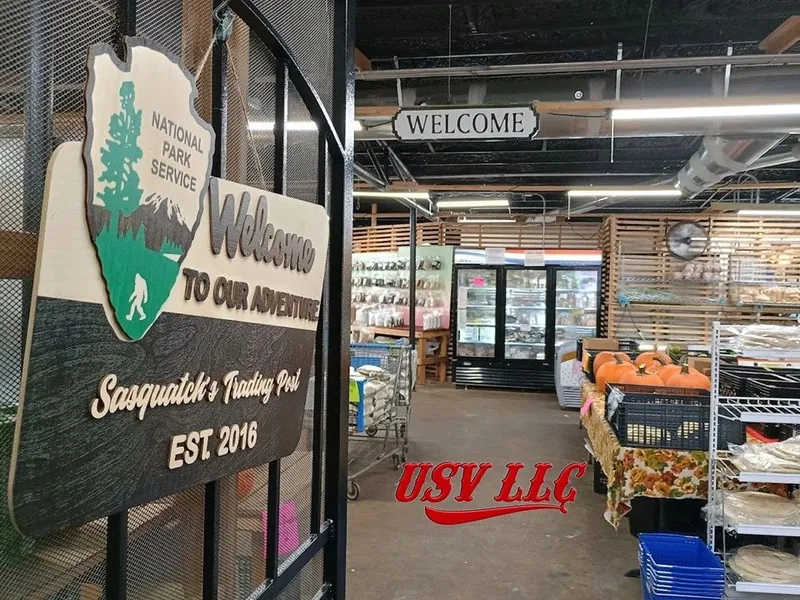
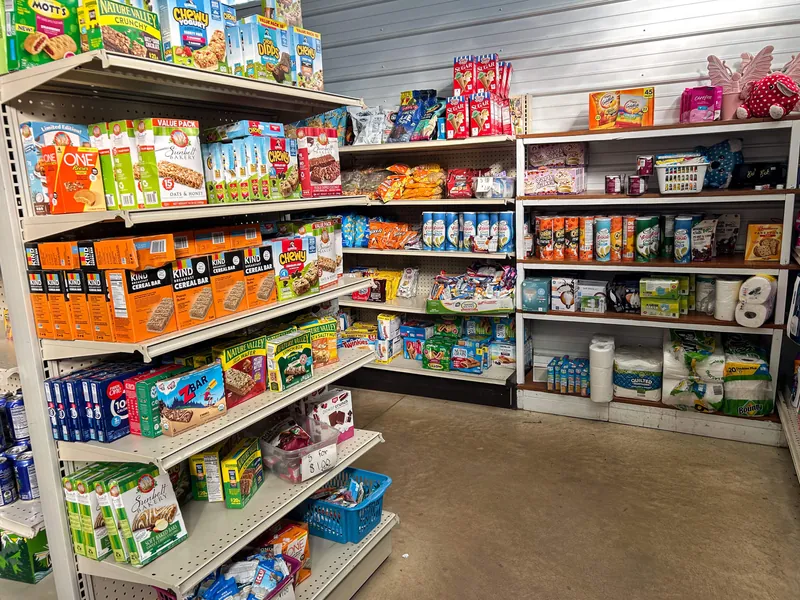
Walking into one for the first time, you might not know what to expect. It doesn't look like a normal grocery store. Boxes are sometimes stacked floor to ceiling. Products are grouped loosely by category rather than arranged with the surgical precision of a Kroger or Safeway. There might be a hand-written sign on a shelf. Prices are often marked with stickers, not shelf tags. It's a little chaotic, and honestly, that's part of the charm.
These places get their inventory through channels that traditional supermarkets don't touch. Overstock from big retailers, discontinued product lines, items with slightly dented cans or torn outer packaging, goods that missed their shipping window and got pulled from major distribution chains. None of that means the food inside is bad. It just means it didn't fit the perfect-looking-shelf standards that a conventional store requires.
Some items are approaching their sell-by date, which sounds alarming until you realize that sell-by dates are largely about inventory management for stores, not about food safety for consumers. More on that in a minute. Other items are perfectly dated, just over-ordered or repackaged. A damaged goods grocery store is essentially catching all the good food that would otherwise get wasted or returned to manufacturers at a loss.
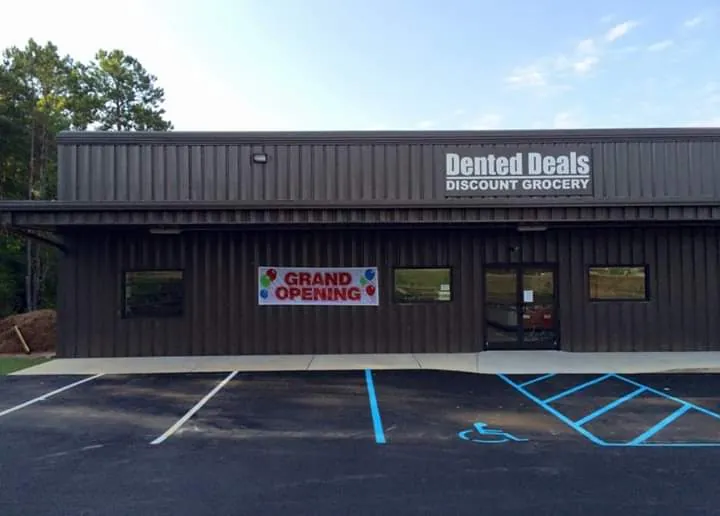
Store formats vary a lot. Some salvage grocery stores operate out of large warehouse-style spaces with concrete floors and industrial shelving. Others look more like a small neighborhood market, tidy and organized. A few run somewhere in between. What they all share is a rotating, unpredictable inventory and prices that make you stop and do a double-take.
Not every discount grocery store is a salvage store. Some chains, like grocery outlet-style retailers, buy overstock at scale and operate polished storefronts. Others are small independent operations with a loading dock and some folding tables. Both types fall under the same broad umbrella and offer real savings, but the experience is different.
Price Comparison: How Much Can You Actually Save?
Here's the honest answer: a lot. Industry estimates consistently put savings at 40 to 70 percent off comparable items at traditional supermarkets. That's not a rounding error. On a $200 weekly grocery run, that's $80 to $140 back in your pocket.
But the savings aren't uniform across every product category. Knowing where the best deals actually live helps you shop smarter.
Where Salvage Stores Dominate on Price
- Canned goods: This is where scratch and dent grocery stores absolutely shine. A can of name-brand soup or beans with a minor label tear might sell for $0.35 when the same product costs $1.89 at a regular store. The contents are identical.
- Dry goods and pasta: Boxes of pasta, rice, oats, and cereals that got slightly crushed in transit show up here constantly, often 60 to 70 percent off retail.
- Snacks and packaged foods: Chips, crackers, granola bars, cookies. These categories rotate fast and the deals can be almost ridiculous. Finding a $4 bag of name-brand trail mix for $1.10 is not unusual.
- Beverages: Cases of sparkling water, juice, flavored drinks, sometimes even specialty beverages from brands you'd normally only see at upscale stores. Often showing up because a retailer over-ordered for a promotion.
- Frozen foods: Hit or miss depending on the store's freezer capacity, but when it's there, savings are real.
What This Means for a Real Family Budget
For a family spending around $800 a month on groceries, supplementing even 40 percent of their pantry purchases at a discount food store could save $150 to $200 monthly. That's $1,800 to $2,400 a year. Not nothing. Not even close to nothing.
The strategy that works best, in my opinion, is using the salvage store for shelf-stable staples and treating the traditional supermarket as the place you go for fresh produce, meat, and things you need on a specific schedule. Split the shopping, keep the savings.
One thing worth knowing: prices at these stores aren't always consistent between visits. Because inventory is so unpredictable, the deal you found last Tuesday on that organic coconut oil might not be there next week. Smart shoppers stock up when they see a great price on something they use regularly.
Product Selection: Treasure Hunt vs. Reliable Grocery Run
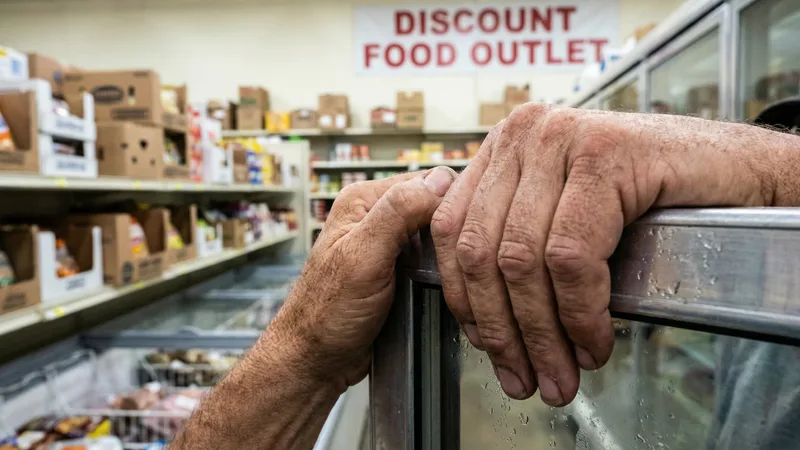
Let's be straight about one thing: if you need a specific ingredient for a recipe on Wednesday night, a salvage grocery store is not where you go to find it reliably. That's just the reality. Inventory changes constantly, products sell out and don't get restocked, and there's no guarantee that what you need will be on the shelf when you need it.
That said, the variety that does show up can genuinely surprise you. Specialty products, organic brands, imported snacks, regional flavors you've never seen before, premium items that would cost double at a regular store. One visit might turn up three different brands of imported Italian pasta, a case of artisanal hot sauce, and six varieties of name-brand protein bars. It's a weird and wonderful mix.
Where Traditional Supermarkets Still Win
Fresh departments. Full stop. Produce, the deli counter, the bakery, the butcher section. These are areas where traditional supermarkets have a clear and basically unbeatable advantage. Most salvage grocery stores carry very little in the way of fresh produce, if any at all. In practice, the whole model is built around shelf-stable and packaged goods.
Also: consistency. If your household has specific dietary needs, allergies, or you're cooking for picky kids who will only eat one particular brand of something, the reliable shelves of a conventional store matter. You can't plan a week of meals entirely around what happens to show up at a bent-n-dent store.
Pantry Shopping Is Where These Stores Make Sense
Think about everything in your pantry right now. Canned tomatoes, broth, beans, pasta, rice, cereal, crackers, cooking oils, sauces, condiments. All of that is exactly what discount grocery stores carry in abundance and at steep discounts. Shifting your pantry shopping to a salvage store and doing fresh shopping elsewhere is a realistic, practical strategy that many regular shoppers already use.
Oh, and check the international food section when you find one. Some salvage stores end up with products from overseas distribution deals gone sideways, and you'll occasionally stumble onto imported snacks or specialty items that you genuinely cannot find at a regular grocery store at any price. Weird perk, but a real one.
Quality and Safety: What You Actually Need to Know
This is the section where people get nervous. It's understandable. "Damaged goods grocery" sounds, on paper, like it might mean food that isn't safe to eat. It does not.
FDA guidelines draw a clear line between sell-by dates, best-by dates, and use-by dates. Sell-by and best-by dates are manufacturer guidelines about peak quality, not safety cutoffs. Only use-by dates on things like infant formula carry actual safety weight. Most products that appear at a food salvage store with near-term dates are still completely safe and good to eat. They just need to be used reasonably soon, which is fine if you're buying things you'll actually use.
Packaging damage is the other concern. A dented can is not automatically dangerous. A can that is bulging, has deep rust, leaks, or smells wrong when opened is a different story entirely. Those are signs of potential spoilage or contamination and should always be avoided. Most reputable salvage grocery stores inspect their inventory before putting it on shelves and pull anything that fails basic safety checks. Typically, the stores with strong customer ratings are especially thorough about this.
Do buy: Items with minor dents on the side of a can, torn outer packaging (box inside is intact), items with a sell-by or best-by date that's within a reasonable window for your usage. Skip: Cans that bulge at the top or bottom, anything with a broken inner seal, products where the package integrity is fully compromised, anything that smells off when you open it.
Frozen foods deserve extra scrutiny. If a bag of frozen vegetables has ice crystals clumped around the food, that can suggest it thawed and refroze at some point. Not always dangerous, but quality may have taken a hit. Check for this before buying frozen items at any discount food store.
Here's what the data actually tells us about consumer satisfaction at these places: across 3,183 salvage grocery businesses listed in our directory, the average customer rating sits at 4.3 stars. That is genuinely high for any retail category. People who shop at these stores are not writing rave reviews because they lowered their expectations. They're happy because the experience delivered.
By the Numbers: Salvage Grocery Stores Across the U.S.
With 3,183 businesses listed, the salvage grocery industry is far bigger than most people realize. And the concentration in certain cities tells a story about where demand is strongest.
Houston leads with 83 listings, which tracks for a large, sprawling metro with a wide range of neighborhoods and income levels. Brooklyn has 61 listings, impressive for a borough where real estate is famously expensive and residents are always looking for ways to stretch their dollar. Philadelphia shows up with 46 listings, and Los Angeles with 41.
Urban density matters here. These stores thrive in cities because foot traffic is high, real estate for large format retail is expensive, and there's a built-in customer base of people who are actively hunting for groceries on a budget. As a rule, the fact that four of the most expensive cities in the country also host the highest concentrations of salvage grocery stores is not a coincidence.
Top-Rated Salvage Grocery Businesses
| Business Name | Location | Rating | Reviews |
|---|---|---|---|
| Salvage Saviors | Katy, Texas | 5.0 ★ | 718 reviews |
| Re_ Grocery | Studio City, California | 5.0 ★ | 224 reviews |
| Re_ Grocery | Los Angeles, California | 5.0 ★ | 191 reviews |
Salvage Saviors in Katy, Texas stands out in particular. 718 reviews at a perfect 5.0 rating is remarkable by any measure. That's not a fluke or a few friends writing nice things online. That's a store that has consistently delivered for a very large number of real customers. Worth making a trip out to Katy if you're anywhere near Houston.
Re_ Grocery shows up twice, in Studio City and in Los Angeles proper, both at 5.0 stars. That format, a polished grocery outlet-style concept focused on near-expiry and surplus goods, seems to be resonating strongly in the LA market, where shoppers tend to be both cost-conscious and quality-conscious at the same time. Good combination to satisfy.
For most shoppers, the high average rating across the whole directory (4.3 stars) suggests this isn't about a few exceptional outliers pulling up the numbers. Broadly speaking, people who try salvage grocery stores come away happy. That tracks with what repeat customers say: once you figure out how to shop these stores, the value is hard to walk away from.
Frequently Asked Questions
Are salvage grocery stores safe to shop at?
Yes, with some basic product-checking habits. Most food salvage stores inspect their inventory and pull unsafe items before they hit the shelves. As a shopper, check that cans are not bulging or deeply rusted, confirm inner packaging seals are intact, and pay attention to use-by dates on perishables. Sell-by and best-by dates are quality markers, not safety deadlines, for most products.
How much can I actually save at a discount grocery store?
Savings typically range from 40 to 70 percent compared to regular supermarket prices on comparable items. Canned goods, dry goods, snacks, and beverages tend to offer the steepest discounts. Fresh produce and deli items are usually not available at salvage stores, so those savings don't apply to every category of your grocery list.
How do bent-n-dent stores get their inventory?
Through several channels: overstock from manufacturers and retailers, discontinued product lines, items with damaged outer packaging, and goods that missed their shipping or distribution windows. None of these sources inherently mean the product is low quality. They just mean the product didn't fit the normal retail supply chain's requirements.
Can I rely on a scratch and dent grocery store for my weekly shopping?
Not entirely, and that's okay. These stores are best used for pantry staples like canned goods, pasta, rice, snacks, and packaged foods. For fresh produce, meat, dairy, and specific recipe ingredients you need on a reliable schedule, a traditional supermarket is still the better option. Most regular salvage store shoppers use both.
Where can I find a discounted grocery store near me?
Our directory lists 3,183 salvage grocery businesses across the U.S. Houston, Brooklyn, Philadelphia, and Los Angeles have the highest concentrations of listings, but stores exist in cities and towns of all sizes. Use the search tool on this site to find options in your area.
What does a grocery outlet-style store typically look like inside?
It varies. Some are large warehouse-style spaces with industrial shelving and hand-written price signs. Others look much closer to a conventional small grocery store, organized and tidy. What almost all of them share is a rotating inventory that changes week to week, which is part of the appeal for regular shoppers who enjoy finding new deals.
Find Salvage Grocery Stores Near You
Browse our directory of 3,183+ businesses and find the best discount grocery stores, bent-n-dent stores, and food salvage stores in your city.
Search the Directory