Your Grocery Bill Could Drop by 50% or More — Here's Exactly Why Salvage Grocery Stores Make That Possible
You're standing in a regular supermarket holding a can of soup that costs $2.79, and you know, you just know, you've seen that exact same can somewhere else for sixty cents. You weren't imagining it. That was a salvage grocery store, and most people have no idea how the math actually works.
This article breaks down the real cost structure behind these stores, what the numbers say about how many exist and where, and how to shop them so you're actually saving money instead of just buying weird stuff you'll never eat. Because yes, that's also possible.
What Are Salvage Grocery Stores and How Do They Work?
Go by a lot of names. Bent-n-dent stores, scratch and dent grocery shops, discount food stores, damaged goods grocery outlets, they're all basically the same thing with slightly different inventory mixes. Some people call them grocery outlets, some call them food salvage stores, and in certain parts of the country older folks just say "the dent store." Whatever you call them, the operating model is the same.
Products arrive at these stores through supply chain situations that major retailers can't or won't deal with. A manufacturer overproduces a seasonal item. A distributor ends up with a truckload of goods where a few cases got crushed in transit. A national grocery chain decides to discontinue a product line and needs to move thousands of units fast. A brand redesigns its packaging and now has a warehouse full of the old boxes. All of this merchandise is still perfectly good food. It just has nowhere normal to go.
Salvage stores step in and buy that inventory at a steep discount, sometimes for pennies on the dollar compared to what it originally cost. They don't need to do much to it. Stack it on a shelf, put a price on it, open the doors. That's basically the whole operation. No elaborate store design, no national ad campaigns, no loyalty card infrastructure. Just product and price.
Here's where people get it wrong, and this mistake keeps a lot of budget-conscious shoppers away from real savings. "Salvage" does not mean expired, unsafe, or low quality. It means the product ended up outside the normal distribution chain for logistical, cosmetic, or timing reasons. A can with a dented label is not a health hazard. A box of crackers that's two weeks from its best-by date is still crackers. The food safety standards for these products are the same as any grocery store; the difference is where the product came from and how much was paid for it upstream.
Sell-by and best-by dates are quality indicators set by manufacturers, not legal safety deadlines. "Use by" dates on certain perishables are the ones that actually matter from a safety standpoint. Most dry, canned, and packaged goods at discount grocery stores are perfectly safe well past their sell-by date. When in doubt, use your nose and your eyes, that's still the best test.
The Cost Structure: Why Prices Are So Much Lower
Okay, so why can a salvage grocery store sell a box of name-brand cereal for $1.25 when the same box is $5.49 at a conventional supermarket? It's not magic. It's not a scam. It's just math applied at multiple points in the chain.
Acquisition cost is where it starts. When a discount food store buys a pallet of overstock cereal, they might pay fifteen or twenty cents per box instead of the normal wholesale price of two dollars or more. That margin cushion is enormous. Even if they sell it for $1.25, they're doing fine. A regular grocery chain can't offer that price because they paid full wholesale, they have pricing agreements with suppliers that require consistent shelf pricing, and they have brand image concerns about being seen as a discount outlet. They're stuck.
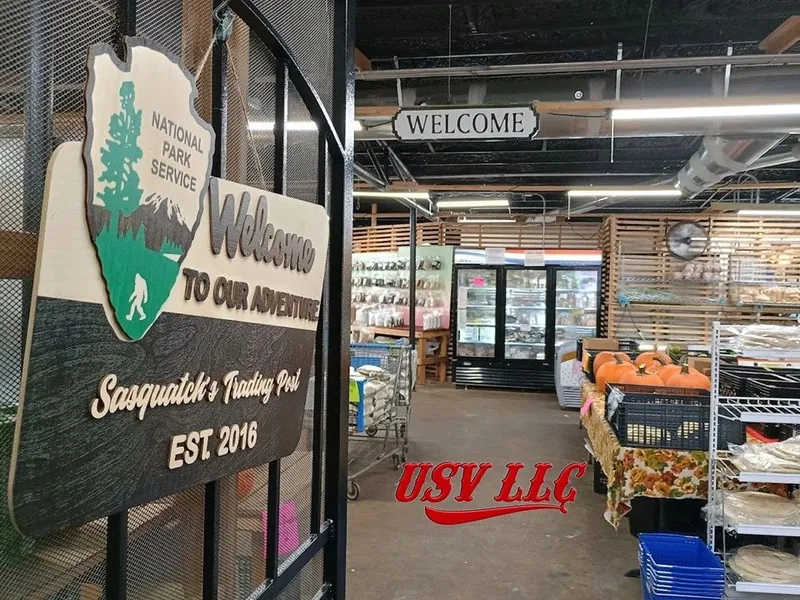
Overhead at salvage stores is also dramatically lower. You're not shopping somewhere with fancy lighting, organized signage systems, a deli counter with eight employees, and a floral department. Most of these places look like a warehouse had a baby with a garage sale. Concrete floors, mismatched shelving, handwritten price tags. And honestly? That's fine. Nobody's going to a scratch and dent grocery shop for the ambiance.
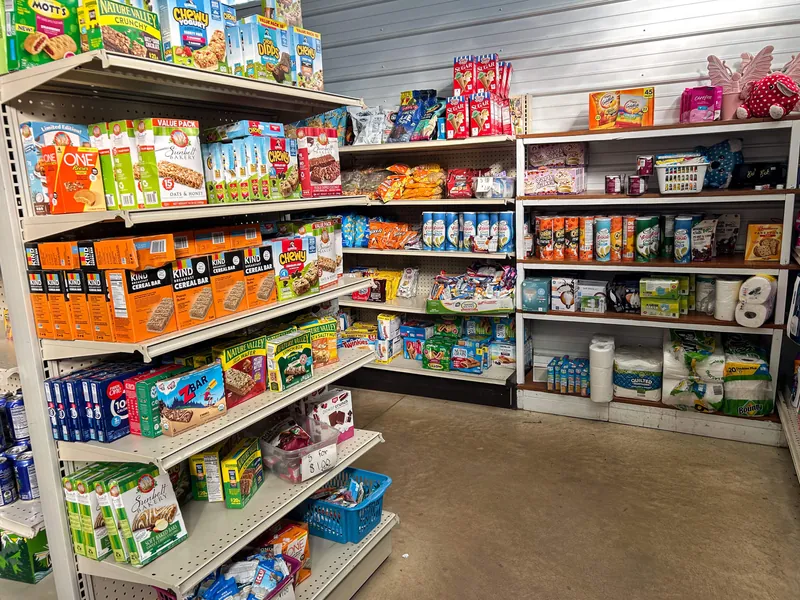
Product condition categories matter a lot for understanding how deep the discounts go. Cosmetically damaged packaging, think dented cans, torn outer boxes, faded labels, usually means 30 to 50 percent off comparable retail. Short-dated inventory, meaning stuff that's close to but not past its sell-by date, can run 50 to 70 percent off. Closeout merchandise, which is discontinued items a brand is done producing, sometimes goes even lower because the store just needs to move it. Those are the finds people get excited about.
Marketing budgets at salvage stores are essentially zero. No TV spots. No weekly circular mailers. No sponsored posts. Word of mouth and repeat customers are the whole strategy. That cost savings gets passed through to the shelf price. A conventional grocery chain spends a meaningful portion of its operating budget just on advertising and promotions. A bent-n-dent store does not.
Add it all together and you get a store that can consistently price products at 30 to 70 percent below what you'd pay at a regular supermarket. Not occasionally. Consistently.
Salvage Grocery Stores by the Numbers: What the Data Actually Shows
There are 3,183 salvage and discount grocery businesses currently listed across the country. That number is bigger than most people expect. This is not a niche thing happening in a few quirky towns. It's a legitimate, widespread retail sector that's sitting right in most people's backyards, completely ignored.
Houston leads all cities with 83 listings, which makes sense, it's a massive metro with intense cost-of-living pressure and a population that's extremely price-aware. Brooklyn comes in second with 61 listings, Philadelphia has 46, and Los Angeles shows 41. Notice anything? The highest concentrations are in cities where grocery budgets are already stretched thin. That's not a coincidence. These stores grow where the need is sharpest.
And this is the part that really should change how skeptical people think about these stores: the average customer rating across all 3,183 businesses is 4.3 stars. Not 3.1. Not "acceptable." 4.3. That's higher than a lot of conventional grocery chains score. High savings and high satisfaction are apparently not mutually exclusive.
Some individual businesses are doing even better. Salvage Saviors in Katy, Texas holds a 5.0 star rating across 718 reviews. That's not a fluke, 718 people don't accidentally all give five stars. Re_ Grocery shows up twice in California, with a 5.0 rating at their Studio City location (224 reviews) and another 5.0 at their Los Angeles store (191 reviews). These aren't hidden gems that nobody knows about anymore. They're well-established, well-reviewed businesses.
Top-Rated Salvage and Discount Grocery Businesses
| Business Name | Location | Rating | Reviews |
|---|---|---|---|
| Salvage Saviors | Katy, Texas | ⭐ 5.0 | 718 |
| Re_ Grocery | Studio City, California | ⭐ 5.0 | 224 |
| Re_ Grocery | Los Angeles, California | ⭐ 5.0 | 191 |
A small note: two other businesses in the directory data, House of Milner Jewelers in Philadelphia and Hegwood's Towing in Brandon, Mississippi, also show 5.0 ratings, but those are jewelry and towing businesses that appear to have been caught in the same data pull. Not relevant to your grocery bill, but worth flagging so the table above stays honest.
What You Can Realistically Expect to Save
Let's get specific, because vague promises about "big savings" don't help anyone plan a grocery run.
Canned goods at a discount food store typically run 40 to 60 percent below supermarket prices. Dry pantry staples like pasta, rice, flour, and dried beans are usually 30 to 50 percent off. Snack foods and crackers, which cycle through closeout inventory constantly because brands are always launching and discontinuing flavors, can be 50 to 70 percent off. Beverages, especially sodas and juices with discontinued labels or seasonal formulas, often hit 60 to 70 percent off. Frozen items are less consistent because not all salvage stores have deep freezer capacity, but when they do carry them, savings are usually 40 to 55 percent. Household products like dish soap, laundry detergent, and paper goods tend to fall in the 30 to 45 percent range.
Now for the honest comparison. Say a regular supermarket grocery run for a week of basics looks like this: a 12-pack of canned tomatoes ($18), two boxes of pasta ($4), a box of crackers ($4.50), a case of sparkling water ($9), two boxes of cereal ($11), a bag of rice ($6), and some dish soap ($5). That's $57.50. Not unusual for a week of pantry stock-up.
Hit a well-stocked salvage grocery store with that same list and you're realistically looking at $24 to $28 total, assuming decent inventory that week. That's a 51 to 58 percent reduction. On a single trip. And that's without even getting lucky on any big closeout deals.
Groceries on a budget don't require eating worse. They require shopping smarter.
Shoppers who insist on specific brands consistently save less than shoppers who go in with a category list instead of a brand list. If your list says "crackers" instead of "Ritz crackers," you can buy whatever cracker brand the store has at 70% off that week. That flexibility is where the real money is.
How to Shop Salvage Grocery Stores Without Wasting Money or Getting Bad Food
Frequency matters more than any other strategy. Inventory at these stores rotates constantly and unpredictably, so the person who visits once a month will always do worse than the person who stops by every week or two. You're not building a routine list, you're responding to what's there. That's a different mental model than conventional grocery shopping and it takes a couple visits to get comfortable with.
Check dates on everything. Not because there's anything wrong with short-dated products, but because you need to know what you're buying and whether you'll actually use it in time. Buying four cans of something with three days left on the sell-by date only makes sense if you're eating them this week. Buying four cans with three months left? Stock up.
Packaging damage is mostly fine. A dented can is safe as long as the dent is on the side and the can is not bulging, leaking, or deeply creased along a seam. A torn outer box with an intact inner bag? No problem. A cracked seal on a jar? Skip it. Use common sense, it's actually pretty straightforward once you know what you're looking for.
Prioritize non-perishables for the biggest savings. That's where the price gap is widest and where you can realistically stock up without worrying about things going bad. Stocking up on discounted canned goods, dry goods, and household products at a discount grocery store and then buying fresh produce and proteins at a regular store is a totally valid split strategy. Plenty of people do exactly that and cut their overall grocery bill by 30 to 40 percent without even going all-in on the salvage model.
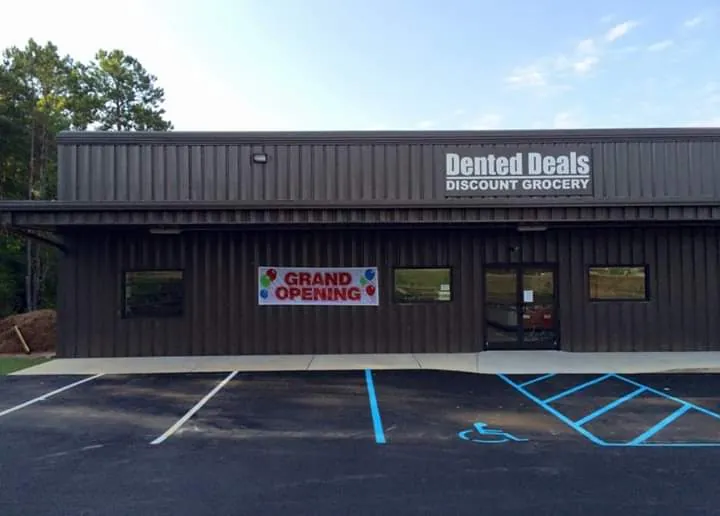
One more thing about parking lots at these stores, they're often a mess. Busy, a little chaotic, sometimes in strip malls that have seen better days. Don't let that put you off. In practice, the parking lot is not the product.
If you're searching for where to find discounted groceries in your area, the directory has 3,183 listings to work from. Houston, Brooklyn, Philadelphia, and Los Angeles have the densest concentrations, but most mid-size cities have at least a handful of options. Searching "discount food store near me" or "bent-n-dent stores" along with your city will usually surface results the same way looking up the directory does. Just go check one out in person before you judge it, the inside almost always surprises people who expected something grim.
Bulging cans. Cracked jar seals. Any meat or dairy without clear temperature control. Baby formula past its use-by date. These aren't worth the risk. Everything else on the shelf is almost certainly fine.
The Bottom Line on Salvage Grocery Shopping
A 50 percent reduction in your grocery bill is not a fantasy number cooked up to get clicks. It's achievable, and the cost structure of these stores explains exactly why. Lower acquisition costs, minimal overhead, zero marketing spend, and a steady supply of perfectly good food that fell out of the normal distribution system. That math produces real savings.
Salvage Saviors in Katy has 718 five-star reviews. Re_ Grocery in Los Angeles has 191. Typically, the average across 3,183 businesses is 4.3 stars. None of that happens if people are getting sick or feeling ripped off. These stores work.
Start with one visit. Go in with a category list, not a brand list. Check the dates, avoid the obvious red flags, and buy what looks good. You'll figure out the rest after that first trip.
Honestly, once you've paid sixty cents for that can of soup you saw for $2.79 at the regular store, going back to paying full price feels pretty strange.
FAQ: Are salvage grocery stores safe to shop at?
Yes. Products at salvage and scratch and dent grocery stores meet the same food safety standards as conventional stores. As a rule, the merchandise is either cosmetically damaged, approaching (but not past) its sell-by date, or discontinued. Sell-by dates are quality indicators, not safety deadlines. Avoid bulging cans, broken seals, and any product where the packaging integrity is compromised, that advice applies at any store, not just these.
FAQ: How much can I realistically save at a discount grocery store?
Savings vary by product category and inventory available on any given day. Canned goods typically run 40 to 60 percent below regular retail. Dry staples are 30 to 50 percent off. Snack foods and beverages can hit 60 to 70 percent off when closeout merchandise is available. Shoppers who visit regularly and stay flexible with brands consistently achieve 40 to 60 percent savings on their overall grocery spend.
FAQ: How do I find a salvage grocery store near me?
There are 3,183 salvage and discount grocery businesses listed in the directory. Houston, Brooklyn, Philadelphia, and Los Angeles have the highest concentrations. Searching the directory by city or zip code is the fastest way to find options near you. Searching terms like "bent-n-dent stores," "scratch and dent grocery," or "discount food store" along with your city name will also return results.
FAQ: What products should I look for at salvage grocery stores?
Non-perishables offer the best and most consistent savings. Focus on canned goods, dry pantry staples, snack foods, household products, and beverages. Frozen items and refrigerated products can also be good deals but are less consistently available. Avoid being brand-loyal, the best savings come from buying whatever category you need at the best price available that day.
FAQ: Why are prices so much lower at these stores?
Three main reasons: acquisition cost is far lower because merchandise was bought as overstock, closeout, or cosmetically damaged inventory; overhead is minimal with no elaborate store infrastructure; and there is essentially no marketing budget. All of those cost reductions flow directly to shelf prices. A conventional grocery chain cannot match these prices because they pay full wholesale, have supplier pricing agreements, and carry significantly higher operating costs.
Find a Salvage or Discount Grocery Store Near You
Browse our directory of 3,183+ salvage grocery, bent-n-dent, and discount food store businesses across the country. Check ratings, read reviews, and find the best options in your area.