Dented Cans Are Fine. Here's What to Actually Watch For.
Picture this: someone walks into a salvage grocery store, spots a box of cereal with a crushed corner, and puts it back on the shelf. They spend the next ten minutes second-guessing every item they touch, eventually leaving with almost nothing. Meanwhile, the person next to them loads up a cart full of perfectly good food at a fraction of the regular price. Same store, same products. Very different results. The difference comes down to knowing what damage actually matters and what does not.

Salvage grocery stores stock food that has been discontinued, overproduced, cosmetically damaged, or closeout from other retailers. Most of it is completely fine to eat. But "most" is doing some work in that sentence, so it pays to do a quick check before you buy.
What "Cosmetic Damage" Actually Means
Cosmetic damage is the kind that affects how a product looks, not how it performs. A dented can with no puncture, a torn label, a slightly crushed box where the inner bag is still sealed tight. These are the standard at salvage grocery stores, and none of them affect the food inside.
Honestly, a lot of this stuff looks worse than it is. A can that got bumped in shipping might look rough on the outside while the seam and lid are perfectly intact. Run your fingers around the rim and check the side seams. If there's no puncture, no deep crease along a seam, and no bulging at the top or bottom, it's almost certainly fine.
Bulging is worth stopping on for a second. A bulging can is not cosmetic. It can indicate bacterial activity inside the can, and that's a product you want to leave on the shelf. Same goes for any can that hisses or spurts when opened at home. Those are rare, but they do happen, and the visual check before you buy takes about three seconds.
For boxed or packaged goods, squeeze gently and check that the inner seal hasn't been broken. A box of pasta or crackers with a torn outer box is totally fine if the inner bag is closed. But if the inner bag has a tear or the product is exposed to air, skip it.
Checking Dates: What the Labels Are Actually Telling You
Date labels at salvage grocery stores deserve more attention than they get, partly because there's a lot of confusion about what they mean.
"Best by" and "sell by" dates are not expiration dates. They're quality benchmarks set by manufacturers. A bag of rice or a jar of peanut butter that's three months past its "best by" date is still safe to eat. It might taste slightly less fresh, but it won't hurt you. The USDA has been consistent on this point for years.
That said, some categories need more caution. Dairy, deli meats, fresh juice, and eggs are the ones where dates actually matter. Baby formula is another. If you're buying any of these at a salvage grocery store, check the date carefully and make sure you're buying something you'll use before it actually turns.
Dry goods, canned goods, shelf-stable snacks, condiments, frozen items. Most of these have much more flexibility than people assume. A can of soup that's a year past its best-by date is still edible; it may just be slightly lower in texture or flavor quality. You're buying it for the value, not the restaurant-quality experience.
One thing that helps: bring your phone. If you're not sure about a product, a quick search for that specific item and date can tell you a lot. Stores in the directory of 3,190+ verified salvage grocery store listings often have staff who can also answer questions about specific items. Don't be shy about asking.
A Walk Through the Store: What to Check in Each Section
Different sections call for different attention.
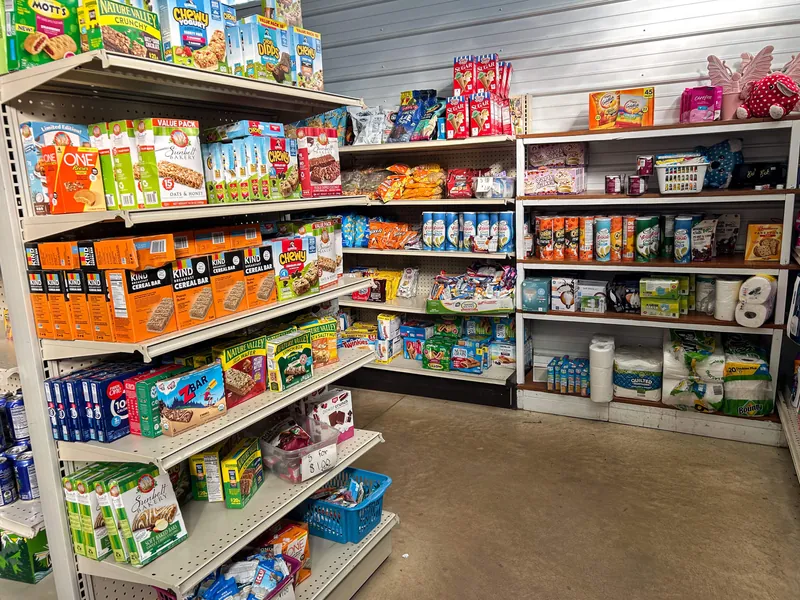
In the canned goods aisle, run the quick check described above: no bulge, no puncture, seams intact. That covers 90% of what you need to worry about. In the dry goods section, look at the packaging rather than the product itself. A bag of flour or a box of oatmeal with a broken seal has probably been exposed to moisture or pests, so skip it.
Frozen items are usually in great shape at these stores. Freezer burn is the main thing to check for, which you can sometimes see through the packaging as grayish or whitish patches on the food. It's not a safety issue, but it will affect taste. If the packaging is torn, though, pass on it entirely.
Condiments and jarred goods need a visual check for seal integrity. Press down on the center of any jar lid. It should not flex. A lid that pops up and down has lost its vacuum seal, which means air got in at some point. That's a pass. And if you notice a jar with a sticky residue around the lid or down the side, it's probably been leaking slowly for a while.
Personal care items, cleaning products, and paper goods show up at salvage stores too. These don't have safety date concerns in the same way, but check for leaks, missing lids, and any damage that would make them unusable before you get home.
Building the Habit Without Slowing Down Your Trip
None of this has to take long. Once you've done it a few times, the inspection becomes automatic. You're really just training your eye to catch a handful of specific things: bulging, broken seals, torn inner packaging, and dates on the higher-risk categories.
Grab, glance, decide. That's the rhythm. Most items will pass in about two seconds.
A useful habit is to do a second quick check when you unload your cart at checkout. You've handled everything once already, so anything that didn't quite feel right will get a second look. It's a good catch-all for the things you might have missed while moving quickly through the store.
Salvage grocery stores reward people who pay attention. Ratings across these stores average 4.3 stars, which tells you people are generally having good experiences. Part of that comes from the prices, but part of it comes from shoppers knowing what to look for and feeling confident about what they're bringing home.
Confidence comes from doing the check. Every time.
Frequently Asked Questions
Is it safe to buy dented cans at a salvage grocery store?
Yes, with conditions. A small dent on the body of a can with no puncture or seam damage is fine. Avoid cans