How to Evaluate Scratch and Dent Grocery Finds for Quality
You're standing in the aisle of a discount food store, holding a can of name-brand soup with a dent the size of a quarter on the side. It's 60% off. You want to buy it, but something makes you hesitate. That hesitation is exactly what this guide is here to fix.
Scratch and dent grocery stores, also known as bent-n-dent stores, food salvage stores, and discount grocery outlets, have grown into a legitimate retail category that millions of shoppers now count on. With grocery inflation running well above historical averages over the past few years, more people are asking where to find discounted groceries, and these stores keep coming up as the answer. But the skill that actually determines whether you walk out with great deals or wasted money is knowing how to evaluate what you're looking at. A dented can is not automatically bad. A "past date" label is not automatically dangerous. And not all salvage finds are equal.
Across 3,183 salvage and discount grocery businesses listed in our directory, the average customer rating sits at 4.3 stars. That number matters. It tells you that shoppers, most of whom started out with the same uncertainty you might feel right now, are consistently walking away satisfied. This guide gives you the knowledge to join them.
What Is a Scratch and Dent Grocery Store and How Do Products End Up There?
Most people assume salvage grocery inventory is somehow lower quality by nature. The data tells a different story. Products end up at a damaged goods grocery store through several entirely ordinary supply chain events, most of which have nothing to do with the food inside.
Here are the main reasons products land on salvage shelves:
- Overstock from major retailers: A big-box store ordered too much of a seasonal item. Rather than sit on it, they sell the excess to a discount food store. The product is untouched.
- Discontinued product lines: A manufacturer reformulates a product or changes packaging. In practice, the old version gets cleared out through salvage channels. Same recipe, different box.
- Damaged shipping boxes: A pallet gets dropped in a warehouse. Typically, the outer cardboard tears. Some cans get dented. Many items are completely unaffected, but the whole lot gets flagged and sold at a discount.
- Seasonal items past their retail window: Christmas cookies in January. Halloween candy in November. These are perfectly fine products that traditional supermarkets no longer want to stock.
- Misprinted or outdated labels: Regulatory label updates sometimes make perfectly good products unsellable at normal retail. Salvage stores take them instead.
As a rule, the key distinction is cosmetic damage versus actual product compromise. A dented can with no sharp creases, no swelling, and no foul smell when opened is almost certainly fine. Torn outer packaging on a box of pasta does not affect the pasta. Faded printing on a label does not affect the contents. These stores often carry the exact same brands you'd find at a traditional supermarket, sourced from the same manufacturers, just further down the supply chain.
Before your first visit to a bent-n-dent store, mentally separate "the package" from "the product." Your evaluation job is to check the actual food, not judge the box it came in. Most of what you see on salvage shelves is cosmetically imperfect and completely edible.
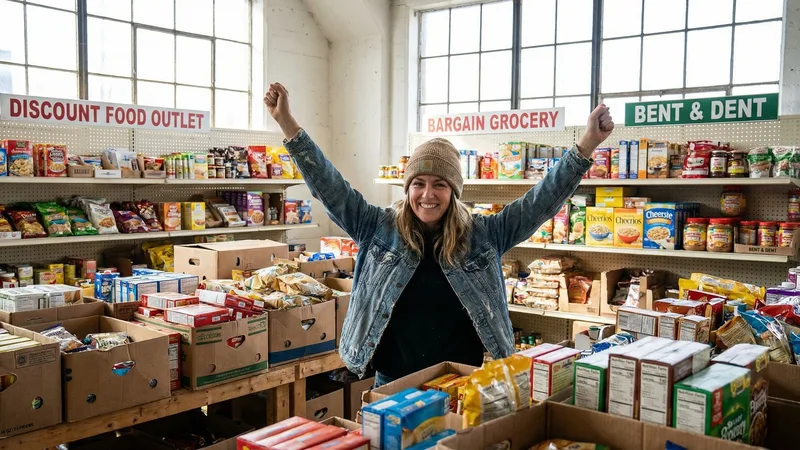
The Salvage Grocery Industry by the Numbers
3,183 businesses. That is not a niche. That is a nationwide retail category with real infrastructure and real customer loyalty.
Contrary to popular belief, scratch and dent grocery shopping is not just a rural phenomenon or a last resort for people with no other options. Some of the highest concentrations of discount grocery stores are in major metros. Houston leads with 83 listings, followed by Brooklyn with 61, Philadelphia with 46, and Los Angeles with 41. These are dense, competitive urban markets where shoppers have plenty of alternatives and still choose salvage grocery outlets regularly.
For most shoppers, the ratings data backs that up. Salvage Saviors in Katy, Texas holds a 5.0-star rating across 718 reviews. That volume of reviews at a perfect score is genuinely rare in any retail category. Re_ Grocery appears twice in the top-rated list, once in Studio City, California with 224 reviews at 5.0 stars, and again in Los Angeles with 191 reviews at the same score. Stores like these are not getting away with selling questionable products. They're earning repeat customers through consistently good inventory and smart quality control.
And here's the part most new shoppers miss: a 4.3-star average across thousands of listings is higher than most traditional grocery chains average on Google or Yelp. Worth thinking about.
What the numbers suggest is that quality concerns at a discount food store, when you know what to look for, are manageable and rarely the barrier people assume. Most stores themselves have strong incentive to maintain reasonable standards because their customer base is knowledgeable and vocal. A place with a 2.0-star rating and complaints about expired product will tell you something. A place with 400 reviews averaging 4.8 stars will tell you something much better.
Search the directory for salvage grocery stores near you and filter by rating before you visit. Stores with 100+ reviews and 4.0 stars or above are significantly more likely to maintain organized inventory and rotate stock responsibly. Don't just pick the closest one.
How to Read Expiration Dates, Best-By Labels, and Use-By Dates on Salvage Products
This is probably the most misunderstood part of grocery shopping in general, and it matters even more at a scratch and dent grocery store where a lot of the inventory is close to or past printed dates.
There are three main types of date labels you'll encounter, and they do not all mean the same thing:
- Best-By / Best-If-Used-By: This is a quality recommendation from the manufacturer, not a safety deadline. Canned goods, dry pasta, crackers, cereal, and most shelf-stable items are typically safe and palatable well past this date. You might notice a slight drop in flavor intensity or texture after a long time, but the product is not spoiled.
- Use-By: A stricter indicator, mostly found on perishables like dairy, deli meats, and refrigerated items. Treat these dates with more caution. At room temperature or in a compromised cooler, products past a use-by date carry higher risk. At most salvage stores, you won't see many refrigerated items past their use-by dates, but check carefully when you do.
- Sell-By: This is a date for the retailer, not the consumer. It tells the store when to pull the item from shelves. Products are often perfectly usable for days or weeks beyond a sell-by date. Eggs are a common example where sell-by dates confuse shoppers unnecessarily.
Okay, small tangent but it is relevant: the USDA has actually moved toward standardizing date labels to reduce food waste, partly because consumers throw out billions of dollars of perfectly good food every year due to date confusion. Salvage grocery shopping, in a weird way, is the practical application of that exact principle.
At a discount food store, a good rule of thumb is: the more shelf-stable the product, the less the date matters. Canned tomatoes two months past best-by? Almost certainly fine. Sliced turkey deli meat one day past use-by? Do not risk it. These category of the product matters more than the specific number of days past the printed date.
A Quick Date Evaluation Checklist
- Is this a shelf-stable product (canned, dry, boxed)? Best-by dates can often be ignored by weeks or months.
- Is this a perishable product (dairy, meat, refrigerated)? Check use-by dates carefully and evaluate storage conditions in the store.
- Does the packaging look intact? No cracks, no swelling, no leaks? Date matters less when the seal is good.
- Does the product smell normal when opened? Trust your nose over any printed date.
- Is the store keeping refrigerated items at the right temperature? Check the cooler units before buying anything cold.
Bring your phone. Look up the specific product category and its typical shelf life past best-by dates before you buy something you're unsure about. The FDA and USDA both have free, searchable guidance online. Thirty seconds of research can turn hesitation into a confident purchase.
How to Physically Inspect Products Before You Buy
Reading dates is only part of the evaluation. Physical inspection is where you catch the actual problems, the ones that dates won't tell you about.
Walking into a scratch and dent grocery store for the first time can feel a little chaotic. Shelves are often stocked without the orderly category logic of a traditional supermarket. Items get moved around. Pricing stickers sometimes cover important label information. You have to slow down and actually look at what you're picking up. Most experienced salvage shoppers spend more time per item than they would at a regular store, and that's a reasonable trade for saving 40% to 70% on name brands.
Here is what to check on specific product types:
Canned Goods
- Skip any can with a sharp, deep crease along a seam. Shallow dents on the body of the can are usually cosmetic. Creases on or near the top or bottom seam are a different situation because the seal integrity matters there.
- Do not buy any can that is swollen, bulging, or makes a hissing sound when opened. That indicates gas buildup from bacterial activity.
- Surface rust on the outside is generally not a dealbreaker unless it has pitted through to the metal. Wipe it off and look closely.
- No label does not mean no good. Many salvage stores sell unlabeled cans at steep discounts. Fine for adventurous cooking, not ideal if you need specific ingredients.
Dry and Boxed Goods
- Torn outer box is almost never a problem if the inner packaging (bag, sealed liner) is intact.
- Check pasta, rice, and grains for any signs of moisture exposure: clumping, off-color patches, or a stale musty smell.
- Cereal boxes with crushed corners are fine. Cereal boxes with water damage stains are not worth the gamble.
Bottles and Jars
- Check the lid seal. On metal lids, the center should be slightly concave and not flex when pressed. If it pops up and down like a button, the vacuum seal is broken.
- Look for any dried residue around the lid, which can indicate a past leak or compromised seal.
- Scratched labels on glass bottles mean nothing about the product inside.
Frozen and Refrigerated Items
This category needs the most care at any groceries-on-a-budget store. Freezer burn on frozen items is not a safety issue but does affect quality significantly, those white crystalline patches on frozen meat or vegetables mean the product dried out during freezing. Safe to eat, not pleasant. More importantly, check for any sign that frozen items were thawed and refrozen, which shows up as ice crystals in odd patterns or frozen liquid pooled at the bottom of the package.
Refrigerated items at a discount food store should be stored at 40°F or below. If the cooler feels warm or the products feel room temperature, skip the whole cooler section. This is the one area where a bad discount store can actually cost you in ways beyond money.
Make a physical checklist on your phone before you shop: seams, swelling, seals, smell, storage temperature. Run through it on every item you're considering. It takes maybe five seconds per product once you've done it a few times, and it eliminates almost all the actual risk in salvage grocery shopping.
Building a Smart Shopping Strategy for Discount Grocery Stores
Knowing how to evaluate individual products is the foundation. Building a shopping strategy on top of that is what turns occasional discount finds into real, consistent savings.
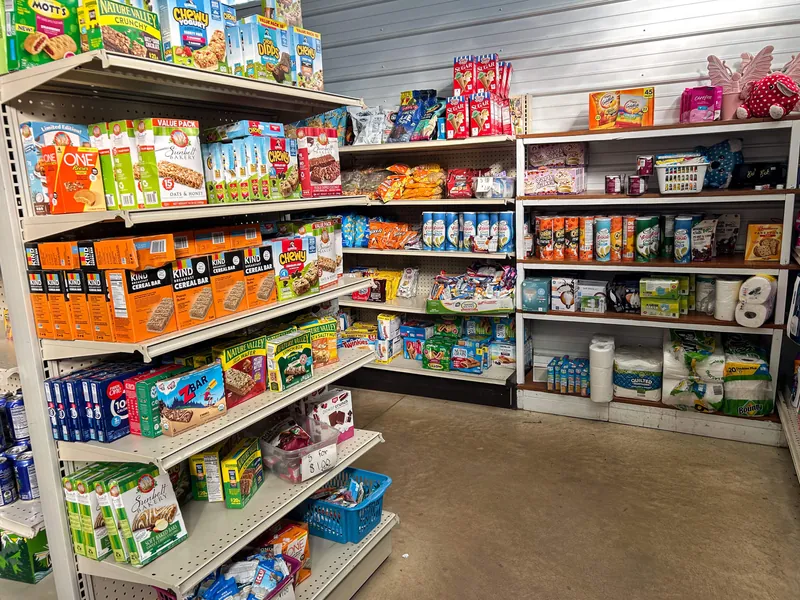
First: stock up on shelf-stable items you know you'll use. Canned beans, tomatoes, broths, pasta, rice, cooking oils, condiments. These are the products where salvage grocery stores offer the biggest savings with the least risk. A dented can of chickpeas at 70% off retail is one of the genuinely great deals in modern grocery shopping. Buy six.
Second: go frequently, not infrequently. Salvage store inventory is not predictable. Unlike a traditional supermarket where you know exactly what will be there next Tuesday, a bent-n-dent store gets different product lots on an irregular schedule. Shoppers who visit once a month miss a lot. Shoppers who stop in once or twice a week find the good stuff before it's gone. It is a bit like thrift store shopping in that way, timing matters.
Third: get comfortable asking store staff about incoming inventory. Most small scratch and dent grocery operations are independently owned, and the staff genuinely know when new lots are arriving. A quick "when do you get new stock?" gets you useful information that no app or website will provide.
Fourth: do not buy something you won't use just because it's cheap. This sounds obvious, but a $1.50 jar of an unfamiliar sauce that sits in your pantry for two years is not a win. Buy discounted versions of things already on your shopping list, and add new items only when they're cheap enough to be worth the experiment.
One more thing worth saying plainly: if a store smells bad, leave. Not the products, the store itself. A well-run discount grocery outlet should smell like any other food store. A persistent sour or rotten odor means they are not managing their inventory well, and that affects everything on the shelves, not just the obvious items.
Salvage Shopping Frequency Guide
- Once a week or more: Ideal for experienced shoppers near a high-volume store. You catch the best lots early.
- Every 2 weeks: Works well for most shoppers. You'll miss some finds but still build good savings over time.
- Once a month: Better than nothing but you're leaving savings on the table. Increase frequency if the store is convenient.
Start a simple notes file on your phone for each salvage store you visit regularly. Track what you found, what the prices were, and roughly when new stock arrived. After 4 to 6 visits you'll have a pattern that makes every future trip more efficient.
Frequently Asked Questions About Scratch and Dent Grocery Shopping
Are dented cans actually safe to eat?
Mostly yes, with a specific exception. Shallow dents on the body of the can are cosmetic and do not affect the food inside. Dents along the seams at the top or bottom of the can are more concerning because those seams are what maintain the airtight seal. Sharp creases anywhere, swelling, or a bulging lid are red flags regardless of location. If the can looks structurally sound and shows no signs of gas buildup, the food is almost certainly fine.
How much can I actually save shopping at a discount food store?
Savings vary by product category and store, but 30% to 70% off retail prices is a realistic range for shelf-stable items at a well-stocked salvage grocery store. Seasonal items and discontinued product lines sometimes go even deeper than that. Shoppers who build a consistent salvage shopping habit alongside regular grocery runs commonly report reducing their total grocery spending by 20% to 35% over time.
How do I find a good scratch and dent grocery store near me?
Our directory lists 3,183 salvage and discount grocery businesses across the country. You can search by city and filter by rating. For reference, top cities by listing volume include Houston (83 listings), Brooklyn (61 listings), Philadelphia (46 listings), and Los Angeles (41 listings). Start with stores that have a strong review volume and high average rating; that combination is a reliable indicator of quality inventory management.
What products should I avoid at salvage grocery stores?
Be cautious with any refrigerated or frozen items at stores where you can't verify the storage temperature is correct. Avoid canned goods with seam damage, swelling, or rust that has pitted through the metal. Skip anything with visible mold, a sour smell, or a broken seal on the lid. Baby formula and infant food are categories where most experienced salvage shoppers prefer to stick to traditional retail, given the stricter safety margin required for that age group.
Is there a difference between a best-by date and a use-by date?
Yes, and it matters. A best-by date is a quality recommendation; the product is likely fine to eat past that date, just potentially not at peak flavor or texture. A use-by date is a stricter indicator used mostly on perishables, and those dates deserve more respect, especially on dairy and meat products. Sell-by dates are instructions for retailers, not consumers, and are generally the least meaningful date label for your own safety evaluation.