Online Discount Food Stores vs. Local Salvage Grocery Stores: Which One Actually Saves You More?
You're Trying to Stretch Your Grocery Budget and Getting Nowhere Fast
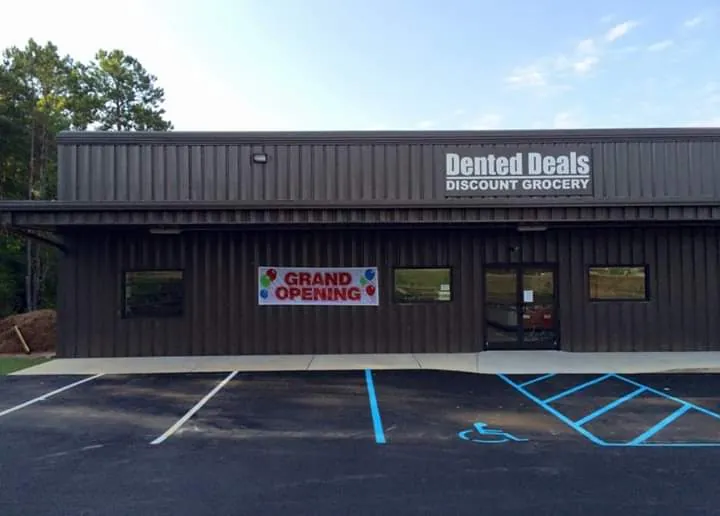
Food prices have been brutal lately. You've probably stood in a regular supermarket aisle, looked at a can of soup or a box of pasta, and thought: there has to be a cheaper way to do this. So you start poking around online, maybe searching "discounted grocery store near me" or "where to find discounted groceries," and suddenly you're looking at two very different worlds: online discount food stores that ship directly to your door, and local bent-n-dent stores tucked into strip malls or warehouse spaces that you might have driven past a hundred times without knowing what they were.
Both options promise big savings. Both carry real, perfectly edible food at a fraction of retail price. But they work completely differently, they're not right for everyone in the same situations, and picking the wrong one for your lifestyle could mean paying more in shipping than you saved on groceries, or driving across town to find a store that's out of what you need. This guide breaks down exactly what each option offers, where each one wins, and how to figure out which approach fits your actual life.
What These Stores Actually Are (Because the Names Get Confusing)
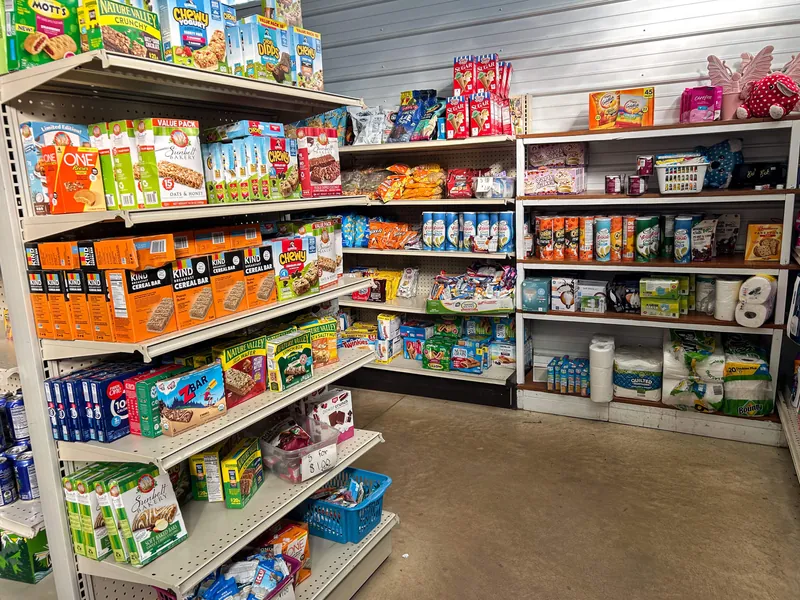
First, a quick primer, because the terminology around discount grocery shopping is a genuine mess. "Bent-n-dent stores," "scratch and dent grocery," "salvage grocery stores," "damaged goods grocery," "grocery outlet", these all refer to essentially the same category of shop: a retailer that buys food products that can't go through normal retail channels and sells them at steep discounts. That might mean dented cans, discontinued brand lines, overstock from manufacturers, packaging that got slightly crushed in transit, or products that are approaching (but haven't reached) their best-by date.
The products are not expired. They are not unsafe. They are just imperfect by some standard that a regular grocery chain won't tolerate.
Online discount food stores work on the same basic sourcing model, except they operate e-commerce platforms, ship nationwide, and often run subscription or club membership programs to make bulk buying easier. Some specialize in specific categories like organic pantry goods or specialty snacks. Others are basically liquidation platforms that list whatever they've acquired that week.
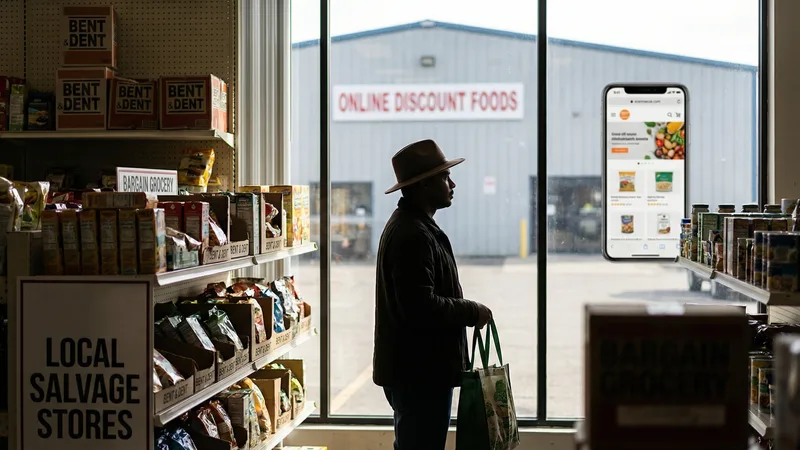
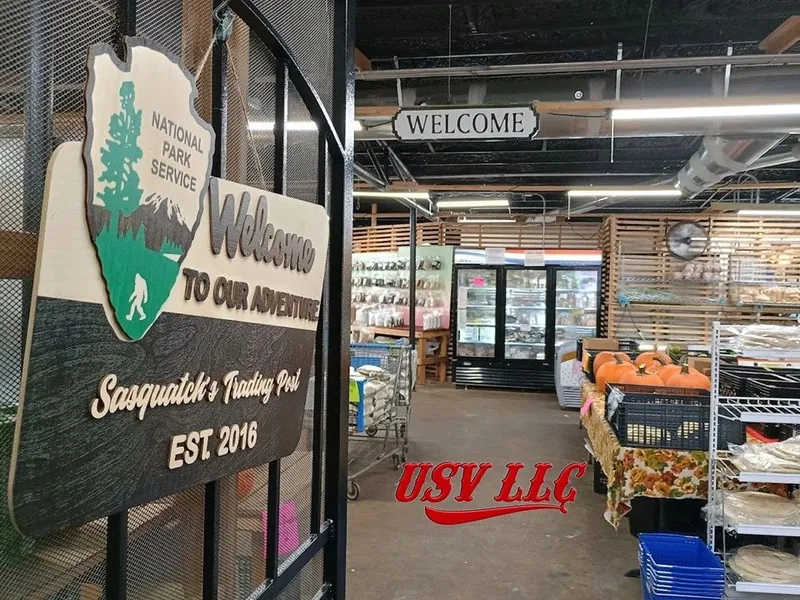
Local salvage grocery stores are brick-and-mortar shops, often independently owned, sometimes operating out of no-frills warehouse spaces that smell faintly of cardboard and floor cleaner (which, honestly, is kind of reassuring, it means they're moving product fast). You walk in, you look at what's on the shelf, you check the date yourself, and you take it home that day. No waiting, no shipping fees, no guessing about condition from a product photo.
If you're searching online for local options, try multiple terms. "Bent-n-dent store near me," "scratch and dent grocery," "food salvage store," and "discount food store" often surface different results in maps and directories. One term might not find a store that another will. Cast a wide net.
The Real Numbers: What Our Directory Shows About Local Options
Our salvage grocery stores directory currently lists 3,183 businesses across the country, and they're holding an average customer rating of 4.3 stars. That's genuinely impressive for any retail category, let alone one that deals in imperfect products. It tells you something important: people who shop at these places are not disappointed. They come in skeptical and leave as regulars.
Houston leads the directory with 83 listings, which makes sense given the city's size and its culture of practical, value-forward shopping. Brooklyn comes in at 61 listings, Philadelphia at 46, and Los Angeles at 41. If you live in or near any of these cities, you have real options. Multiple options, even.
But here's something worth paying attention to: those cities are all major metro areas. If you're in a smaller city or a rural area, your local choices get thinner fast. That's exactly where online discount food stores start to make more sense, not as a second-best option, but as the genuinely practical one.
Some of the top-rated stores in the directory are worth calling out specifically. Salvage Saviors in Katy, Texas holds a 5.0-star rating across 718 reviews, 718 reviews! That's not a fluke or a few loyal customers padding the numbers. That's consistent, genuine satisfaction from a lot of different shoppers over time. Re_ Grocery appears twice in the top ratings, with locations in both Studio City (5.0 stars, 224 reviews) and Los Angeles (5.0 stars, 191 reviews), which is a strong signal that their model works and their product quality is reliable.
Any local discount grocery store with over 200 reviews and a 4.5+ rating is almost certainly worth visiting. At that review volume, the rating reflects real patterns, not outliers. Use our directory to filter by city and sort by rating before you plan your first trip.
Side-by-Side: Online vs. Local Discount Grocery Stores
Okay, let's get into the actual comparison. This is where most people want to land quickly, and the answer is genuinely not one-size-fits-all.
| Criteria | Online Discount Food Stores | Local Salvage Grocery Stores |
|---|---|---|
| Price Savings | ★★★★☆ (15–50% off retail) | ★★★★★ (20–70% off retail) |
| Product Variety | ★★★★★ Wide, national selection | ★★★☆☆ Changes week to week |
| Convenience | ★★★★★ Shop anytime, ship to door | ★★★☆☆ Store hours and location dependent |
| Product Inspection | ★★☆☆☆ Photos only | ★★★★★ Full in-person check |
| Same-Day Availability | ★☆☆☆☆ Shipping takes days | ★★★★★ Take it home now |
| Shipping Costs | ★★☆☆☆ Can eat into savings | ★★★★★ No shipping fees |
| Access in Rural Areas | ★★★★★ Ships anywhere | ★★☆☆☆ Limited in small markets |
| Perishables / Refrigerated Items | ★★☆☆☆ Limited, cold chain risk | ★★★★☆ Often available in-store |
Local salvage grocery stores win on raw savings, product inspection, and same-day access. Online platforms win on convenience, product variety, and reaching shoppers who do not have a good local option. The tie-breaker for most people is shipping costs: a 40% discount on a $20 box of pasta means nothing if you paid $15 to ship it.
Local wins on price in most real-world scenarios. I would pick a local bent-n-dent store over an online option almost every time, assuming a decent one is within reasonable driving distance.
Pros and Cons: Online Discount Food Stores
- Pro: Shop at midnight in your pajamas, which is genuinely useful if you're busy
- Pro: Access to niche or specialty brands you won't find locally
- Pro: Good for stocking up on non-perishables in bulk
- Pro: Available no matter where you live
- Con: Shipping costs reduce or eliminate savings on smaller orders
- Con: You cannot check dates, smell products, or inspect packaging yourself
- Con: Returns for food products are complicated and often not worth pursuing
- Con: Inventory is unpredictable and items sell out before you can reorder
Pros and Cons: Local Salvage Grocery Stores and Grocery Outlets
- Pro: Deepest discounts, often 50–70% off retail on individual items
- Pro: You see, touch, and smell what you're buying before it goes in your cart
- Pro: No shipping fees, ever
- Pro: Perishables, dairy, and refrigerated items sometimes available
- Pro: Local owners who know their stock and can point you toward deals
- Con: Inventory changes constantly, often week to week or even day to day
- Con: Not available in all areas (smaller cities and rural spots have fewer options)
- Con: Store hours can be limited, and some are only open a few days a week
- Con: You have to actually go there, which costs time and gas
Before placing an online order with a discount food store, add up your subtotal, then add shipping. Divide the shipping cost across the number of items. If the per-item shipping adds more than a few dollars to each product, you may be better off at a local store. A $50 minimum for free shipping is common online, so plan orders accordingly or skip it.
Who Should Shop Where: A Practical Decision Guide
Stop overthinking it. Here's a simple framework.
Go local first if: You live in or near a city with real options (Houston, Brooklyn, Philadelphia, Los Angeles, and hundreds of others have strong directory coverage), you want perishables or refrigerated items, you need groceries on a budget this week and can't wait for shipping, or you want to inspect products before buying.
Try online if: You're in a rural area with no decent local store, you're stocking a pantry with non-perishables and can hit a free-shipping minimum easily, you want access to specialty or organic discount options that local stores don't carry, or you genuinely cannot get to a store during normal hours and online is the only workable option.
A lot of savvy shoppers actually do both. They use a local scratch and dent grocery store for weekly staples, canned goods, dry pasta, snacks, condiments, and occasionally order from an online discount food platform when they spot a bulk deal on something specific they use a lot. That combination approach gets you the best of both worlds without the downsides of relying on either one exclusively.
Your Pre-Trip Checklist for Local Discount Grocery Stores
- Check the store's hours before you drive over, many bent-n-dent stores keep unusual hours or are closed midweek
- Bring a cooler if you're hoping to grab perishables or refrigerated items
- Look up dates yourself on every item; do not assume someone else checked
- Bring cash, some smaller stores do not accept cards or charge a fee
- Check for a weekly stock update on the store's social media (many post what came in)
- Inspect cans for deep dents near seams, surface dents are fine, seam damage is not
- Do not skip the cereal and snack aisle; those are often the deepest discount items in the store
Your Pre-Order Checklist for Online Discount Food Stores
- Read the actual product description, not just the title, condition details matter
- Check the best-by date listed, and be realistic about whether you'll use it in time
- Calculate total cost including shipping before you commit
- Look for minimum order thresholds that unlock free shipping
- Check return and refund policies before ordering anything perishable
- Read recent reviews specifically about condition on arrival, not just product quality
What the Top-Rated Stores Tell Us
Looking at the highest-rated listings in our directory offers some useful signals about what makes a damaged goods grocery store worth visiting regularly.
Salvage Saviors in Katy, Texas (5.0 stars, 718 reviews) is operating at a scale and consistency that most retail businesses would envy. Nearly 720 people took time to write a review, which means this store has regular, loyal customers who feel strongly enough to say something. That kind of rating at that review volume usually means predictable stock quality, fair pricing, and staff who are actually helpful.
Re_ Grocery in Studio City and Los Angeles (5.0 stars at both locations) shows that a well-run discount food store can maintain standards across multiple locations, which is harder than it sounds given how unpredictable salvage sourcing can be. Worth noting that "Re_" branding suggests they're positioning around sustainability and food waste reduction, not just price. Some shoppers respond really well to that angle.
And yeah, House of Milner Jewelers and Hegwood's Towing also appear in the top five rated listings, both at 5.0 stars. They're obviously not grocery stores. That's just the way directory data works when you're pulling top-rated businesses by category and geography from a large, mixed database. In practice, the grocery-specific ratings are what matter here, and those are genuinely strong.
Use our directory to find salvage grocery stores in your city, then sort by rating and look specifically for stores with 100+ reviews. High review count plus high rating is the combination that indicates consistent quality, not just one good week.
Frequently Asked Questions
Is food from salvage grocery stores actually safe to eat?
Yes, in almost all cases. Products sold at bent-n-dent stores and food salvage stores are not expired, they're usually approaching their best-by date, which is a manufacturer's quality suggestion, not a safety cutoff. Canned goods with surface dents are fine. Deep dents near can seams are worth skipping. Use your own judgment on anything that looks questionable, the same way you would at any store.
How much can I actually save shopping at a local scratch and dent grocery store?
Realistically, 30–60% off retail on most items, and sometimes more on things like cereals, snacks, and brand-name pantry goods. A family doing a full weekly shop at a good local store can save $40–$100 compared to regular supermarket prices, depending on what they buy. Typically, the savings add up fast if you go regularly.
What's the difference between a grocery outlet and a salvage grocery store?
They overlap heavily. A grocery outlet often refers to a chain or franchise model (like the Grocery Outlet chain in the western US), while salvage grocery stores are typically independent operations sourcing directly from liquidators,