What to Look for at Damaged Goods Grocery Outlets (And What to Leave on the Shelf)
Have you ever walked past a salvage grocery store and wondered if it was actually worth stepping inside?
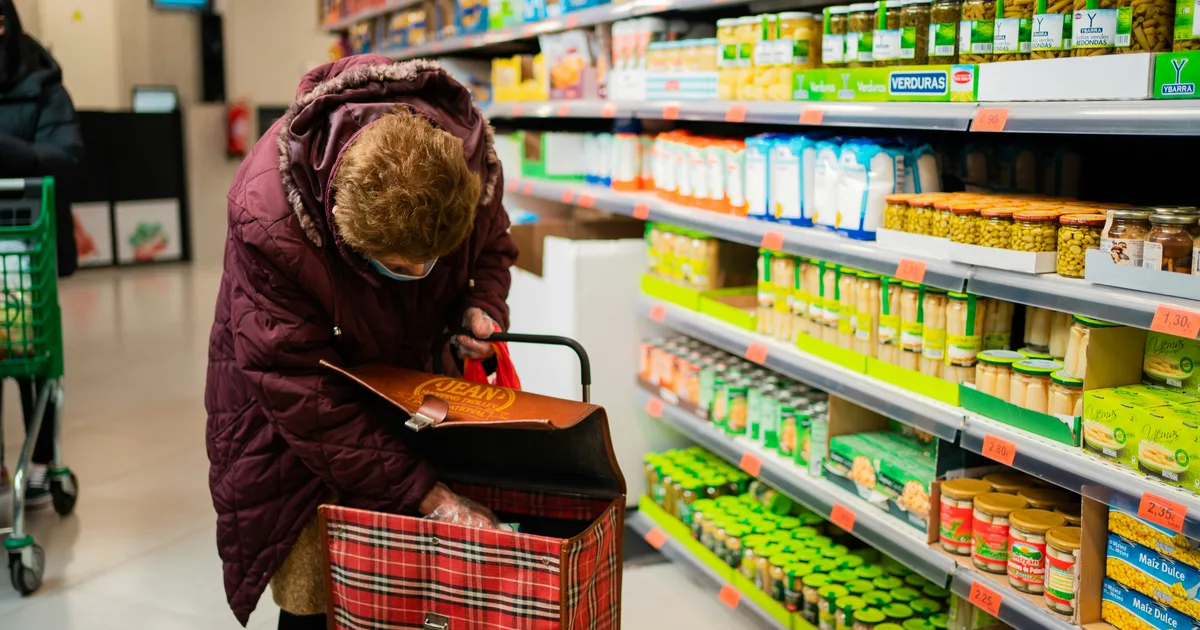
Most people keep walking. They picture dusty shelves, expired food, and mystery products with no labels. But that mental picture is pretty far from reality, and missing out on these stores means leaving real money on the table. With over 3,183 salvage and discount grocery businesses listed nationwide and an average customer rating of 4.3 stars out of 5, this category is not some fringe shopping experiment. It's a well-established, consistently rated part of how millions of households stretch their food budgets every week.
This guide is for budget-conscious shoppers, bulk buyers, and anyone who has ever typed "where to find discounted groceries" into a search bar and come up empty on practical answers. We're going to cover what "damaged" actually means, which products are safe bets, what red flags to walk away from, and how to shop these places with confidence. No vague advice. Actual criteria you can use in the aisle.
Myth #1: "Damaged" Means the Food Inside Is Bad
This is the big one. The word "damaged" sounds alarming, but in the context of a bent-n-dent store, it almost always refers to the packaging, not the product. A can with a shallow dent on its side wall is structurally fine. A box of pasta with a torn corner label but a sealed inner bag is completely intact. Cereal with a misprinted package is the same cereal.
Think about what actually happens in a grocery supply chain. Products get loaded, shipped, unloaded, stacked, and moved again. A little cosmetic wear is almost inevitable. Retailers pull these items from regular shelves because they don't look perfect, not because anything is wrong with them. Salvage grocery stores exist specifically to take that surplus and sell it to people who care more about what's inside than what the box looks like.
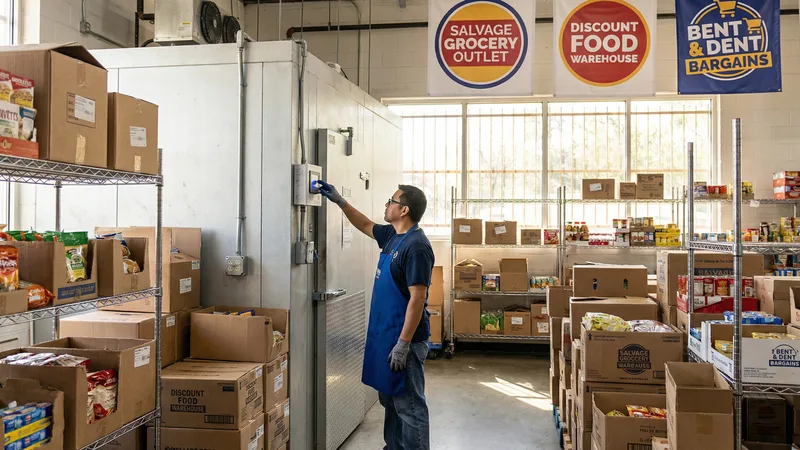
That said, there is a real line between cosmetic damage and safety risk. You need to know where it is.
For canned goods, the rule is pretty simple. Minor dents on the body of the can, away from the seams and the lid, are acceptable. Those dents do not compromise the seal. What you absolutely do not want is a can that is bulging, swollen, or deeply dented at a seam or lid edge. Those are red flags for potential bacterial contamination, including the kind you cannot see or smell. Deep seam dents can create tiny fractures in the metal that let air in and bacteria grow. Put it back. No price makes that worth it.
Run your thumb along both ends of the can and down the side seams. If anything feels raised, soft, or buckled at those points, leave it. A perfectly round, firm can with a small dent on the flat side wall is fine to buy.
For boxed and bagged items, open the outer box or look for a way to feel whether the inner seal is intact. A bag of rice inside a torn outer box is totally fine if the inner bag hasn't been opened or punctured. A bag of flour with a broken inner seal is not, because moisture and air have already gotten in. Check the seal. That's the whole job.
Myth #2: Shopping at a Scratch and Dent Grocery Is a Last Resort for People Who Can't Afford Better
Honestly, this myth bothers me more than the food safety one. These stores carry name-brand products you would recognize from any supermarket. Organic brands, specialty imports, premium snacks, name-brand condiments. The difference is that something went slightly sideways in the distribution chain, overstock, a discontinued SKU, a shipment with packaging that didn't meet retailer standards, and now it's here for a fraction of the original price.
Salvage Saviors in Katy, Texas has a 5.0-star rating across 718 reviews. Re_ Grocery in both Studio City and Los Angeles each hold a perfect 5.0 as well, with 224 and 191 reviews respectively. These aren't places where people are settling. They're places people are genuinely happy to shop.
Houston leads the country with 83 discount grocery store listings. Brooklyn follows with 61, Philadelphia with 46, and Los Angeles with 41. High store counts in major cities mean real competition, and competition means these places have to earn your business. They stock better products, price things more aggressively, and keep their stores cleaner because there's another discount food store a few miles away. Good for shoppers.
You'll often find things at these stores that you can't find at a regular grocery. Discontinued flavors. Regional products that were being tested in new markets. International items from overstock lots. Walking into a well-stocked bent-n-dent store is a little like a scavenger hunt, you don't always know what will be there, but the finds can be genuinely exciting.
Bring a small notepad or use your phone's notes app to track which items are good deals compared to your regular store. After a few visits you'll know what's worth grabbing in bulk and what's only marginally cheaper.
Myth #3: If the Best-By Date Has Passed, It's Expired and Unsafe
Best-by dates and expiration dates are not the same thing. This is probably the most practically important thing in this entire guide.
Best-by, sell-by, and use-by dates on shelf-stable products are quality indicators. They tell you when the manufacturer thinks the product will taste best, not when it becomes dangerous. A can of chicken broth that's two months past its best-by date is still safe to eat. Pasta, rice, canned vegetables, cereals, crackers, dried beans, these products can remain safe for months or even years past their printed dates when stored properly.
The FDA has consistently stated that most shelf-stable foods do not have true expiration dates in the safety sense. What degrades over time is texture, flavor intensity, or color, not food safety.
Now, there are exceptions worth knowing. Baby formula is one of the clearest examples of a product where the date matters for actual nutritional reasons, not just quality. Certain dairy products have real biological limits. Medications and supplements follow their own standards entirely. And refrigerated or fresh items should always be evaluated more carefully regardless of the date printed on them, because cold chain handling matters a lot more than shelf-stable storage does.
At a good discount food store, most of what you'll find either hasn't reached its best-by date yet, or is only recently past it. Short-dated products, things approaching their date but not past it, are common here and represent some of the best deals in the store. Grab them if you plan to use them soon.
Safe to buy with some date flexibility: Canned goods, pasta, rice, cereals, crackers, dried beans, condiments, most packaged snacks, shelf-stable beverages.
Evaluate carefully, buy only if well within date: Dairy, refrigerated items, frozen proteins, eggs.
Do not buy past date: Baby formula, prescription medications, infant foods.
Myth #4: You Can't Find Anything Useful, It's All Random Junk
Fair concern. In practice, the inventory at salvage grocery stores is genuinely unpredictable. But that's different from saying it's useless.
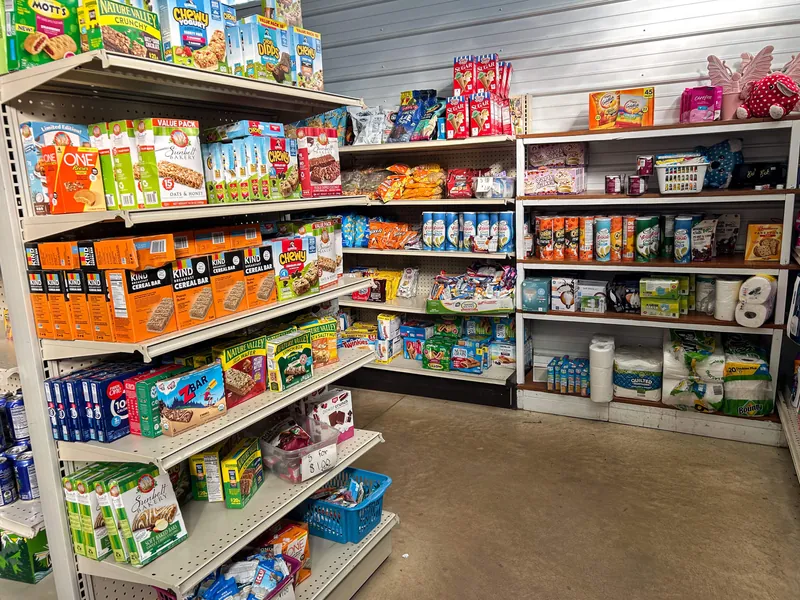
Shelf-stable pantry staples are the backbone of what these stores do well. Canned goods, pasta, rice, dried legumes, cereals, oats, condiments, oils, vinegars, sauces, soups. These categories almost always have solid representation and the savings can be steep. A name-brand pasta sauce that retails for $4.99 at a regular grocery might be $1.50 here because the label is slightly wrinkled or the outer case had some damage in shipping.
Packaged snacks and beverages are another strong category. Chips, cookies, crackers, protein bars, sparkling waters, juices, these show up in excellent condition at these stores all the time. Often they're discontinued flavors or overstock from a seasonal promotion, which means the product is perfectly fine and just needs a home.
Household and cleaning supplies also appear regularly. Dish soap, laundry detergent, paper products, and similar items with minor packaging issues are totally safe to buy and use. There's nothing food-safety-related to worry about with a bottle of dish soap that has a scratched label.
Frozen and refrigerated items deserve a separate conversation, because they require a bit more scrutiny than shelf-stable products. With frozen items, you're looking for signs of thawing and refreezing. Large ice crystals inside the packaging, visible frost buildup on the outside of the bag, or meat that looks dried out and pale on the edges, these suggest the product may have partially thawed at some point. That doesn't automatically make it unsafe, but it does affect quality significantly and can be a food safety issue with certain proteins. If frozen fish looks like it's been through a freeze-thaw cycle, pass. If a bag of frozen vegetables has some frost but everything feels solidly frozen, it's probably fine.
Refrigerated items need to be cold. Really cold, not just slightly cool. If a refrigerated case at a grocery outlet feels warm or the products inside are sweating or have condensation they shouldn't, trust your instincts and skip it.
✓ Canned vegetables, beans, tomatoes, soups
✓ Pasta, rice, dried grains
✓ Cereal, oats, granola
✓ Condiments and sauces (sealed)
✓ Packaged snacks (intact inner seal)
✓ Beverages, bottled, canned, boxed
✓ Cleaning and household supplies
✓ Frozen vegetables (if solidly frozen, no ice crystal buildup)
✗ Skip: bulging or seam-dented cans, broken inner seals, warm refrigerated items, frost-damaged frozen proteins
Myth #5: These Stores Are Hard to Find and Not Worth the Trip
3,183 listings nationwide. That number means something.
If you live in or near a major city, there's almost certainly a discounted grocery store near you that you haven't been to yet. Houston shoppers have 83 options. Brooklyn residents have 61. Philadelphia has 46. Los Angeles has 41. Even mid-sized cities have multiple options, and the 4.3-star average across all those listings means most people who go, go back.
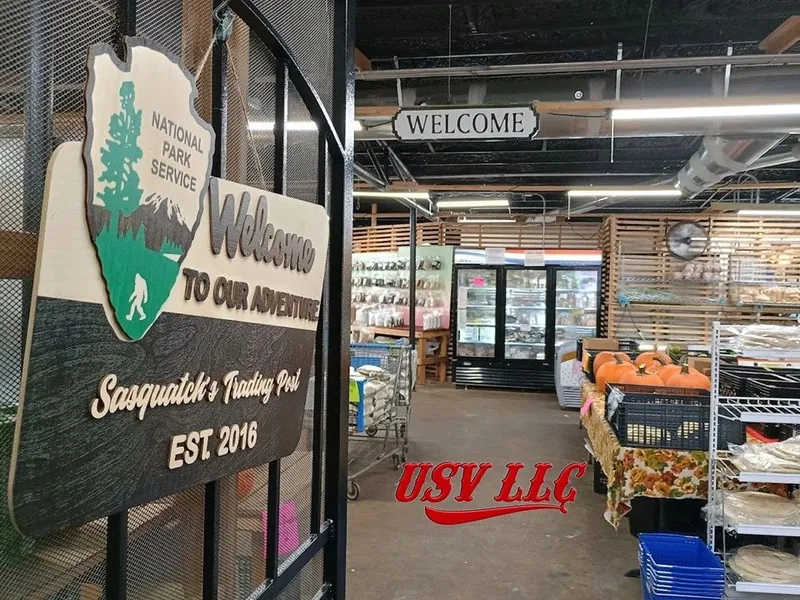
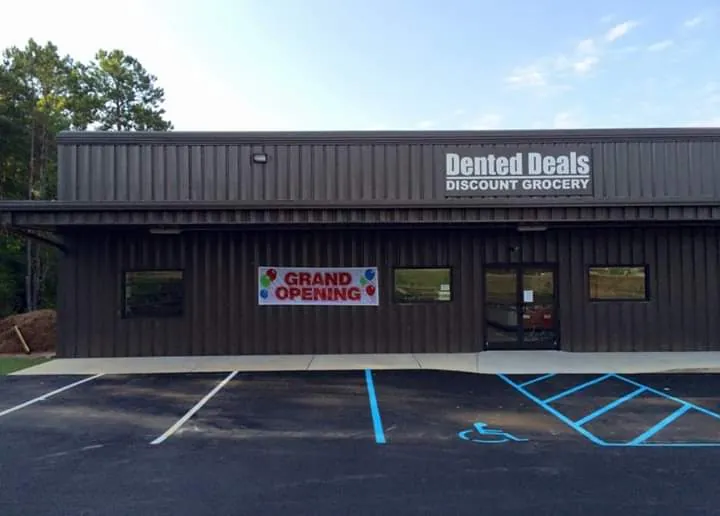
Parking lots at these places are often a clue to what's inside, I visited one in a strip mall once that had shopping carts overflowing in the lot mid-afternoon on a Tuesday, which told me everything I needed to know about how popular it was. Busy stores with high turnover tend to have fresher inventory anyway, so that's actually a good sign. Typically, the best salvage grocery stores often look like any other grocery from the outside, maybe a little more crowded, usually with handwritten signs on bright paper advertising whatever lot just came in.
Finding one near you is easy now with business directories. Search for "groceries on a budget," "food salvage store," or just "discount food store near me" and you'll surface real options with reviews, addresses, and hours. Check the ratings before you go. A store with hundreds of reviews and a 4.5 average is worth a trip. One with 12 reviews and a 2.9 is probably telling you something too.
Stores like Salvage Saviors in Katy, Texas, 718 reviews, 5.0 stars, didn't build that reputation by accident. That's a store with consistent inventory, fair pricing, and staff who know what they're selling. Those places exist in most markets if you look for them.
Look for: 50+ reviews, 4.0 stars or higher, recent reviews (within the last 3 months), and any mention of specific product categories you care about. If multiple reviewers mention the same product type (like good deals on canned goods or great snack selection), that tells you something real about what the store carries consistently.
What This Means For You
Salvage grocery stores are not a gamble. They're a category of retail with thousands of locations, strong customer ratings, and a clear value structure, you trade cosmetic perfection for real savings on products that are otherwise identical to what you'd find at full price.
As a rule, the shopping skill you need is inspection, not luck. You need to know what a compromised can seal looks like. You need to understand that a best-by date on pasta is not the same as a safety cutoff. You need to check that inner seal on every bag and box. Those are learnable habits that take about two shopping trips to build, and after that, navigating a scratch and dent grocery store gets genuinely easy and kind of fun.
Start with shelf-stable staples. Build familiarity with a store you like, one that has good reviews and consistent stock. And buy enough of the things you use regularly to make the trip worth it.
Once you've had a grocery bill drop by 40% on a cart full of name-brand products you actually wanted, you won't wonder whether it's worth walking in anymore.
How do I know if a dented can is safe to buy?
Minor dents on the flat side wall of a can, away from the seams and lids, are generally safe. For most shoppers, the concern is with dents at the seams or lids, or any can that is bulging or swollen. Those can indicate seal failure or bacterial growth. Run your fingers along both ends and the side seams before buying.
Are products at these stores actually cheaper than regular grocery stores?
Yes, usually significantly so. Discounts of 30–70% off retail prices are common, especially on shelf-stable items, snacks, and household products. Most savings are biggest on name-brand items that have cosmetic packaging issues but are otherwise identical to full-price versions.
What's the difference between a bent-n-dent store and a regular discount grocery?
A bent-n-dent or scratch and dent grocery specifically sells products with cosmetic damage, overstock, discontinued items, or short-dated goods. A general discount grocery might offer everyday low prices through bulk buying or store-brand strategies. Both can offer good value, but bent-n-dent stores specifically source product that didn't make it to regular retail shelves.
Should I buy frozen meat at a salvage grocery store?
It depends on the condition. Check for large ice crystals, freezer burn, and discoloration, which suggest a freeze-thaw cycle has occurred. Frozen vegetables with some frost but solid texture are usually fine. For proteins like fish, chicken, or beef, be more cautious and skip anything that looks like it has been through a temperature change.
How do I find a good salvage or discount grocery store near me?
Search business directories for "food salvage store," "discount food store," or "groceries on a budget" in your area. Filter by rating and look for stores with 50 or more reviews and a 4.0-star average or higher. In major cities like Houston, Brooklyn, Philadelphia, and Los Angeles, you have dozens of options to compare.
Find Salvage Grocery Stores Near You
Browse our directory of 3,183+ salvage and discount grocery businesses across the country, with real ratings and reviews from shoppers just like you.
Search the Directory