Beyond Groceries: Why Salvage Store Shoppers Should Also Visit Dollar Stores
You already know the frustration. You've driven across town to your favorite bent-n-dent store, scored some incredible deals on canned goods and boxed staples, and then you get home and realize you're completely out of dish soap, paper towels, and shampoo. Now you're facing a choice: pay full price at a regular grocery store for those basics, or make another trip somewhere else entirely. It's a gap that a lot of discount grocery store regulars never fully close, and it ends up costing them more than they realize over the course of a month.
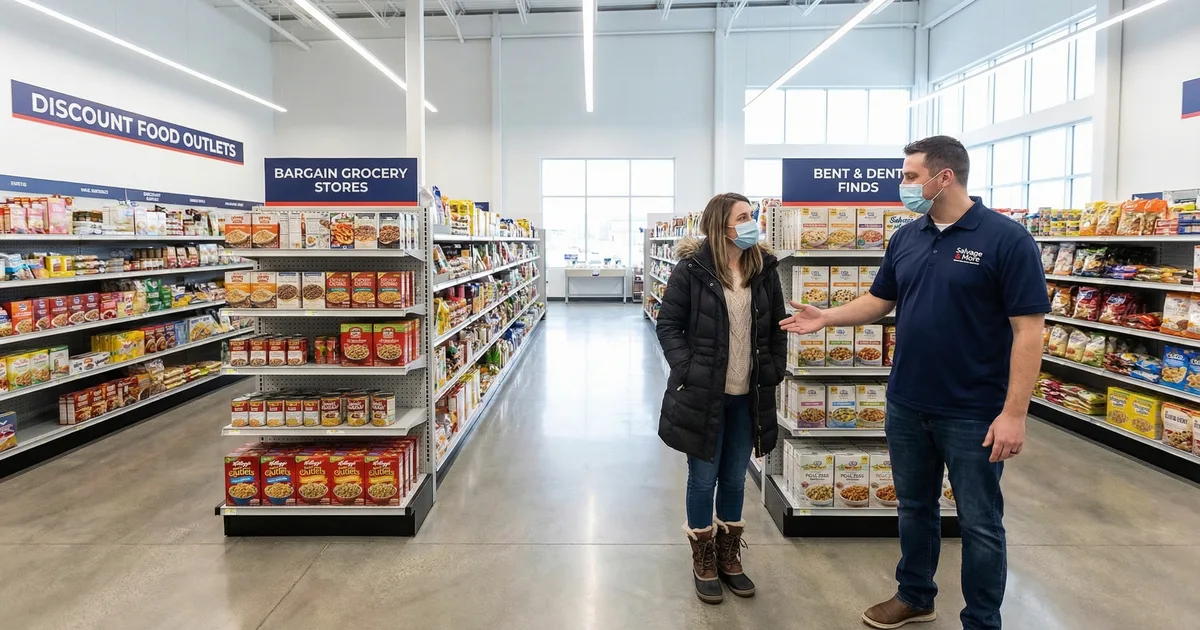
This article is for the shopper who already gets it. If you've ever searched "discounted grocery store near me" at 7pm on a Sunday, or if you know what a scratch and dent grocery section smells like (a little dusty, usually near the back), you're already ahead of most people on the budget shopping spectrum. But there's a next step that a lot of these shoppers skip, and that's pairing their salvage grocery store routine with regular visits to dollar stores. Done right, the two together can cover nearly every household need at the lowest possible cost. Let's talk about how.
Understanding the Salvage Grocery Shopper Mindset
People who shop at discount food stores are not, as some assume, just people who are desperate. A lot of them are genuinely strategic. They've figured out that a dented can of tomatoes tastes exactly the same as a perfect one, that a box of pasta with a torn corner is still pasta, and that paying full price for name-brand cereal when the same box is available at a food salvage store for 60% less is just... not logical. That kind of thinking does not happen by accident. It takes a little rewiring of how you see a grocery store trip.
What drives most salvage shoppers is a combination of frugality and practicality. They are not chasing coupons for the sport of it. They are not building YouTube channels about extreme saving (well, some are, but that's a whole other thing). Most of them are just regular households trying to keep the food budget reasonable without eating terribly. And the damaged goods grocery world has grown a lot to meet that need. With over 3,192 salvage grocery store businesses listed across our directory, this is not a niche anymore. It's a mainstream approach to buying food.
The mindset these shoppers carry is the key thing here. Once you've accepted that a product doesn't need to look perfect to be worth buying, once you've stopped paying a premium just for pristine packaging, you're ready to apply that same logic to the rest of your household shopping. And that's exactly where dollar stores come in.
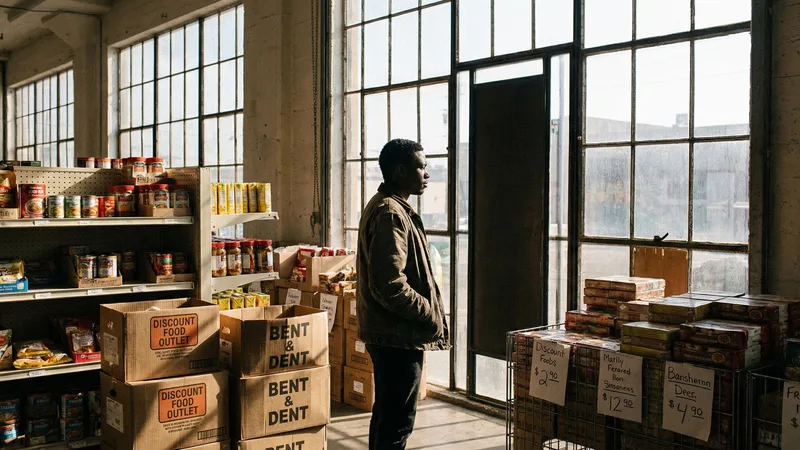
What Dollar Stores Offer That Salvage Stores Typically Don't
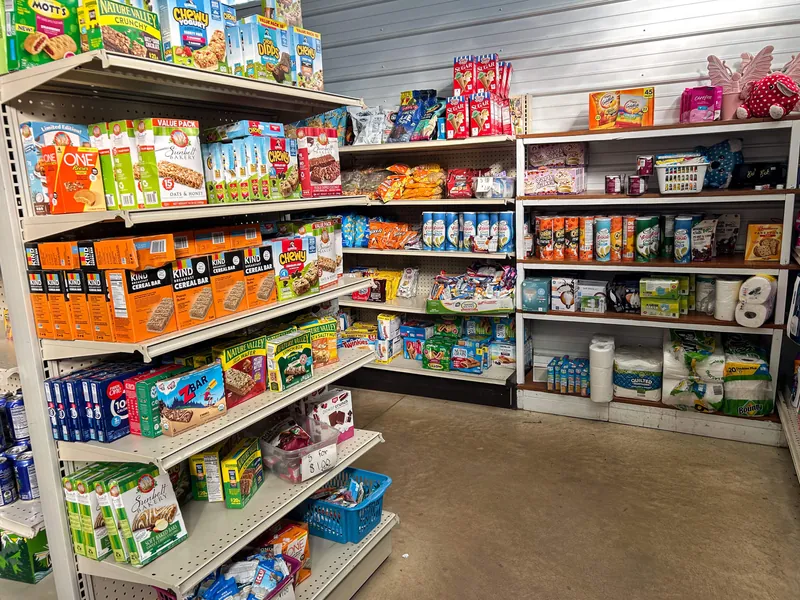
Walk into most grocery outlet or bent-n-dent stores and you'll find plenty of food. Canned vegetables, soups, snacks, sometimes dairy or frozen stuff if they have refrigeration. What you usually won't find is a reliable, steady supply of non-food essentials. Cleaning products, personal care items, paper goods, seasonal stuff like gift wrap or batteries, these categories are hit or miss at a salvage store because the whole point of salvage inventory is that it changes based on what comes in. Today there's laundry detergent. Next week there isn't.
Dollar stores solve that problem. They're consistent. You can go to the same dollar store every week and know they'll have dish soap, trash bags, shampoo, toothpaste, sponges, and a dozen other household basics. That predictability is worth something when you're trying to plan a real budget.
And here's something people overlook: dollar stores carry name-brand products more often than shoppers expect. Bounty paper towels. Dawn dish soap. Colgate. Tide pods in smaller quantities. These aren't off-brand knockoffs, they're just smaller pack sizes or older formulations being sold at reduced prices. Sound familiar? It should, because that's almost exactly the same value structure as a scratch and dent grocery store. Older stock, imperfect packaging, still perfectly good product. The logic is identical.
Dollar stores also do seasonal really well. Back-to-school supplies in August, holiday decorations in November, garden stuff in spring. A discount food store rarely has space or inventory flow to carry seasonal non-food items, so dollar stores fill that gap completely. If you need cheap gift bags or plastic storage bins or birthday candles, the dollar store has them every single time. In practice, the salvage store almost certainly doesn't.
If you're spending more than $15 a month on cleaning supplies at a regular grocery store or big-box retailer, a dollar store could cut that bill roughly in half. Paper towels, sponges, multi-surface cleaner, dish soap, all available at dollar stores for less than you'd pay almost anywhere else. Pair that with your salvage grocery haul and you're covering nearly every household category at a discount.
How Combining Both Store Types Creates a Complete Budget Shopping Strategy
Think about what a typical household actually needs in a week. Food, obviously: proteins, produce, canned goods, snacks, breakfast items, beverages. But also: toilet paper, paper towels, dish soap, laundry detergent, shampoo, conditioner, toothpaste, trash bags, and probably a few other things depending on your household. If you're relying solely on a bent-n-dent store or a discount food store for all of that, you're going to run into gaps. Regularly.
A smarter approach splits the list. Before you go shopping, make one master list and divide it into two columns: food and household essentials. Typically, the food column goes to the salvage grocery store. As a rule, the household essentials column goes to the dollar store. It sounds simple because it is. But most people don't do it, and they end up either overpaying at a regular supermarket for basics or making extra trips they didn't plan for.
Here's how a real week might look. Monday, you check what's running low at home: you need pasta, canned tomatoes, some kind of protein, maybe a snack for the kids. You also need dish soap, a new sponge, and you're almost out of paper towels. Tuesday or Wednesday, you stop by your local food salvage store. You pick up dried pasta for maybe 40 cents a box, canned tomatoes for under a dollar, some dented cans of beans, and if you're lucky there's a marked-down protein in the freezer section. You spend maybe $18 on food that would have cost $40 at a regular store. On the way home, or on a separate trip later in the week, you swing by the dollar store. You grab dish soap for $1.25, a two-pack of sponges for a dollar, and paper towels for $1.50. Total for non-food basics: under $5.
That's groceries on a budget done properly. Not one store doing everything halfway, but two stores each doing what they do best.
Splitting purchases across both store types also protects you from the boom-and-bust cycle of salvage store inventory. Some weeks your local damaged goods grocery store is overflowing with great finds. Other weeks the shelves look thin. If your whole household budget depends on what the salvage store has that week, a slow week can genuinely mess up your routine. Dollar stores smooth that out because their inventory is steady.
Salvage store: Canned vegetables, dry pasta, rice, beans, soups, marked-down snacks, frozen proteins when available, bakery items near date.
Dollar store: Dish soap, paper towels, toilet paper, shampoo, toothpaste, laundry supplies, trash bags, seasonal items, small pantry fillers like spices or condiments.
The Growth of Discount Shopping: What the Numbers Actually Show
There are 3,192 salvage grocery store businesses listed in our directory. That number alone says something important: this is not a fringe market. People are actively looking for where to find discounted groceries, and there are thousands of businesses built around meeting that demand. This is real, it's established, and it's growing.
Urban areas lead the concentration. Houston has 83 listings, which is the highest of any city in the directory. Brooklyn comes in at 61, Philadelphia at 46, and Los Angeles at 41. That's a lot of options for urban shoppers, and it makes sense because dense city populations create enough demand to support multiple discount food store locations within a reasonable drive or transit ride. If you're in one of these cities and haven't searched "discounted grocery store near me" recently, you're probably leaving money on the table every single week.
Average customer rating across all listed businesses is 4.3 stars. That matters. Some people still assume discount means low quality, lower service, and a worse experience overall. A 4.3-star average across thousands of businesses says otherwise. Shoppers are satisfied. They're finding value and coming back.
And then there are the standouts. Salvage Saviors in Katy, Texas holds a 5.0-star rating across 718 reviews. That's not a fluke; 718 reviews is a real customer base with a clear, consistent opinion. Re_ Grocery in Studio City, California has 224 reviews at 5.0 stars, and their Los Angeles location adds another 191 reviews at the same perfect rating. These are places that have figured out how to deliver a discount shopping experience that people genuinely love.
| Business Name | Location | Rating | Reviews |
|---|---|---|---|
| Salvage Saviors | Katy, Texas | 5.0 ★ | 718 |
| Re_ Grocery | Studio City, California | 5.0 ★ | 224 |
| Re_ Grocery | Los Angeles, California | 5.0 ★ | 191 |
| House of Milner Jewelers | Philadelphia, Pennsylvania | 5.0 ★ | 531 |
| Hegwood's Towing LLC | Brandon, Mississippi | 5.0 ★ | 277 |
One more thing worth saying about the data: the geographic spread of those top cities is not random. Houston, Brooklyn, Philadelphia, and LA are four of the most economically diverse cities in the country. They're places where a wide range of households are actively looking for ways to reduce grocery bills. For most shoppers, the market for discount grocery store options exists everywhere, but it concentrates where people most need it. That's not surprising, but it is worth remembering when you're planning your own shopping routine.
Tips for Getting the Most Out of Both Store Types
Planning matters more than people think. Walking into a salvage grocery store with no list and just grabbing whatever looks cheap is a good way to end up with seventeen cans of something you don't actually eat and nothing useful for dinner. Same problem at the dollar store: it's easy to fill a basket with stuff you don't need when you're not working from a clear list.
Make your master list at home before you go anywhere. Seriously, just five minutes with a notepad. Write down what you've run out of or are almost out of, organized by category. Then mark each item with either an S (salvage store) or a D (dollar store). Food staples, canned goods, frozen items if available, salvage. Cleaning products, personal care, paper goods, dollar store. This small step prevents duplicate purchases and keeps you from paying more than you need to at either location.
At the salvage store, always check expiration dates. This isn't a paranoid thing to do, it's just practical. Most items at a scratch and dent grocery store are perfectly fine well past the date on the package, especially shelf-stable goods, but you want to buy things you'll actually use before they expire. If you're buying six cans of soup because the price is incredible, make sure you'll eat six cans of soup in the next few months. Buying too far ahead is one of the most common mistakes new discount shoppers make. Also, check for swollen cans or broken seals; those actually are a concern, not just cosmetic damage.
At the dollar store, compare unit prices before you assume you're getting a deal. Most of the time you are, but occasionally a larger size at a warehouse store or even a regular grocery store on sale comes out cheaper per ounce. Dollar stores price things at a per-item level that looks cheap, and often is, but the unit price math doesn't always favor the dollar store on every product. Just check. It takes about ten seconds and it keeps you honest about where you're actually saving.
Both store types benefit from being checked weekly, not just when you've completely run out of something. For salvage and food salvage stores especially, inventory turns over fast. A particular product might show up at a great price one week and be completely gone the next. If you're only visiting when you're desperate, you'll miss the best finds. Regular visits, even quick ones, let you stock up strategically when something good comes in.
Use online directories to find new options. Searching for "discounted grocery store near me" or browsing a directory like ours can surface stores you didn't know existed. With 3,192 businesses listed, there are probably one or two discount grocery store options near you that you haven't tried yet. Same goes for dollar stores; new locations open regularly and they don't always advertise heavily. Checking a directory or app every few months can genuinely reveal a better or closer option than what you're currently using.
Spices at dollar stores are almost always a better deal than anywhere else. A small jar of garlic powder or cumin for $1.25 beats the grocery store price by a mile, and they're the same quality. If you cook at all, the spice rack at your local dollar store is worth a look every single time you're in there.
And look, neither store type is perfect for everything. A dollar store isn't where you're getting your produce or your fresh meat. A salvage grocery store isn't going to reliably stock birthday candles or cleaning gloves. That's exactly the point. They're different tools. Using them together is just smarter than using either one alone.
Budget shopping done well is less about finding one magic store and more about building a system. Salvage grocery stores for food. Dollar stores for household basics. A little planning before each trip. A few minutes checking expiration dates and unit prices. That's it. Nothing complicated, nothing extreme. Just a consistent habit that adds up to real money saved every single month.
Frequently Asked Questions
Are salvage grocery stores safe to shop at?
Yes, in almost all cases. Products at salvage and damaged goods grocery stores are safe to eat; they're discounted because of cosmetic damage, overstock, or near-expiration dates, not because they're unsafe. Most one thing to always avoid is a can that's visibly swollen or has a broken seal. Everything else is generally fine. The 4.3-star average rating across 3,192 listed businesses reflects that shoppers consistently have positive experiences at these stores.
How do I find a salvage grocery store near me?
Searching "discounted grocery store near me" or "bent-n-dent stores near me" in a business directory is the fastest way. Our directory lists 3,192 businesses nationwide, with strong concentrations in cities like Houston (83 listings), Brooklyn (61), Philadelphia (46), and Los Angeles (41). Chances are there's at least one option within a reasonable distance from you.
What should I buy at the dollar store versus the salvage store?
A good rule of thumb: food staples, canned goods, dry goods, and marked-down proteins at the salvage grocery store. Cleaning supplies, paper goods, personal care products, and seasonal items at the dollar store. This split covers nearly all household needs at the lowest combined cost. For spices and small pantry fillers, dollar stores often win on price even over salvage stores.