Building a Complete Budget Shopping Strategy with Salvage Groceries and Dollar Stores
The Grocery Bill That Broke the Budget
You walk out of a conventional supermarket with two bags, a receipt for $180, and that familiar sinking feeling. You bought the basics. Nothing fancy. And somehow it still cost more than you budgeted. If that sounds familiar, you are not alone, and the solution most financial advice skips over is already operating in your city, probably within a few miles of where you live.
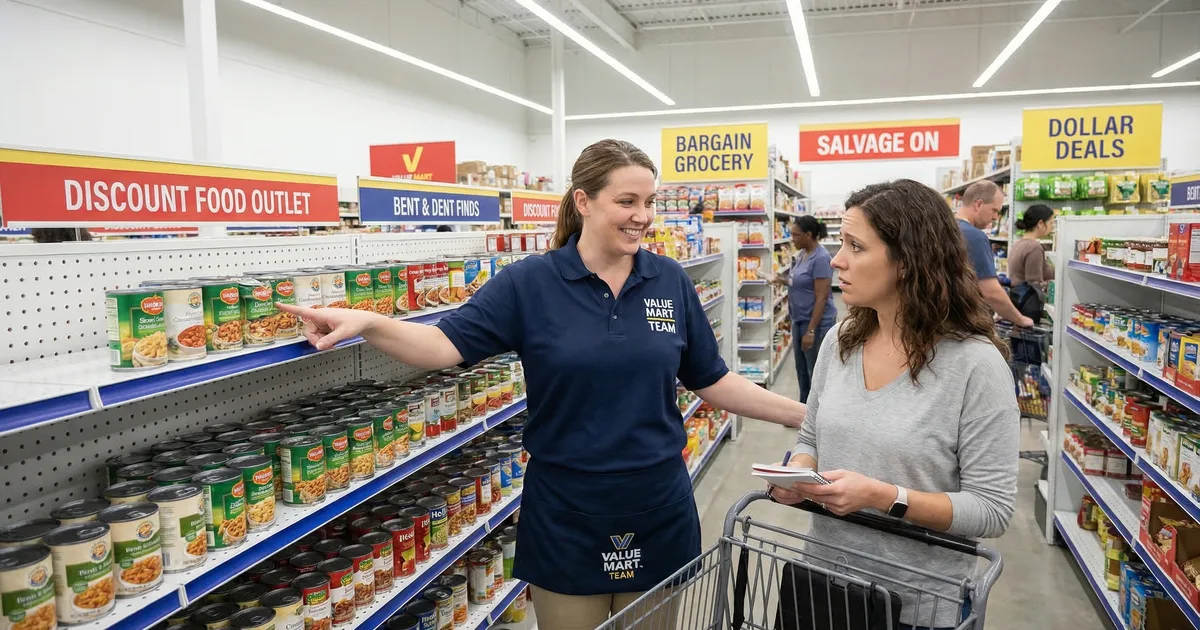
Salvage grocery stores, also called bent-n-dent stores, scratch and dent grocery shops, or discount food stores, operate on a model that mainstream retail ignores. They buy overstock, discontinued products, slightly dented cans, and near-date items from manufacturers and distributors, then sell them at prices that are often 40% to 70% lower than what you'd pay at a traditional supermarket. Pair that with a smart dollar store strategy and you've got a real, repeatable system for cutting your grocery bill without eating worse.
This article walks through exactly how that system works, what the data says about these stores, and how to build a shopping routine that actually sticks.
What Salvage Grocery Stores Actually Are
Most people have a vague idea that these stores sell "damaged" food, and that vagueness is what keeps them away. Worth clearing up immediately: the damage is almost always cosmetic.
A bent-n-dent store gets its inventory from several sources. Manufacturers sometimes produce more than retailers ordered. Distributors end up with pallets that got shuffled around in a warehouse too long. Retailers discontinue a product line and need to move hundreds of cases fast. A grocery outlet steps in and buys all of it at a steep discount, then passes most of that discount to you. The box of cereal has a crease. The soup can has a scratch. In practice, the pasta sauce is three months from its best-by date. None of that makes the food unsafe.
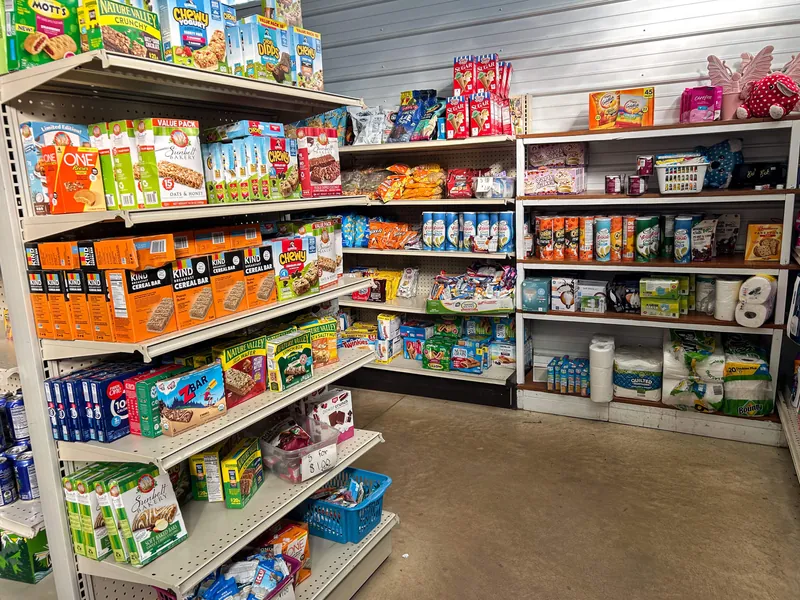
What you'll typically find at a good discount food store: canned goods, dry pantry staples (rice, pasta, beans, flour), snacks, beverages, condiments, frozen items when the store has freezer capacity, and sometimes personal care and cleaning products mixed in. Inventory turns over fast and is often unpredictable, which is both the challenge and the thrill of shopping at these places.
Canned goods with dents on the body (not the seam), dry goods with torn outer packaging, items past their "best by" date but within a few weeks, overstock products in perfect condition, and discontinued items that are otherwise identical to what you'd buy full price. Avoid cans with deep seam dents, bulging lids, or any sign of leakage. Those are the actual red flags, not a dented label or a scratched box.
Because inventory is sourced in bulk and opportunistically, prices at a damaged goods grocery can seem almost random. You might pay $0.49 for a can of diced tomatoes that's $1.29 at the regular store, or $1.99 for a box of name-brand crackers that retails for $5. That variability is the whole point. You're shopping a clearance channel, not a curated menu.
The Data Behind Discount Grocery Stores: More Than a Fringe Market
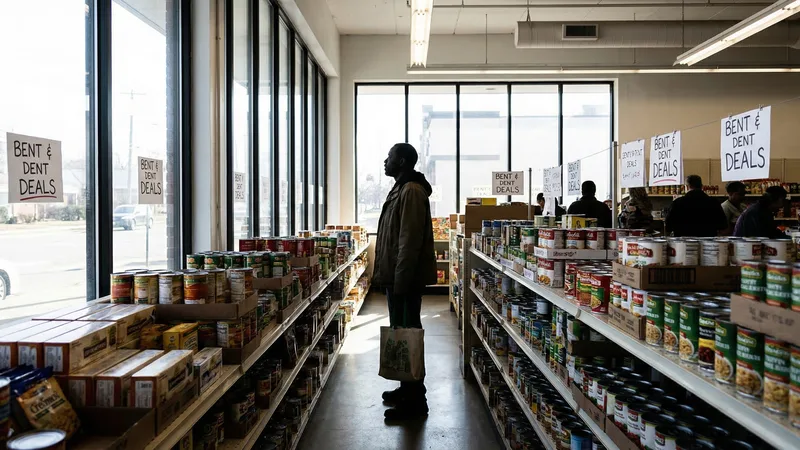
Contrary to popular belief, salvage and discount grocery stores are not a niche category operating on the margins. Our directory lists 3,192 businesses in this space, with an average customer rating of 4.3 stars. That's not a fluke number.
For context, 4.3 stars across thousands of locations is actually higher than the average rating for many fast food chains and pharmacy retailers. These aren't stores that survive on desperate shoppers with no other options. They're earning repeat business from people who actively prefer them.
Typically, the geographic spread tells a story too. Houston leads with 83 listings, followed by Brooklyn with 61, Philadelphia with 46, and Los Angeles with 41. These are dense, high-cost urban markets where grocery budgets are under the most pressure. As a rule, the concentration of discount food stores in exactly those cities is not a coincidence. Demand drives supply, and clearly the demand is substantial.
And the top performers in this space are genuinely impressive. Salvage Saviors in Katy, Texas holds a 5.0-star rating across 718 reviews. Re_ Grocery operates two locations in the Los Angeles area (Studio City and Los Angeles proper) with 5.0 stars across a combined 415 reviews. That is a level of customer satisfaction that most retail businesses never reach.
| Business Name | Location | Rating | Reviews |
|---|---|---|---|
| Salvage Saviors | Katy, Texas | 5.0 ★ | 718 |
| Re_ Grocery | Studio City, California | 5.0 ★ | 224 |
| Re_ Grocery | Los Angeles, California | 5.0 ★ | 191 |
| House of Milner Jewelers | Philadelphia, Pennsylvania | 5.0 ★ | 531 |
| Hegwood's Towing LLC | Brandon, Mississippi | 5.0 ★ | 277 |
A quick note on those last two entries: House of Milner Jewelers and Hegwood's Towing appear in the broader directory and are listed here as top-rated businesses by review volume, though they operate in adjacent categories. For most shoppers, the grocery-specific entries like Salvage Saviors and Re_ Grocery are the most relevant benchmarks for this discussion.
Finding Discount Grocery Stores Near You
Knowing these stores exist and actually finding one near you are two different problems. Most people searching for "discounted grocery store near me" or "food salvage store" get spotty results because these businesses don't always market aggressively. They don't need to. Word of mouth does most of the work.
Start with online business directories (like this one) and search specifically for "bent-n-dent store," "scratch and dent grocery," or "grocery outlet" along with your city or zip code. Local Facebook groups and neighborhood apps like Nextdoor are genuinely useful here, someone in your area has almost certainly already found the best one and mentioned it. I'd prioritize those community recommendations over a cold Google search any day.
Once you have a few candidates, check the reviews before you go. Look specifically for comments about product variety, restocking frequency, and whether the store is organized well enough to shop efficiently. A store that's chaotic and understocked might save you money on individual items but cost you time and frustration. A 3.8-star store with 40 reviews mentioning "hard to find anything" is a different experience than a 4.5-star store where people specifically mention good turnover and clean aisles.
Ask the store when they restock. Many bent-n-dent stores receive new inventory on specific days, often mid-week, and the best selection goes fast. Shopping within 24 hours of a restock is the single biggest advantage you can have. Saturday afternoon is usually the worst time; you'll get picked-over shelves and longer checkout lines.
Visit a new store once before deciding it's part of your regular rotation. Walk the whole store. Check what categories are well-stocked versus thin. Note whether prices are clearly labeled (some salvage grocery stores are better about this than others, walking around with unmarked items and discovering the price at checkout is annoying). If the store passes that initial visit, add it to your rotation.
Building the Strategy: Layering Salvage Stores and Dollar Stores
Here's where most budget shopping advice falls apart. People get excited about one store type, go all-in, and then get frustrated when it doesn't cover everything. Groceries on a budget requires a tiered approach, not a single-source solution.
Think of your grocery needs in three categories.
Tier 1: Salvage grocery store sourcing. Pantry staples are the sweet spot here. Canned beans, tomatoes, soups, pasta, rice, flour, cooking oils, cereal, snacks, crackers, juice, soda, condiments in jars (think pasta sauce, salsa, pickles), and non-refrigerated beverages. These are the items where a discount food store almost always beats both dollar stores and traditional supermarkets on price-per-unit, especially when you find name-brand overstock.
Tier 2: Dollar store sourcing. Cleaning supplies (dish soap, all-purpose cleaner, trash bags), paper goods (napkins, paper towels, toilet paper), basic condiments in smaller quantities, some snack items, and personal care basics. Dollar stores are more consistent than salvage stores, the inventory doesn't shift as wildly week to week, which makes them better for things you need reliably on a schedule.
Tier 3: Traditional supermarket. Fresh produce, meat, dairy, and anything you couldn't find at the other two. Yes, you still need a regular grocery store sometimes. But if your Tier 1 and Tier 2 shopping is working, your supermarket trips get shorter and cheaper. You're going in for specific things, not wandering the whole store.
On a practical level, this means planning your meals loosely around what you find at the discount grocery store rather than building a rigid list and hoping everything's available. That's a mental shift for some people. You go in knowing you want to make dinners this week that use canned tomatoes, some kind of pasta, and whatever protein you can source fresh. You find the canned goods at the salvage store for maybe $4 total. You grab the pasta. You do not know yet if you'll make marinara or soup or a grain bowl, and that's fine. Most flexibility is part of how you save money.
Set a weekly budget ceiling before you start. Not a target, a ceiling. Something like: $40 at the salvage store, $15 at the dollar store, $30 at the supermarket. Write it down. Track it for four weeks and see where you actually land. Most people who do this are surprised to find they come in under budget consistently once the routine is set.
Smart Shopping Tips You'll Actually Use
Reading expiration dates at a scratch and dent grocery is a real skill and it takes about three visits to get fast at it. Know the difference between "best by" and "use by." "Best by" is a quality indicator, not a safety cutoff. A can of soup that's two weeks past its best-by date is almost certainly fine. "Use by" on refrigerated or perishable items is a harder line, treat those more carefully. Most of what you'll find at a bent-n-dent store is dry or shelf-stable, so you're mostly dealing with best-by dates, which are genuinely flexible.
Bring a small cooler in your car if the store carries frozen or refrigerated items. This sounds like overkill but once you've had to throw out a package of frozen meat because it thawed on a 30-minute drive home, you won't skip the cooler again. Not a pleasant discovery.
Stock up aggressively on non-perishables when the price is exceptional. Finding a case of canned chickpeas for $0.35 per can when you normally pay $1.19 is the kind of thing you should buy 12 of, not 2. Storage space is the only real limit. Non-perishable pantry items don't expire for years, and your per-unit cost on that stock-up purchase effectively lowers your grocery average for months.
Keep a simple running total of what you saved each week. Compare the price you paid at the discount food store against the standard supermarket price for the same item. After a month, most regular shoppers at salvage grocery stores report saving $80 to $200 depending on household size. Seeing that number written down makes the occasional chaotic shopping trip feel worth it.
One more thing that most articles skip: check the unit price, not just the sticker price. A 28-ounce can of tomatoes for $0.89 is a better deal than a 14-ounce can for $0.55. This is basic math but in the slightly chaotic environment of a salvage grocery store, with mismatched inventory and hand-written price tags, it's easy to grab things without doing the calculation. Slow down for thirty seconds per item when you're buying in quantity.
Frequently Asked Questions
Are salvage grocery stores safe to shop at?
Yes, with the basic precautions any careful shopper would use. Salvage and bent-n-dent stores are legitimate retail businesses subject to the same health and safety regulations as any other food retailer. These products they carry are not recalled or condemned, they're overstock, discontinued, or cosmetically damaged. A 4.3-star average rating across 3,192 businesses in our directory strongly suggests that millions of shoppers are having consistently good experiences. Check cans for seam dents or bulging, avoid anything with obvious leakage or compromised seals, and you'll be fine. Generally, the idea that these stores are somehow less safe than a supermarket's clearance shelf is not supported by the data.
How much can I realistically save by shopping at discount grocery stores?
Savings vary by household size, shopping habits, and what your local store carries. Most estimates put the discount at 40% to 70% off standard retail prices for comparable items. For a household spending $300 per month on groceries, shifting even 40% of pantry purchases to a salvage grocery store could save $50 to $80 per month. Over a year, that's $600 to $960 back in your pocket. In practice, the layered strategy combining salvage stores and dollar stores can push those numbers higher, especially for households buying a lot of shelf-stable goods.
What should I avoid buying at a bent-n-dent store?
Avoid cans with deep dents along the seam (not the body, the seam specifically), any packaging that shows signs of moisture damage or mold, bulging lids on canned goods, and anything with a "use by" date that has already passed on a perishable item. Baby food and infant formula are categories where many experienced salvage shoppers choose to stick with traditional retail, just as a precaution. Everything else is largely fair game if it looks intact and you inspect it briefly before buying.
How do I find salvage grocery stores near me?
Search online directories using terms like "discount grocery store near me," "food salvage store," or "grocery outlet" plus your city. Local community Facebook groups and neighborhood apps are often the fastest source of specific recommendations. Our directory lists 3,192 businesses nationally, with strong concentrations in Houston (83 listings), Brooklyn (61 listings), Philadelphia (46 listings), and Los Angeles (41 listings), so if you're in or near any of those cities, you have real options to explore immediately.
Can I do most of my grocery shopping at salvage stores, or do I still need a regular supermarket?
A salvage grocery store works best as the foundation of your pantry shopping, not a complete replacement for fresh food sourcing. Produce, fresh meat, and dairy are usually not available or not reliably stocked at most bent-n-dent stores. Typically, the tiered approach, salvage store for shelf-stable pantry goods, dollar store for household basics, supermarket for fresh items, is the most practical system for most households. As you get more familiar with what your local stores carry, you'll naturally shift more spending toward the discount options and less toward full-price retail.
Putting It All Together
Budget grocery shopping done right is not about deprivation. It's about routing your money away from retail markup and toward actual food value. Salvage grocery stores have been doing this for decades, 3,192 businesses don't exist by accident, and a 4.3-star average rating doesn't come from reluctant shoppers making do. These are places people genuinely like, with businesses like Salvage Saviors in Katy pulling 718 five-star reviews from real customers who could have gone anywhere.
Start small. Find one salvage or discount food store near you. Visit once, inspect what they carry, and buy five or six pantry items you know you'll use. Compare your receipt to what those same items would have cost elsewhere. That single comparison, on your first trip, will tell you everything you need to know about whether this strategy is worth building out.
It almost always is.
More Ways to Save
Find Salvage Grocery Stores Near You
Browse our directory of 3,192+ discount grocery businesses, including bent-n-dent stores, scratch and dent groceries, and grocery outlets across the country. Search by city or zip code to find top-rated options close to home.
Search the Directory