Holiday Grocery Shopping at Salvage Stores: A Month-by-Month Planning Guide
You Can Cut Your Holiday Food Budget in Half. Seriously.
Most people spend more on holiday groceries than they plan to, and a lot of that money goes toward things they could have bought months earlier for a fraction of the price. Salvage grocery stores, sometimes called bent-n-dent stores or scratch and dent grocery shops, are one of the least talked-about tools for people who want to eat well during the holidays without draining their bank account. These are not sketchy discount bins or expired-food warehouses. They are real stores that source overstock, discontinued items, cosmetically damaged packaging, and seasonal surplus from manufacturers and distributors, then sell everything at deep discounts, sometimes 30 to 70 percent below what you would pay at a regular supermarket.
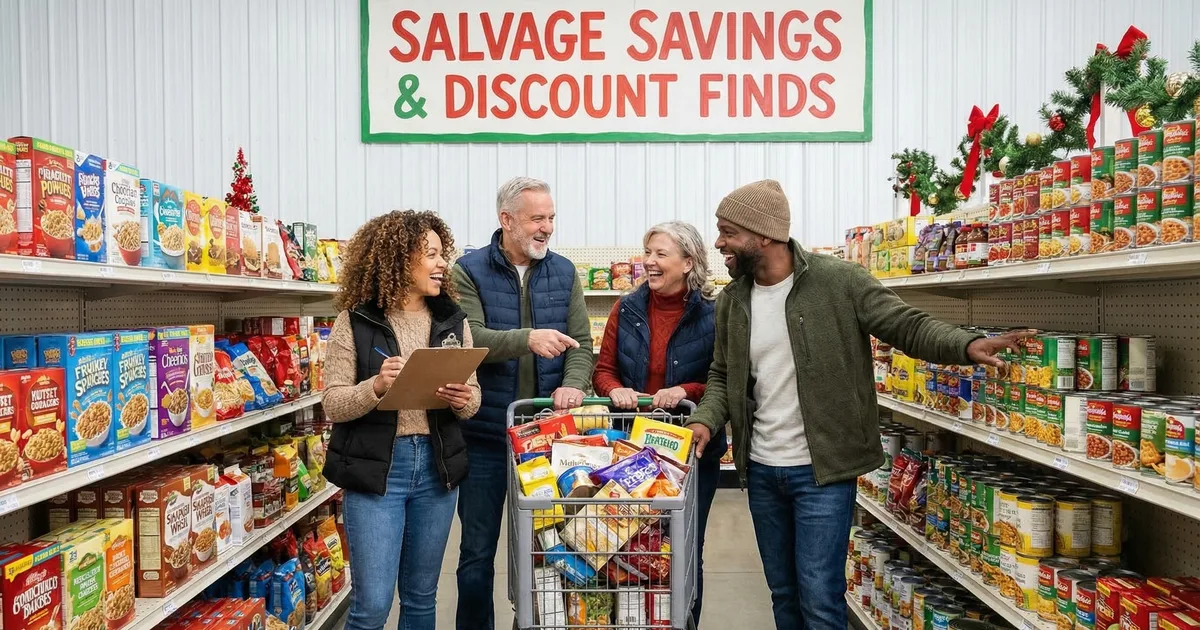
Planning holiday shopping around these stores, month by month from September through December, can genuinely transform what you spend on food. A jar of pumpkin pie spice that costs four dollars at a traditional grocery store might be a dollar fifty at a food salvage store because the label is slightly dented or the product was overproduced for a run that did not sell through. Same spice, same quality, different price. And if you know when to look for what, you can build an entire holiday pantry without the panic-buying that happens when everyone rushes to the same grocery aisles in November.
This guide walks through each month of the fall season and tells you what to look for, when to look for it, and how to shop smart at these stores so that by the time December rolls around, you are ready, stocked up, and well under budget.
How Salvage Grocery Stores Actually Work
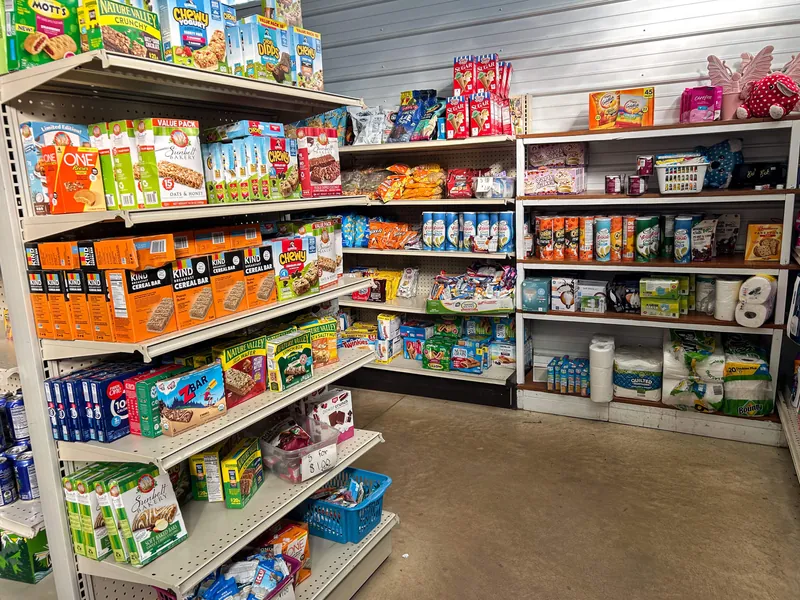
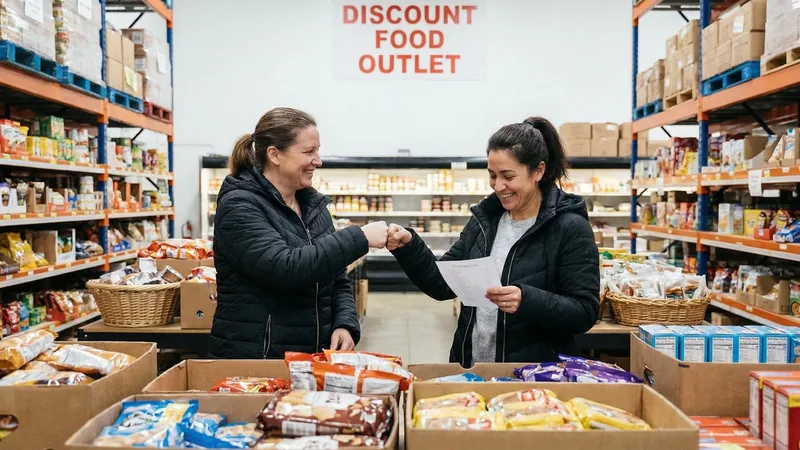
Walking into one of these places for the first time can be a little disorienting. Shelves are not organized like a traditional supermarket. You might find a display of fancy imported crackers next to a stack of canned black beans next to a bin of protein bars. That randomness is not a flaw; it is the whole business model.
Discount food stores source their inventory from a few different places. Manufacturers who overproduce seasonal items, think canned cranberry sauce in January, or Halloween candy in early November, need to move that product fast. Distributors dealing with damaged shipments, rebranded products, or items nearing their best-by dates also offload to these stores. Grocery chains clearing out discontinued items send truckloads to damaged goods grocery operations. So what ends up on the shelves is genuinely unpredictable, which means you need a strategy rather than a specific shopping list if you want to shop efficiently here.
Here is something that surprises a lot of first-timers: the vast majority of products at these stores are completely safe to eat. A dented can is not dangerous unless the dent is on a seam, and even then, a quick visual check takes about three seconds. Best-by dates on shelf-stable items are about quality, not safety, a bag of flour that is two months past its best-by date will still make perfectly good pie crust. Spices, canned goods, dry pasta, baking mixes, and most beverages have a much longer useful life than their labels suggest.
Run your finger along the seam of any dented can. If the dent is on the side body of the can and the seam is intact, the product is safe. Avoid cans where the dent sits directly on a seam, where the lid bulges, or where rust is present. That covers 90% of what you need to know for safe shopping at any scratch and dent grocery store.
The Numbers Behind This Sector
Our directory lists 3,192 salvage grocery businesses across the country, with an average customer rating of 4.3 stars. That average rating is worth pausing on for a moment, because 4.3 stars across thousands of listings means these are not fringe operations that occasionally disappoint people. That is a consistently positive shopping experience happening at scale.
Urban shoppers have the most options. Houston leads with 83 listings, which makes sense given the city's size and the culture of value-focused shopping across its many neighborhoods. Brooklyn has 61 listings, Philadelphia has 46, and Los Angeles has 41. If you have ever searched "discounted grocery store near me" and come up empty, you might just need to widen your search radius slightly or look specifically for terms like bent-n-dent stores or food salvage store rather than just "grocery store."
Among the top-rated businesses in the directory, a few stand out. Salvage Saviors in Katy, Texas holds a perfect 5.0 stars across 718 reviews, that is an extraordinary number of reviews for a store of this type to maintain a perfect score. Re_ Grocery appears twice, both in Studio City and Los Angeles, each location with 5.0 stars and 224 and 191 reviews respectively. I would pick Re_ Grocery as a model worth studying if you're curious what a well-run discount food store looks like in practice. These ratings suggest that the "discount = low quality experience" assumption does not hold up.
| Business Name | Location | Rating | Reviews |
|---|---|---|---|
| Salvage Saviors | Katy, Texas | 5.0 ★ | 718 |
| House of Milner Jewelers | Philadelphia, Pennsylvania | 5.0 ★ | 531 |
| Hegwood's Towing LLC | Brandon, Mississippi | 5.0 ★ | 277 |
| Re_ Grocery | Studio City, California | 5.0 ★ | 224 |
| Re_ Grocery | Los Angeles, California | 5.0 ★ | 191 |
The growth of this sector reflects something real about how people shop. More households are actively looking for ways to manage grocery costs without switching to cheaper ingredients. Salvage grocery stores sit right in that sweet spot: same brands, same products, lower prices.
Month-by-Month: Your Holiday Shopping Game Plan
September: Build the Foundation Early
September feels too early to think about holiday cooking. It is not. This is actually the best month to stock up on the non-perishable backbone of your holiday kitchen, and here is why: summer overstock hits salvage store shelves in late August and September as distributors clear out products that did not sell through the warmer months. That includes things like baking staples, flour, sugar, brown sugar, powdered sugar, cornstarch, that may have been packed in summer-themed or promotional bags that are now out of season. Same product, different package, heavily discounted.
Look for canned pumpkin in September. Sounds weird, but pumpkin products often arrive early at discount food stores when a manufacturer overproduces for an early promotional run. Grab vanilla extract, cinnamon, nutmeg, and cloves now too. Spices at a bent-n-dent store in September can be 50 to 60 percent cheaper than what you will see at a regular grocery store in October when everyone is baking pumpkin bread.
Honestly, September shopping at one of these places feels a little like treasure hunting. You might find an unusual imported chocolate bar, a case of specialty broth, or a box of holiday-themed cookie cutters mixed in with the regular dry goods. Keep an open eye.
Build a list before you go, but stay flexible. Categories to target in September: baking basics, spices, canned goods (especially pumpkin, sweet potatoes, and pie filling), and any shelf-stable beverages you plan to use for fall entertaining.
October: Halloween Stock and Early Thanksgiving Prep
October is a two-track month. On one track, candy overstock from pre-Halloween production runs starts appearing at discount grocery stores, sometimes weeks before Halloween and definitely the week after. If you buy Halloween candy to hand out, this is worth knowing, but it is even more relevant if you buy candy for baking, gifting, or stocking holiday treat bags. Chocolate chips, caramel bits, and similar baking candy often arrive in Halloween-branded packaging at steep discounts, and the chocolate inside is identical to what you would buy year-round.
On the other track, early Thanksgiving inventory starts showing up. Canned vegetables, chicken and turkey broth, stuffing mixes, dried cranberries, and gravy bases all begin arriving at groceries-on-a-budget stores in October as distributors and manufacturers move the first wave of seasonal production. Early October is better than late October for selection, because once the general public figures out that Thanksgiving is close, even discount store shelves get picked over faster.
Do not overlook beverages in October either. Apple cider, sparkling juices, and specialty sodas often arrive in overstock batches around this time, and a good salvage grocery store will have them stacked near the entrance or in a seasonal display area.
November: Two Distinct Phases
November splits into two very different shopping opportunities, and missing the second one is a mistake a lot of people make.
Phase one is obvious: in the first two weeks of November, stock up on Thanksgiving essentials. Canned goods, baking supplies, and pantry staples are at their most plentiful at discount food stores during this window. Manufacturers have been pushing product into the distribution chain since September, and by early November, a lot of that surplus has trickled down to salvage stores. Stock up on pie crusts, canned fruits, nuts, butter (yes, some stores carry refrigerated items), and anything else on your Thanksgiving recipe list.
Phase two starts the day after Thanksgiving. Post-Thanksgiving clearance at these stores can be genuinely remarkable. Thanksgiving-specific items, seasonal canned goods with harvest-themed labels, pumpkin everything, and specialty items that did not move at regular grocers all arrive in volume at bent-n-dent stores in the days after the holiday. This is the moment to shift immediately toward Christmas shopping. Buy baking mixes, holiday beverage bases, and specialty ingredients for Christmas cookies and breads now, while they are at their lowest prices. Waiting until December means competing with other shoppers who have caught on to the same strategy.
The Friday through Monday after Thanksgiving is one of the best four-day windows of the entire year for salvage grocery shopping. Stores restock fast with post-holiday overstock. Go early in the day, bring a cooler bag if you're buying refrigerated items, and bring cash, some smaller discount food stores prefer it.
December: Premium Finds at Budget Prices
December at a salvage grocery store can feel like stumbling into a specialty food shop that forgot to charge full price. Premium crackers, imported cheeses (at stores with refrigerated sections), fancy nuts, chocolate bark, specialty jams and preserves, sparkling beverages, and gift-ready food items all arrive in volume as post-Thanksgiving and early Christmas overstock floods the supply chain.
Holiday party shopping is where salvage stores shine in December. Appetizer ingredients, charcuterie components, festive drink mixes, and snack foods that would cost a small fortune at a specialty grocer are often available at groceries-on-a-budget prices. A box of fancy imported cookies that retails for eight dollars might be two fifty here. A bottle of sparkling grape juice with a premium label that costs seven dollars at a wine shop might be three dollars at a scratch and dent grocery store because the label has a slight smudge.
New Year's entertaining is also worth planning in late December. Post-Christmas overstock starts hitting shelves around December 26th, and it includes exactly the kinds of things you want for a New Year's party: sparkling beverages, specialty snacks, premium packaged foods, and festive treats that are being cleared out after Christmas. Shop these shelves before they get picked clean by early January.
Shopping Smart: Strategies That Actually Work
Shopping at a discount grocery store requires a slightly different mindset than a regular supermarket run. You are not walking in to find a specific item; you are walking in to find value within categories you already need. The distinction matters.
Start with a category-based list, not an item-based one. Instead of "I need Pillsbury pie crust," write "pie crust or pie filling alternatives." Instead of "McCormick cinnamon," write "cinnamon, any brand." This flexibility is what unlocks the real savings at these stores, because you are working with whatever showed up in last week's delivery, not a curated product assortment.
Calculating per-unit value is a habit worth developing. Pull out your phone and divide the price on the shelf by the number of ounces or units. Compare that to what you know a similar product costs at a regular store. A big can of something for two dollars sounds like a deal, but if the regular grocery store sells the same can for two twenty-five, it is only a modest savings. A small jar of fancy mustard for seventy-five cents when the regular price is four dollars, that is a deal worth stocking up on.
How much to buy is a real question. For shelf-stable items with best-by dates more than six months out, buying multiples makes sense if you use the product regularly. For items closer to their best-by date, buy only what you will use before that date. A case of broth that expires in three months is fine if you make soup every week; it is a waste if you only cook with broth twice a year.
Pair salvage store shopping with your regular grocery store runs rather than replacing them. Use these stores for pantry staples, specialty items, and non-perishables, then fill in with fresh produce and meat from your regular store. Combined, this approach can cut total grocery spending meaningfully over the course of the holiday season without requiring you to compromise on a single recipe.
Salvage grocery stores work best when stacked with other budgeting habits. Use manufacturer coupons on the rare occasion a salvage store accepts them. Check if your regular grocery store's app has digital coupons for items the salvage store does not carry. And keep a running price book, even a simple note on your phone, so you know at a glance whether the salvage price is actually a deal.
Frequently Asked Questions
Are products at salvage grocery stores safe to eat?
Yes, in the vast majority of cases. Most products at bent-n-dent stores are safe and fully edible. They may have cosmetic damage to packaging, slightly shortened best-by dates, or be overstock from seasonal runs. Check dented cans carefully (avoid seam dents or bulging lids), and use your judgment on best-by dates for shelf-stable goods, which are about quality rather than safety.
How do I find salvage grocery stores near me?
Search for terms like "discount food store near me," "bent-n-dent stores," or "scratch and dent grocery" in your area. Our directory lists 3,192 businesses nationwide, with the highest concentration in cities like Houston (83 listings), Brooklyn (61 listings), Philadelphia (46 listings), and Los Angeles (41 listings).
What is the best time of year to shop at salvage stores for holiday items?
September through December each offer distinct opportunities. September is best for baking staples, October for early Thanksgiving prep, the first half of November for Thanksgiving essentials, and late November through December for Christmas and New Year's entertaining items. Post-holiday windows (day after Thanksgiving, day after Christmas) are especially productive for stocking up at the lowest prices.
Do salvage grocery stores accept coupons?
It varies by store. Some discount grocery stores accept manufacturer coupons; others do not because their prices are already below what coupons typically reduce regular retail to. Call ahead or ask at the register before assuming either way.
What holiday items can I realistically expect to find at these stores?
Canned goods, baking supplies (flour, sugar, spices, pie filling), holiday beverages, specialty snack foods, premium crackers and spreads, candy, stuffing mixes, broth, dried fruits, and nuts are common finds. High-end specialty items sometimes appear in quantity when a retailer or distributor clears seasonal inventory.
Salvage grocery shopping is one of those habits that sounds frugal in a pinch-penny kind of way until you actually try it and realize you are coming home with premium products you would have paid full price for without thinking twice. It takes a little more intention than a regular grocery run, and you have to be flexible about brands and packaging. But across a full holiday season, the savings are real, the quality holds up, and you might even enjoy the hunt a little.
Find Salvage Grocery Stores Near You
Browse our directory of 3,192+ salvage grocery businesses and start planning your holiday shopping with real savings in mind.
Search the Directory