How Salvage Grocery Stores Get Their Inventory: From Warehouse to Shelf
You're Spending Too Much at the Grocery Store, And You Probably Know It
Grocery bills have been quietly brutal for a few years now. You walk in for a few things, and somehow you walk out having spent $180 on what felt like nothing. If you've ever stood in a checkout line mentally recalculating whether you actually need that block of cheese, you are not alone. A lot of shoppers have started looking for alternatives, and one of the best-kept secrets in American retail is the salvage grocery store, also called a bent-n-dent store, scratch and dent grocery, or discount food store, depending on where you live and who you ask. These places sell real, name-brand food at prices that can feel almost criminal compared to what a regular supermarket charges. But here's what most people never stop to think about: where does all that cheap food actually come from? How does a can of soup end up on a salvage shelf for forty cents when it retails for $2.50 two miles away?
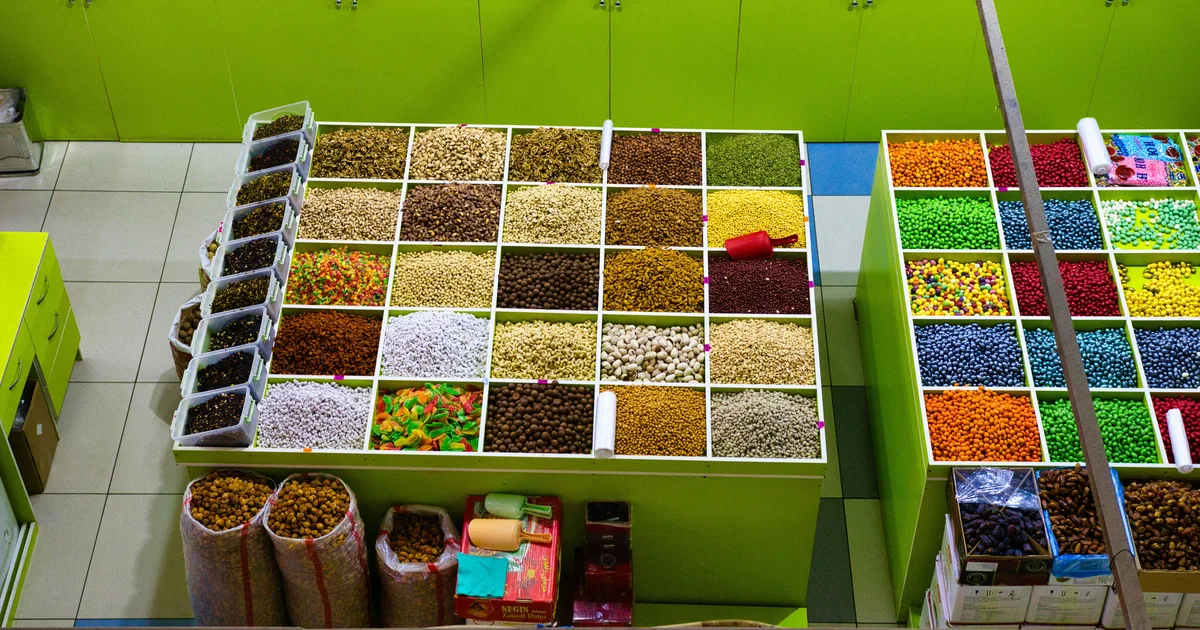
That question has a genuinely fascinating answer, and it involves a whole supply chain that operates almost invisibly behind the scenes of the food industry. This article walks through the full journey, from manufacturer overruns and retailer returns to insurance lots and salvage brokers, so you understand exactly what you're buying and why the prices are so low. Knowing how these stores work makes you a smarter shopper, and it might also make you feel a lot better about grabbing that slightly dented can of black beans.
What a Salvage Grocery Store Actually Is (And What It Isn't)
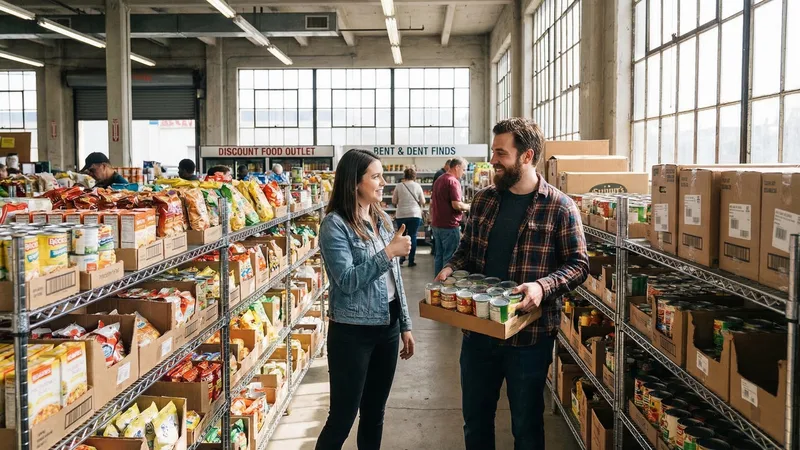
Salvage grocery stores go by a lot of names. Bent-n-dent stores, damaged goods grocery, discount food stores, grocery outlet, the terminology shifts by region, but the model is basically the same everywhere. These are retail shops that buy food inventory at steep discounts from sources that can no longer sell the products through normal retail channels, and then pass those savings on to shoppers. That's it. That's the whole concept.
What they are not is a place selling expired, unsafe, or mystery-origin food. That misconception keeps a lot of people away, and honestly it's a shame. Most of what you find on salvage store shelves is perfectly good food. A lot of it is food you'd recognize immediately, national brands, name-brand cereals, soups, snacks, condiments, just with some cosmetic issue or a backstory that pushed it out of the normal supply chain. A dented can doesn't make the soup inside bad. A torn outer box on a package of crackers doesn't affect the crackers. Discontinued flavors are discontinued because marketing decided to move on, not because something was wrong with the product.
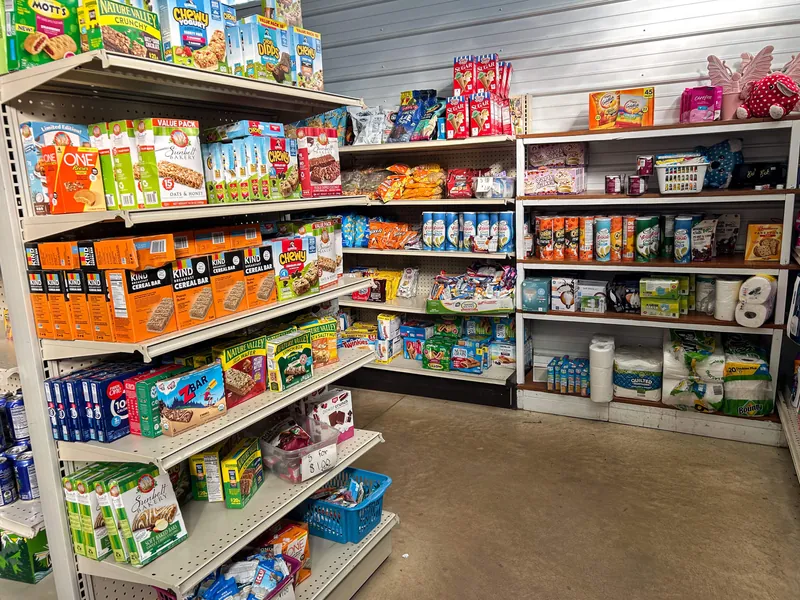
Some shoppers call them discount grocery stores. Others search online for "discounted grocery store near me" or "groceries on a budget" and end up finding these places almost by accident. However you find them, what you'll typically see inside is a mix of canned goods, dry goods, snacks, beverages, sometimes frozen food and refrigerated items, and occasionally non-food household products. Stock changes constantly, sometimes week to week, which is part of what makes shopping at these places feel like a scavenger hunt in the best possible way. You have to check out what's on the shelf today, because it probably won't be there next week.
Salvage grocery, bent-n-dent, scratch and dent grocery, and discount food store all refer to essentially the same type of business. Regional nicknames vary but the inventory model is consistent: food acquired outside normal retail channels, sold at deep discounts to shoppers looking for groceries on a budget.
Where the Inventory Actually Comes From: The Origins of Salvage Food
This is the part most people never think about, and it's genuinely interesting once you see how it all fits together.
Food manufacturers produce food in massive quantities. Factories run on schedules, contracts, and projections, and those projections are not always right. A snack company might produce 500,000 units of a seasonal product expecting a big retail order, and the retailer ends up ordering 350,000. That leaves 150,000 units sitting in a warehouse with no home. Holding that inventory costs money. Moving it through normal retail channels at this point is slow and expensive. So manufacturers sell it off fast, usually at a fraction of the cost, to buyers who can move it quickly. That's one of the main pipelines feeding salvage grocery stores.
Discontinued products work similarly. A food company decides to kill a product line, maybe a flavor of chips that didn't perform, a pasta sauce brand being phased out, a beverage that lost its distribution deal. There might be tens of thousands of units still perfectly good sitting in a warehouse. Those units need to go somewhere, and "destroy them" is the most expensive option. Salvage buyers swoop in, make an offer, and suddenly that discontinued pasta sauce ends up on a bent-n-dent store shelf for a dollar a jar.
Retailer returns are another huge source. Big grocery chains and box stores regularly return unsold seasonal inventory back into the supply chain. Think about what happens after a major holiday: all those specialty items, gift-set food products, seasonal candies, and themed packaging get pulled from shelves and sent back. A lot of that food is completely fine. It just has a Christmas tree on the box and it's now January. Salvage grocery operators buy those returns in bulk, often mixed pallets containing all kinds of different products, and sort through them to build their store inventory.
And then there are transportation incidents. A truck gets in an accident, a pallet falls in a warehouse, cases of canned goods get water-damaged during a shipping delay, a forklift clips a pallet wrong and sends a hundred boxes of cereal toppling. All of that gets filed as an insurance claim. Once the claim is settled, the insurer or the distributor needs to liquidate the goods. They can't send damaged-case products back into normal retail. Salvage buyers purchase these lots, go through them item by item, pull out anything that is genuinely compromised, and sell the rest. This is exactly where a lot of those dented cans come from. Dented on the outside, completely fine on the inside.
Walking into a well-stocked bent-n-dent store and looking at the shelves, you're actually looking at the residue of dozens of different supply chain events, overruns, discontinued lines, returns, damage claims, all funneled into one place. It's kind of wild when you think about it that way.
The Middlemen: Salvage Brokers and Wholesale Liquidators
Most salvage grocery store owners are not calling up Kraft or General Mills directly. That's not how this works.
Between the large food producers and the individual store owner sits a whole layer of food liquidation brokers and wholesale salvage dealers. These brokers are the ones with the relationships, the warehouse space, and the capital to acquire large lots of inventory and break them down into manageable quantities for smaller buyers. A broker might buy a full truckload of mixed product from a major distributor, bring it into their facility, sort it, and then resell it as mixed pallets to twenty different salvage store owners around the country.
Store owners bid on lots, sometimes sight unseen. That's not a typo, sometimes you are literally buying a pallet of food without knowing exactly what's in it, only the general category (dry grocery, snack items, beverage assortment) and maybe a rough manifest. This is part of what creates the treasure-hunt atmosphere that shoppers at these stores either love or find a little chaotic. The store owner took a gamble on that pallet, sorted through it, priced it, and put it on the shelf. You showed up and found something you weren't expecting.
Pricing in this part of the industry is measured in cents on the dollar relative to retail value. A pallet of product with a retail value of $1,000 might sell between the broker and the store for $100 to $200, depending on the condition of the goods, the freshness of the dates, the desirability of the brands, and how urgently the lot needs to move. Store owners who build good relationships with reliable brokers over time get better lots, better prices, and better consistency. A store that has a solid broker relationship can keep its shelves interesting and well-stocked. One that doesn't will feel sparse and unpredictable in a bad way.
If you've ever walked into a discount food store and noticed that everything seems to be from the same product category one week, and then it's a completely different mix the next time you visit, that's the broker relationship at work. Stock turns over based on what lots are available, not based on a carefully curated purchasing plan.
Not all salvage grocery operators have the same broker relationships or pay the same price per lot. A store that bought a particularly good lot cheap will price things lower. Another store might have paid more for a higher-quality or more desirable lot and will price accordingly. This is why shopping at multiple bent-n-dent stores in your area can pay off, the same brand might be significantly cheaper at one versus the other on any given week.
Quality Control and Food Safety: What Actually Gets Put on the Shelf
This is the part where reputable salvage grocery stores separate themselves from disreputable ones, and it matters.
When a shipment arrives at a salvage grocery store, somebody has to go through it. Every case, every pallet. Staff check expiration dates on every item. They look at packaging integrity, cans with deep dents along the seam get pulled, not sold. Anything with signs of tampering, mold, leaking, or obvious spoilage does not make the shelf. That stuff gets discarded, and a good store operator is not precious about pulling product that shouldn't be sold. The math still works even after pulling 15-20% of a lot as unsellable, because the acquisition cost was low enough.
Date labeling is a topic that confuses a lot of shoppers. "Best by" dates and "use by" dates are not the same thing, and most food products carry a "best by" date rather than a hard safety cutoff. A "best by" date is a quality estimate from the manufacturer, it's when they believe the product is at its peak. Many dry goods, canned foods, and packaged snacks are perfectly safe and still good-tasting for weeks or months past that date. The FDA and USDA have both published guidance confirming that date labels on most products are about quality, not safety, with a few notable exceptions like infant formula and certain dairy products that do carry hard safety dates.
Reputable salvage grocery stores are very transparent about this. They'll mark down items that are near or just past their best-by dates, sometimes with a sign explaining the situation. Shoppers who understand the difference between date types can save a lot of money here. Someone who doesn't understand it might be alarmed by a can of soup dated three weeks ago, but that soup is almost certainly fine.
Stores that do this well build real customer loyalty. In practice, the average rating across 3,192 salvage grocery businesses in our directory is 4.3 stars, which is genuinely impressive for any retail category. Shoppers are not giving four-star reviews to places that sold them bad food. They're giving them because the experience was good, the prices were real, and the products delivered.
The Industry in Numbers: How Big Is This Actually?
Bigger than most people realize.
Our directory lists 3,192 salvage grocery businesses across the country, and these aren't evenly distributed. Houston leads with 83 listings, which makes sense given the city's size and the strong deal-hunting culture in Texas. Brooklyn has 61 listings, Philadelphia has 46, and Los Angeles shows 41. These are dense urban markets where shoppers are price-conscious and have the population density to support multiple discount food stores within a few miles of each other.
| Business Name | Location | Rating | Reviews |
|---|---|---|---|
| Salvage Saviors | Katy, Texas | 5.0 ★ | 718 |
| Re_ Grocery | Studio City, California | 5.0 ★ | 224 |
| Re_ Grocery | Los Angeles, California | 5.0 ★ | 191 |
Salvage Saviors in Katy, Texas stands out in particular, 718 reviews at a perfect 5.0 stars is not a fluke. That kind of review volume at that rating suggests a store that has genuinely figured out how to do this right, probably through strong broker relationships, tight quality control, and the kind of consistent inventory that keeps shoppers coming back. Re_ Grocery in both Studio City and Los Angeles holds the same 5.0 rating across two locations with a combined 415 reviews, which points to a well-run operation that has scaled without slipping on quality.
The 4.3 average across the whole directory also tells you something important: the salvage grocery model works when it's done well. These aren't pity ratings from shoppers who got a deal and felt obligated to be nice. They're real reflections of real shopping experiences at places where people found good food at prices they actually appreciated.
One more thing worth noting: searches for "where to find discounted groceries" and "groceries on a budget" have been climbing steadily for years. This industry is not a niche curiosity. It's a real, growing part of how Americans shop for food.
Start with the directory and filter by your city. Look for stores with at least 50 reviews before trusting the rating, a 5-star store with 8 reviews tells you less than a 4.4-star store with 200. Once you find one, visit on a weekday if you can; that's usually when fresh stock gets put out and you'll have first pick before the weekend crowd gets there.
What to Actually Do With This Information
If you've never been to a salvage grocery store, go. Just go. Find one near you, give yourself an hour, and treat it like an exploration rather than a regular grocery run. You will probably not find everything on your list, but you will find things that surprise you, and the prices will make you a little annoyed that you've been paying regular supermarket prices for as long as you have.
A few practical tips for getting the most out of these stores:
- Check dates before you buy. Not because things are unsafe, but so you know what you're working with. If you're buying something with a best-by date two weeks out, use it soon or skip it.
- Inspect cans before buying. Side dents are almost always fine. Dents along the seam at the top or bottom of a can are a different story, those can affect the seal. Pull seam-dented cans out of your basket and leave them.
- Go often and go flexible. The best salvage grocery shoppers don't go with a fixed list. They go with general needs in mind (need some protein, need some breakfast stuff) and let the current inventory guide them.
- Ask about restocking days. Most stores have specific days when new pallets arrive and get put out. Ask an employee. That's insider information that can completely change your shopping game at a discount food store.
- Buy a lot when you find something great. If you find a product you love at a drastically reduced price, grab multiples. It will likely not be there on your next visit.
Buying your groceries on a budget doesn't mean buying bad food. It means being smarter about where you shop and understanding that the food supply chain produces more perfectly good food than traditional retail can absorb. Salvage grocery stores exist to catch what falls through the cracks, and shoppers who find them tend to become genuinely loyal. The 4.3-star average across 3,192 businesses suggests that once people discover these places, they don't go back to paying full price without at least feeling a little resentful about it.
Frequently Asked Questions
Is food from a salvage grocery store safe to eat?
Yes, in most cases. Reputable salvage grocery stores inspect every shipment and pull anything that shows signs of spoilage, tampering, or compromised packaging. Most products are safe and good, they're discounted because of cosmetic issues, overproduction, or discontinued status, not because of safety concerns. Always check for seam dents on cans and use your own judgment on anything that looks physically damaged.
What does "best by" mean versus "use by"?
"Best by" is a quality date set by the manufacturer, it tells you when the product is at its peak taste and texture. Most foods are safe and enjoyable well past that date. "Use by" is a firmer safety guideline and appears on products like certain dairy items and infant formula. The FDA acknowledges that most date labels on shelf-stable foods are quality indicators, not safety cutoffs.
Why do salvage grocery stores have such different stock each visit?
Because the inventory depends on what lots are available from brokers at any given time. Store owners buy pallets of product that are available in the salvage market, and that supply changes constantly based on manufacturer overruns, retailer returns, and transportation claims. This is by design, the changing inventory is part of what makes these stores fun to visit regularly.
How are prices so low at bent-n-dent stores?
Store owners acquire product at a tiny fraction of retail value, sometimes just ten to twenty cents on the dollar. Because their acquisition cost is so low, they can price items far below what a regular supermarket charges and still turn a profit. Typically, the discount you see at the shelf is a direct reflection of how cheaply the store was able to buy the inventory upstream.
How do I find a salvage grocery store near me?
Our directory lists 3,192