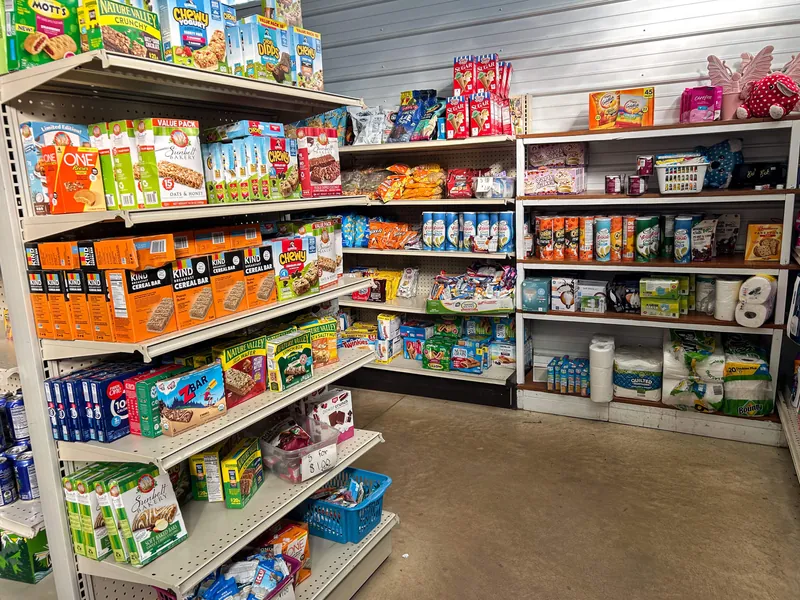
The Rising Popularity of Salvage Grocery Stores: Why Millions Are Skipping the Regular Supermarket
Have You Ever Paid Full Price for a Slightly Dented Can of Soup?
Most people have. And most people didn't need to. Salvage grocery stores have been quietly offering name-brand groceries at 30 to 70 percent off retail prices for decades, and somehow a huge chunk of the country still hasn't heard of them. That's starting to change fast, and if you haven't walked into one yet, you're leaving real money on the table every single week.
Salvage grocery stores go by a lot of names: bent-n-dent stores, scratch and dent grocery, discount food store, damaged goods grocery, food salvage store. Doesn't matter what you call them. They all do roughly the same thing: buy products that major retailers and manufacturers can't sell at full price, then pass those savings directly to shoppers. No membership required. No coupons to clip. Just cheaper groceries, often from brands you already buy at the regular supermarket.
This article is going to break down exactly what these stores are, why they're growing so fast, what the actual numbers say about them, and how to find one near you. There's also some practical advice about what to look for and what to skip when you're shopping there for the first time.
What Actually Makes a Grocery Store a "Salvage" Store
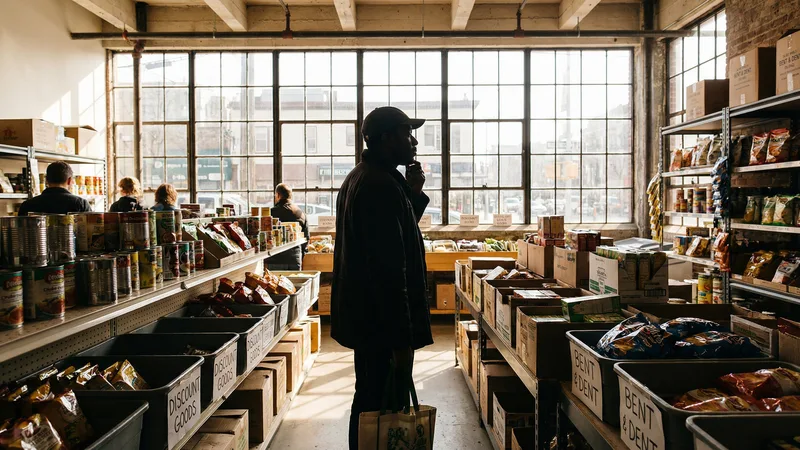
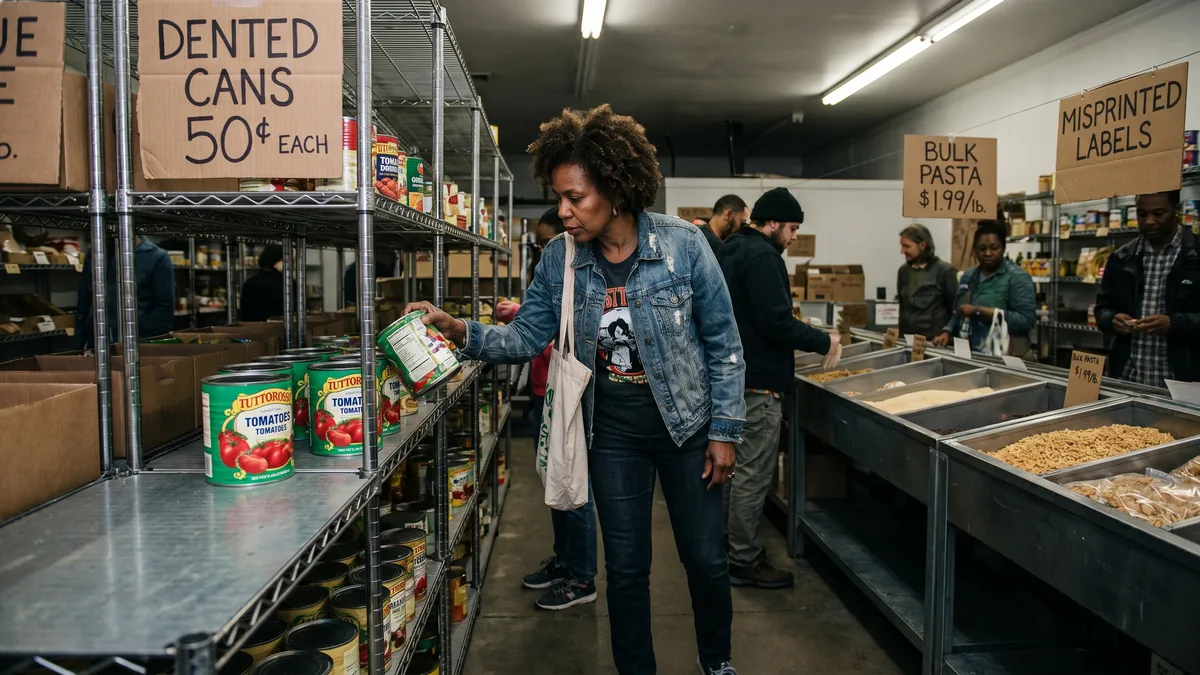
Here's where a lot of people get confused. Salvage grocery doesn't mean expired grocery. It doesn't mean unsafe food or mystery meat from a warehouse fire. Most of the inventory at a discount food store comes from a few very specific and completely mundane sources: overstock from big retailers, products with discontinued packaging or label redesigns, items with cosmetic damage like a dented can or a torn box, and goods that were part of insurance claims after shipping or storage incidents.
Think about it from a manufacturer's perspective. A pallet of cereal boxes gets a little water damage during shipping. Maybe 30 percent of the boxes are crushed or wet, but the other 70 percent are totally fine inside. That cereal still has six months before its best-by date, but the major supermarket chains won't touch it because their quality standards require perfect packaging. So what happens to that cereal? It gets sold to a salvage grocery buyer at a deep discount, and it ends up on a shelf near you for a dollar fifty instead of four dollars.
Same thing happens with overstock. Retailers over-order for the holidays, the product doesn't move fast enough, and suddenly there's a surplus that needs to go somewhere. Salvage stores are that somewhere.
Now, a really important clarification about dates. "Best by," "sell by," and "use by" labels are not expiration dates in the way most people think. With the exception of infant formula, federal law in the United States does not actually require manufacturers to put date labels on food at all. Those dates are manufacturer estimates of peak quality, not safety cutoffs. A can of beans "best by" last March is almost certainly still perfectly safe and tastes exactly the same. Salvage stores selling products past their best-by date are operating legally and ethically, and they're regulated under the same food safety standards as any other grocery retailer.
Only infant formula has a federally mandated expiration date in the US. Every other date on your food packaging is a quality estimate from the manufacturer. "Best by" means "we think this tastes best before this date," not "throw this out or you'll get sick." Salvage grocery stores know this, and now you do too.
All the different names for these stores, bent-n-dent stores, grocery outlet, scratch and dent grocery, damaged goods grocery, are basically regional slang and marketing variations on the same model. Some stores lean into the "outlet" branding to sound a little more polished. Others wear the "bent-n-dent" label proudly because their customers love it. Don't let the name confuse you. Walk in and check the prices. That'll tell you everything.
The Numbers Don't Lie: This Is a Real and Growing Industry
Some people still think of salvage grocery as a fringe thing. A few quirky stores in small towns. That mental image is completely wrong.
Right now, our directory lists 3,183 salvage and discount grocery businesses across the country. That's not a niche. That's a full retail category. And those businesses are averaging 4.3 stars from real customer reviews, which is honestly better than a lot of conventional supermarkets manage. High ratings, high volume, spread across major metro areas and smaller cities alike.
Houston leads all cities with 83 listings. Brooklyn has 61. Philadelphia has 46, and Los Angeles comes in at 41. Those aren't small towns with limited options. Those are some of the biggest, most competitive retail markets in the country, and discount grocery stores are thriving in all of them. That tells you something real about demand.
And the individual business ratings are striking. Salvage Saviors in Katy, Texas holds a perfect 5.0 stars across 718 reviews. That's not a fluke, that's a store that has figured out how to consistently deliver for its customers. Re_ Grocery shows up twice in California, once in Studio City with 5.0 stars and 224 reviews, and again in Los Angeles with 5.0 stars and 191 reviews. These aren't marginal operations scraping by. They're well-reviewed local businesses with serious loyal followings.
Grocery inflation has a lot to do with the growth. Food prices climbed sharply over the past few years and haven't fully come back down. Families that used to treat the regular supermarket as automatic are now actively looking for alternatives, and searching for things like "discounted grocery store near me" or "groceries on a budget" has become way more common. Salvage stores were already there waiting.
Why People Keep Coming Back (It's Not Just the Price)
Okay so the savings are obvious. You go in expecting to pay less, you pay less, you leave happy. But there's a second thing that keeps people coming back that you don't really hear about much: the hunt.
Salvage grocery inventory is unpredictable by nature. You might walk in one week and find a shelf full of a fancy imported pasta sauce you've never seen before. Next week it's gone and there's a mountain of protein bars instead. Some shoppers hate that unpredictability. But a lot of people love it. It turns grocery shopping from a chore into something that's actually kind of interesting.
There's also a food waste angle that matters to a growing number of shoppers. Every year, somewhere between 30 and 40 percent of the food supply in the United States gets wasted. A meaningful chunk of that waste happens before it ever reaches consumers, at the retailer and distributor level, exactly because of the cosmetic and date-related reasons that push products toward salvage channels in the first place. Buying from a discount food store isn't just saving money; it's pulling food back out of the waste stream.
The stigma around these stores has basically evaporated. This used to be something people did quietly, maybe without mentioning it to their friends. Now people post their salvage grocery hauls on social media. They compare notes on which stores in their city have the best deals. Groceries on a budget used to sound like an admission of financial struggle. Now it sounds smart.
It's not just one type of shopper anymore. College students, retirees on fixed incomes, young families stretching a paycheck, and genuinely middle-class households who just don't see the point of paying full price for a box of crackers, they're all showing up. The customer base is as wide as it's ever been.
Skipping the hype for a second: the "treasure hunt" framing can be oversold. Not every salvage store visit is exciting. Sometimes you walk in and the shelves are picked over and there's nothing you need. That happens. But the average trip still saves money even on a mediocre inventory day, because the baseline prices are just lower than what you'd pay elsewhere.
What You'll Actually Find on the Shelves
Let's get specific about inventory, because vague answers here aren't useful.
Most salvage grocery stores carry a mix of canned goods, dry pantry staples like pasta, rice, beans, flour, cereals, snacks, crackers, cookies, condiments, sauces, frozen foods if they have the right equipment, beverages including sodas and juices and sometimes sparkling water brands, and household cleaning products. Not every store carries all of these. Some smaller stores focus almost entirely on canned and dry goods. Bigger operations might have a frozen section and even some refrigerated items.
Brand variety can be wild. You might find Heinz ketchup next to a store-brand mustard next to an artisan hot sauce you've never heard of, all on the same shelf, all well below what you'd pay for any of them at a regular supermarket. Sometimes the name-brand finds are genuinely shocking, a full case of a popular cereal brand at less than a dollar a box because it's got a slightly updated logo and the old packaging needs to move.
One thing worth knowing: inventory turns over fast at these places. If you see something you want, buy it, because it probably won't be there next week. This is not like a regular supermarket where you can come back for the same product in the same spot indefinitely.
Check packaging before you buy. Dents on cans are usually fine, but avoid anything that's bulging, leaking, or severely compromised at the seam. Bring cash. Smaller salvage stores often prefer it or charge fees for cards. Read the date labels and remember what they actually mean (quality estimate, not safety deadline). Go often. Weekly visits are how you catch the best finds before they're gone.
Frozen food sections deserve a specific mention. Not all salvage grocery stores have them, and the ones that do need to maintain the cold chain correctly just like any other store. If you're buying frozen items, make sure they're actually frozen solid, not soft or partially thawed. Same common sense you'd apply anywhere.
Cleaning products and household goods show up regularly too, and these often have the best savings because people don't think to look for them. A bottle of dish soap is a bottle of dish soap. If it's got a dented cap and costs sixty cents, that's a win with zero risk.
Top-Rated Salvage and Discount Grocery Businesses in Our Directory
Numbers and general advice are useful, but real examples make it concrete. Here are some of the highest-rated businesses currently listed in our directory.
| Business Name | Location | Rating | Reviews |
|---|---|---|---|
| Salvage Saviors | Katy, Texas | 5.0 ★ | 718 |
| House of Milner Jewelers | Philadelphia, Pennsylvania | 5.0 ★ | 531 |
| Hegwood's Towing LLC | Brandon, Mississippi | 5.0 ★ | 277 |
| Re_ Grocery | Studio City, California | 5.0 ★ | 224 |
| Re_ Grocery | Los Angeles, California | 5.0 ★ | 191 |
Salvage Saviors in Katy is the standout here. 718 reviews at a perfect 5.0 is genuinely rare for any retail business. That kind of review volume with zero average drag means they're not just getting lucky with happy customers once in a while; they've built a reliable, consistent operation that people trust. If you're in the Houston metro area, which already has 83 listings to choose from, that's a very logical place to start.
Re_ Grocery in California is interesting because they have two locations both sitting at perfect ratings, which suggests a solid system that travels well. If you're in LA and wondering where to find discounted groceries without having to guess, a 5.0 across 224 reviews is about as safe a bet as you're going to get.
How to Find a Salvage Grocery Store Near You
This is actually simpler than most people expect.
Searching "discounted grocery store near me" or "bent-n-dent stores near me" in Google will pull up some results, but the listings are often incomplete or out of date. A dedicated business directory that categorizes these stores specifically is going to give you better, more current results. Our directory has 3,183 of these businesses listed with ratings, addresses, and contact information, which is a much more reliable starting point than hoping Google Maps has it covered.
Call ahead before your first visit. Smaller salvage and scratch and dent grocery stores sometimes have irregular hours, especially if they're family-owned operations. Some close when inventory runs low and reopen when new stock arrives. A quick phone call saves you a wasted trip.
Ask about their sourcing. Good salvage grocery operators are happy to tell you where their products come from. If someone gets cagey about that question, that's worth noting. Most legitimate stores are proud of their supply relationships with major distributors and retailers, and they'll tell you exactly what they carry and how they get it.
And honestly? Just go. Don't overthink it. Bring thirty or forty dollars on your first visit, walk the aisles, check the prices, read the labels, and buy the things that make sense. You'll figure out the rhythm of it fast, and by your second or third visit you'll have a feel for what that specific store usually carries and when to show up for fresh inventory.
Salvage grocery is one of those things that once you try it, you wonder why you waited. Shopping at a discount food store isn't a compromise. It's just a smarter way to buy the same food.
Frequently Asked Questions
Is food from a salvage grocery store safe to eat?
Yes. Salvage grocery stores are regulated under the same food safety standards as conventional supermarkets. Products with dented or damaged packaging are generally safe as long as the can or container isn't leaking, bulging, or severely compromised. Date labels on most food are quality estimates, not safety expiration dates. In practice, the exception is infant formula, which has a federally mandated expiration date you should always respect.
What's the difference between a salvage grocery store and a regular discount grocery chain?
A regular discount grocery chain like Aldi or Lidl buys products at volume and keeps consistent inventory. A salvage or bent-n-dent store buys whatever is available from overstock, discontinued lines, and cosmetically damaged goods, so inventory changes constantly. Salvage stores tend to have deeper discounts on specific items, but less predictability overall.
Why do these stores have so many different names?
Mostly regional habit and personal branding choices by store owners. Bent-n-dent stores, scratch and dent grocery, food salvage store, grocery outlet, damaged goods grocery, they all describe the same basic business model. Different parts of the country developed their own slang for it, and individual store owners pick whichever name fits their vibe.
How much can I actually save at a salvage grocery store?
Savings of 30 to 70 percent off regular retail prices are commonly reported. Typically, the actual amount depends on what's in stock on a given day. Some items are only slightly cheaper than supermarket prices. Others are almost comically cheap, like name-brand cereals for under a dollar or name-brand condiments for a quarter of what you'd pay elsewhere.
How do I find a salvage or discount grocery store near me?
Searching "discounted grocery store near me" or "bent-n-dent stores near me" is a start, but a dedicated business directory gives you more accurate and complete results. Our directory lists 3,183 businesses with ratings and contact details. You can search by city or zip code to find options close to you.
Do salvage grocery stores accept credit cards?
Some do, some don't. Smaller family-owned operations often prefer cash or charge a processing fee for cards. Call ahead or bring cash on your first visit to avoid any inconvenience at checkout.
Find a Salvage Grocery Store Near You
Browse our directory of 3,183+ salvage and discount grocery businesses. Filter by city, read real reviews, and find the best deals on name-brand groceries in your area.
Search the Directory