The Surging Popularity of Salvage Grocery Stores: Why Millions Are Shopping Smarter
You're standing in a regular grocery store, staring at a box of cereal that costs $6.49, and you cannot quite remember when that happened. A few years ago it was $3.99. You grab it anyway because you need it, but something feels off, like you're losing a slow argument with your own budget. Millions of people are having that exact moment every single week, and a growing number of them are starting to do something about it. They're finding salvage grocery stores, and honestly, it's changing how they think about food shopping altogether.
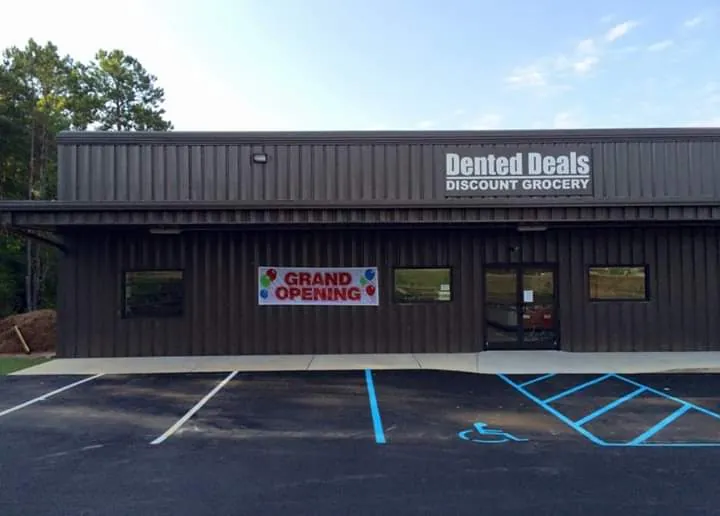
Salvage grocery stores go by a lot of names. You might hear them called bent-n-dent stores, scratch and dent grocery shops, discount food stores, or damaged goods grocery outlets. Some people just call them food salvage stores. Whatever name sticks in your area, the concept is the same: these are stores that sell food and household products that didn't make it through the normal retail supply chain for one reason or another, a dented can, discontinued packaging, overstock that a big retailer couldn't move, or products getting close to their best-by date. And they sell all of it at prices that can genuinely make you do a double-take.
This article covers what these stores actually are, why they've gotten so popular so fast, what you'll find when you walk through the door, and how to track one down in your city. If you've been looking for a real way to cut your grocery bill without eating worse, keep reading.
What Are Salvage Grocery Stores, Really?
Most people's first question is: where does the stuff come from? Fair question. Salvage grocers buy inventory from a bunch of different sources, manufacturers who overproduced a product, distributors sitting on discontinued items, retailers clearing out shelf space for new lines, and insurance companies liquidating goods after warehouse incidents. Sometimes a truck gets in a minor accident and a pallet of canned soup gets shuffled around enough that a few cans get dented. Those cans are perfectly fine to eat. They just can't go on a regular grocery store shelf anymore. That's where a discount food store steps in.
Overstock is actually the biggest category. Manufacturers plan production runs based on projected demand, and sometimes demand doesn't show up the way they expected. So you end up with 10,000 cases of a perfectly good snack that a major retailer doesn't want anymore because they're switching to a different product or the season changed. Salvage stores buy that inventory at a fraction of wholesale cost and pass most of that savings to you.
Best-by and sell-by dates are quality indicators set by manufacturers, not federal safety deadlines. They tell you when a product is at its peak flavor or texture, not when it becomes unsafe to eat. Most canned goods, dry pantry staples, and packaged snacks are safe and perfectly edible well past these dates. Actual safety expiration dates are a different thing entirely and are required on specific product categories like infant formula. When you shop at a salvage or scratch and dent grocery store, you'll often find products right at or just past their best-by date. That's normal and expected.
Now, salvage grocery stores are not the same thing as a Grocery Outlet chain, a warehouse club like Costco, or a traditional discount supermarket like Aldi. Those stores negotiate lower prices through bulk buying and private label strategies. Salvage stores operate differently. Inventory is opportunistic. They buy what's available when it's available, which means the selection changes constantly. That's actually one of the things shoppers end up loving most about these places, but more on that in a minute.
One more thing worth saying clearly: most items in a salvage grocery store look completely normal. You might see a torn label here or a scuffed box there, but the majority of products are shelf-ready and you'd never know they came through an unusual path to get to the store. The "damaged goods grocery" label sounds worse than the reality usually is.
Why Is Salvage Grocery Shopping Growing So Fast?
Grocery inflation has been brutal. That's not an opinion, that's just what happened. Between 2021 and 2024, food-at-home prices climbed significantly across virtually every category, and household budgets that used to feel comfortable started feeling very tight. People who had never thought twice about where they bought their groceries started actively looking for alternatives. Searches for things like "groceries on a budget" and "discounted grocery store near me" exploded. And a lot of those searches led people to salvage stores for the first time.
But here's something interesting: even shoppers who aren't in financial stress are showing up. A certain segment of the customer base at these stores is there because they think it's smart, not because they're desperate. Buying a name-brand pasta sauce for $1.29 instead of $4.49 is just good math, regardless of your income level.
Environmental concerns are also driving traffic. Food waste is a massive problem, something like 30 to 40 percent of the food supply in the United States gets wasted, and a lot of that happens before it ever reaches a consumer. Salvage grocery stores divert usable products from landfills. For eco-conscious shoppers, buying from a discount food store isn't just about saving money; it's a choice that feels aligned with their values. You're basically rescuing food that would otherwise get thrown away. That framing resonates with a lot of people right now.
Social media has done a lot of work here too. People started posting their hauls online, pictures of full shopping carts with $80 worth of name-brand groceries bought for $22, that kind of thing, and those posts spread fast. Bent-n-dent stores that used to rely entirely on word-of-mouth suddenly had people driving 30 minutes to get there after seeing a TikTok. The discovery loop accelerated. One viral post about a local scratch and dent grocery store can fill that store's parking lot for weeks.
And once people go once, they tend to go back. That's the thing about these places.
What You'll Actually Find Inside a Discount Food Store
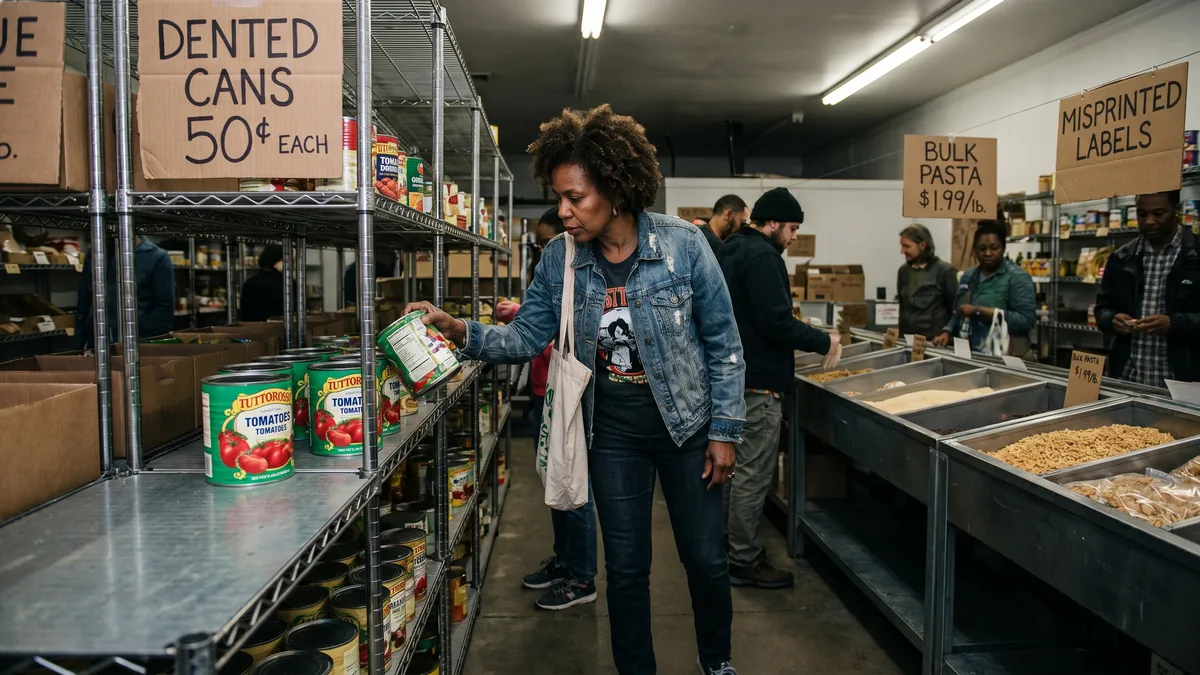
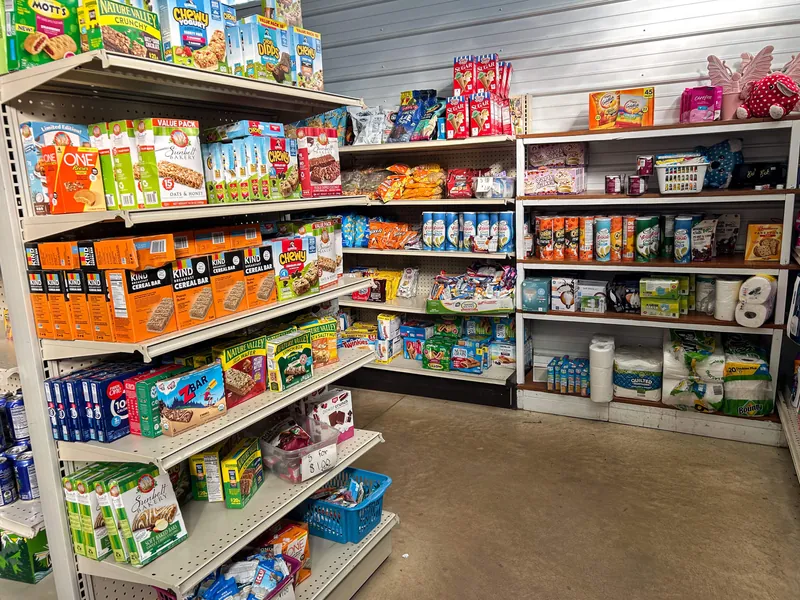
Walking into a salvage grocery store for the first time feels a little like a warehouse and a little like a yard sale, but in the best way. Shelves aren't always perfectly organized. Signage can be handwritten sometimes. Prices are usually marked directly on the product with a sticker, and occasionally you'll see a whole shelf section marked with a single price for everything on it. It's not the polished, fluorescent-lit, perfectly faced shelves of a regular supermarket. It has its own energy.
Product-wise, you'll typically find name-brand pantry staples: canned vegetables, soups, pasta, rice, sauces, cereals, crackers, cookies, chips. Beverages show up regularly, sodas, juices, sparkling water, energy drinks. Frozen food sections vary a lot by store; some have them, some don't. Personal care and household goods are common too. Shampoo, dish soap, paper towels, cleaning supplies, all at 30% to 70% below what you'd pay at a regular store. Sometimes more.
Inventory changes constantly. This is genuinely important to understand before you go. You cannot plan a full week of meals based on what you expect to find at a salvage store. Some weeks there are six different types of organic crackers; the next week there are none. Regulars learn to buy multiples of something they like when they see it, because it might not be there next month. This unpredictability is actually a feature, not a bug, it's what creates the "treasure hunt" feeling that keeps people coming back every week just to see what's new.
Evaluating product condition is easier than it sounds. Dented cans are fine as long as the dent isn't on the seam and the can isn't bulging or leaking. Torn labels don't affect the food inside at all. Repackaged or slightly crushed boxes of dry goods are usually completely intact inside. Just give things a quick look before you put them in the cart. Most of the time you'll find there's nothing wrong with the product whatsoever.
If you're new to salvage grocery shopping, start with shelf-stable products: canned goods, dry pasta, crackers, condiments, and snacks. These carry zero risk and the savings are obvious immediately. Once you're comfortable with how the store works, you can start exploring frozen foods or produce sections if the store carries them. Don't try to replace your whole grocery run on visit one, just supplement it and see what you find.
Some items you should skip. Anything with a damaged seal on a refrigerated or frozen product should stay on the shelf. Bulging cans, always leave those. Products where the packaging damage makes it impossible to read the ingredients or allergen information, skip those too, especially if you're buying for kids or someone with food allergies. But those are the exceptions. Most of what you find is genuinely good stuff.
Salvage Grocery Stores by the Numbers
There are currently 3,183 salvage and discount grocery businesses listed in our directory. That number alone tells you this is not a niche thing anymore. These stores exist in urban neighborhoods, small towns, suburbs, basically everywhere people need to eat on a budget, which is everywhere.
Average customer rating across all listed businesses sits at 4.3 stars. That's a strong number for any retail category. It suggests that people who go to these stores are not just tolerating the experience, they're genuinely satisfied and motivated enough to leave a positive review. That's meaningful data.
Top markets by listing volume break down like this: Houston leads with 83 listings, followed by Brooklyn with 61, Philadelphia with 46, and Los Angeles with 41. The Houston number is interesting because it reflects both the city's sheer size and a strong regional culture around bargain shopping and buying in bulk. Brooklyn's density explains a lot of its volume too, a lot of people, small apartments, tight budgets, and a food-conscious community that's always looking for where to find discounted groceries.
Here's a look at some of the top-rated businesses in this category right now:
| Business Name | Location | Rating | Reviews |
|---|---|---|---|
| Salvage Saviors | Katy, Texas | 5.0 ★ | 718 |
| House of Milner Jewelers | Philadelphia, Pennsylvania | 5.0 ★ | 531 |
| Hegwood's Towing LLC | Brandon, Mississippi | 5.0 ★ | 277 |
| Re_ Grocery | Studio City, California | 5.0 ★ | 224 |
| Re_ Grocery | Los Angeles, California | 5.0 ★ | 191 |
Salvage Saviors in Katy, Texas is the standout here, 718 reviews and a perfect 5.0 rating is remarkable for any retail business. That level of sustained positive feedback doesn't happen by accident. It means the store is doing something consistently right: good selection, honest pricing, clean environment, staff that knows what they're talking about. You have to check out any store that has earned that kind of community loyalty.
A small note on the table: a couple of those listings (Hegwood's Towing, House of Milner Jewelers) don't appear to be grocery-related, which suggests some directory categorization overlap. Don't let that distract you from the 3,000-plus legitimate salvage food businesses in the list.
How to Find a Reputable Salvage Grocery Store Near You
Searching "discounted grocery store near me" in Google is a fine starting point, but results can be inconsistent. Business directories like this one tend to give you more complete information, ratings, addresses, hours, and customer reviews all in one place. That's usually a better use of your 10 minutes than scrolling through a messy Google results page.
Local Facebook groups are genuinely underrated for this. Community groups and buy-nothing groups in your city often have members who are very plugged in to local bargain stores, and someone has almost certainly already asked the question you're about to ask. Search the group before you post and you'll probably find a thread with 40 answers pointing to the same two or three stores.
Nextdoor is another solid option. Neighbors tend to know about these places and love sharing them. One good recommendation from someone who shops at the same store every week is worth more than ten anonymous online reviews.
Once you find a store, here's how to evaluate it before you commit a full shopping trip. Look at recent reviews, not the average rating, but the most recent 10 or 15. If a store had great reviews two years ago but current reviews mention mess, pricing confusion, or product issues, trust the recent ones. Cleanliness matters more at a salvage store than a regular grocery because products come in from all kinds of different places. A well-run store keeps things organized, clearly labeled with prices, and maintained at reasonable temperatures. If you walk in and it smells off, or if nothing has a visible price, just leave.
Starting with non-perishable items on your first visit is genuinely the right move. Skip any pressure to grab everything at once. Walk the store, see how it's organized, check how products are priced and labeled. Then build your shopping habits around what you found. Most regulars describe developing a kind of mental map of a store, knowing which aisle tends to have the best deals, which section gets restocked on what day of the week. That knowledge comes with repeat visits, not a single trip.
One more practical thing: bring cash or confirm payment methods before you go. Some smaller salvage grocery stores are cash-only or have card minimums. Not all of them, but enough that it's worth checking.
Frequently Asked Questions
Are products at salvage grocery stores safe to eat?
Yes, in the vast majority of cases. Most products in these stores are safe and intact. Best-by dates are quality indicators, not safety deadlines for most shelf-stable products. Dented cans are fine unless the dent is on the seam or the can is bulging. Always inspect items before buying and skip anything with a damaged seal or unclear labeling.
How much can I actually save at a scratch and dent grocery store?
Savings typically range from 30% to 70% below standard retail prices, sometimes more on specific items. A realistic expectation for a regular shopper who knows the store well is saving 40 to 50 percent compared to buying the same products at a conventional supermarket.
Do salvage grocery stores carry fresh produce or meat?
Some do, but many don't. Most salvage stores focus on shelf-stable and packaged goods because that inventory is easier to manage. If a store does carry fresh items, evaluate them the same way you would anywhere else, look for freshness, check the date, and trust your senses.
How do I find a bent-n-dent store in my area?
Use an online business directory (like this one), search local Facebook community groups, or ask on Nextdoor. Terms to search include "bent-n-dent store near me," "discount food store," "scratch and dent grocery," and "salvage grocery." Different regions use different names for these places, so try a few variations.
Why does the inventory change so often?
Because salvage stores buy opportunistically from whatever inventory is available at a given time, overstock, discontinued items