What Salvage Grocery Stores Actually Are (And Why You're Probably Overpaying at Your Regular Store)
https://pub-9a4dedcce6dc4846a9c4647f79a2e5fc.r2.dev/salvage-grocery-stores/blog/what-salvage-grocery-stores-actually-are-and-why-you-re-probably-overpaying-at-your-regular-store/hero-1771884015.webp
You're standing in a regular grocery store aisle, staring at a box of cereal that costs $6.49. You remember paying $3.99 for the same box two years ago. You put it in the cart anyway, because what else are you going to do? That quiet frustration at the checkout line is something millions of shoppers feel every single week, and most of them have no idea there's a whole category of store built specifically to fix that problem.
Salvage grocery stores sell real food, name-brand food, at prices that feel almost suspicious the first time you see them. They go by a lot of names: bent-n-dent stores, scratch and dent grocery shops, discount food stores, damaged goods grocery retailers. Some people just call them food salvage stores or grocery outlets. Whatever name you've heard, they all operate on roughly the same idea, and once you understand how they work, you'll wonder why you waited so long to check one out.
What a Salvage Grocery Store Actually Is
Here's the core business model, explained plainly. Manufacturers produce food. Distributors move it. Retailers sell it. But somewhere in that chain, things go sideways in small ways: a label gets printed wrong, a shipment sits too long in a warehouse, a retailer orders too much of something, a package gets a small dent during transit. None of that makes the food bad. But it does make the product unsellable at a regular grocery store, which has strict cosmetic and timing standards.
Salvage grocers buy that inventory cheap. Then they sell it to you cheap. Simple as that.
Products end up in these stores through several routes. Overstock items come from retailers who over-ordered seasonal goods or discontinued a product line. Cosmetically damaged goods arrive with dented cans, torn outer packaging, or misprinted labels. Near-date items are products approaching their "best by" or "sell by" dates. And sometimes whole truckloads of product become available when a brand reformulates a recipe and needs to clear out old packaging fast.
Now, the date question. Because people always ask. "Best by," "sell by," and "use by" are not the same as expiration dates in most cases. A "best by" date is a manufacturer's estimate of peak quality, not a safety cutoff. A can of soup that's two months past its "best by" date is almost certainly fine to eat. Federal law only requires expiration dates on infant formula. Everything else is a quality guideline. Salvage stores selling near-date products are not selling you anything dangerous, they're selling you something that a regular store couldn't move fast enough. There's a difference.
Only infant formula is legally required to carry a safety-based expiration date. For virtually everything else in the store, "best by" and "sell by" dates refer to quality, not safety. A dented can is fine to buy as long as the dent is not on a seam and the can is not bulging or leaking.
Salvage grocery stores are different from warehouse clubs like Costco, which sell full-price goods in bulk. They're different from dollar stores, which carry a limited, often lower-quality selection of staples. And they're different from the small clearance rack at the back of your regular supermarket. This is a whole store dedicated to the discount model, not a footnote at the end of an aisle.
Why There Are So Many Names for These Stores
If you've tried searching online for discounted grocery store near me or groceries on a budget, you've probably noticed the results are all over the place. That's because this category of retail doesn't have one official name. Regional culture, store ownership, and the specific type of inventory a shop carries all influence what they call themselves.
"Bent-n-dent" is a term you hear more often in the Midwest and rural South, where these stores have been a fixture in small towns for decades. Families in those areas grew up with them. Out West and in bigger cities, you're more likely to see "grocery outlet," "discount food store," or just "food salvage store" on a sign. Some newer urban operators, especially ones pitching themselves at environmentally conscious shoppers, lean into language about food waste reduction.
Scratch and dent grocery is another phrase that pops up, especially for stores that stock a lot of cosmetically damaged packaged goods. And "damaged goods grocery" is a term some people use when searching online, even though it sounds worse than the reality (a slightly crushed corner on a box of pasta is not what most people picture when they hear "damaged").
The terminology varies. The savings do not. Whether a store calls itself a bent-n-dent shop or a food salvage store or a discount food store, shoppers are generally looking at the same basic inventory model and similar price cuts. Don't get hung up on the label on the door.
The Actual Numbers: How Big Is This Category?
Over 3,183 salvage and discount grocery businesses are listed across the country. That's not a fringe category. That's a well-established sector of food retail with a footprint in nearly every major metro area. Houston alone has 83 listings. Brooklyn has 61. Philadelphia has 46. Los Angeles has 41.
And here's the part that surprises people most: the average customer rating across these listings is 4.3 stars. Not 3.1. Not "fine, I guess." Four point three. These places earn repeat customers, good word-of-mouth, and genuine loyalty. That doesn't happen by accident.
Savings-wise, shoppers at discount grocery stores commonly report cutting 30 to 70 percent off what they'd pay at a standard supermarket, especially on brand-name packaged goods, canned items, snacks, cereals, and condiments. On a $200 weekly grocery budget, that's potentially $60 to $140 back in your pocket per week. Per week. That adds up faster than almost any other household spending change you could make.
What's Actually on the Shelves
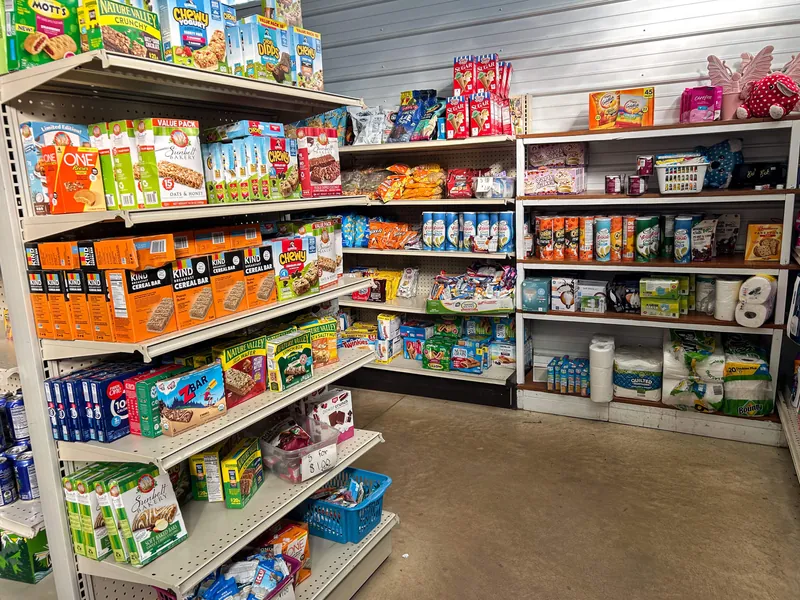
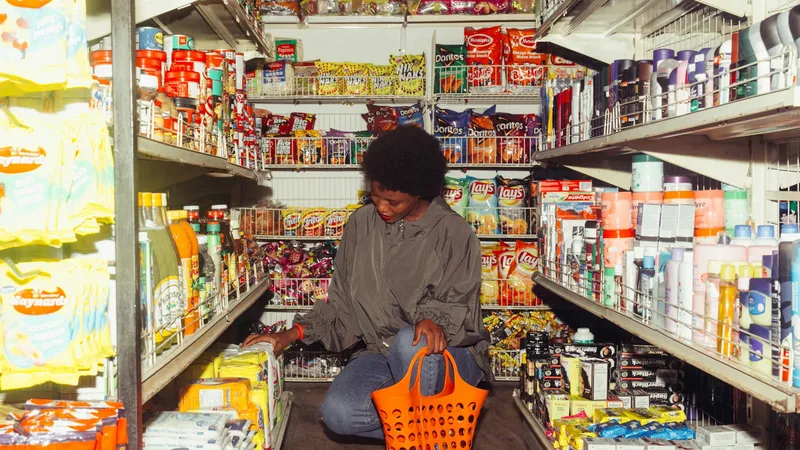
Walking into one of these stores for the first time, you might expect something sparse and sad-looking. Usually it's the opposite. Good salvage grocery stores are packed. Canned soups, beans, tomatoes, vegetables stacked deep. Shelves of cereals, crackers, cookies, pasta, rice. Rows of condiments, sauces, salad dressings. Beverages, both shelf-stable and refrigerated. Snack foods in quantities that feel almost absurd. Personal care products too, shampoo, body wash, toothpaste, all at a fraction of drugstore prices.
Frozen sections vary by store but can be surprisingly good. Some locations carry frozen meals, breakfast items, vegetables, and even meat products, particularly when a retailer has excess inventory to move quickly.
One thing you do have to accept is that inventory is unpredictable. This isn't like a regular grocery store where you can count on the same products being in the same spot every week. Salvage stores get irregular shipments. What was on the shelf Tuesday might be gone by Friday and never come back. A pallet of a specific brand of crackers might appear one week because a manufacturer overproduced, and that's a one-time thing. Some regulars treat this like a treasure hunt, honestly, and that's not a bad way to look at it.
Before you buy anything, do a quick check. Look at the packaging: dented cans are generally fine unless the dent is on a seam, or the can is bulging, or the seal is broken. Check the date label and make an informed decision based on what the product is and how you'll use it. A box of dried pasta that's four months past its best-by date is going to be perfectly good. A container of sour cream near its date is a different conversation.
Canned goods: Avoid bulging, rusted, or seam-dented cans. Minor body dents are fine.
Packaged dry goods: Check that bags and boxes are sealed. Torn outer packaging on a sealed inner bag is no problem.
Refrigerated or frozen items: Same rules as any store. Check dates and look for signs of thawing and refreezing.
Personal care products: These are almost always just overstock or label-issue items. Safe to buy without much concern.
Who Actually Shops at These Stores
Budget-conscious families are the obvious core customer. But the mix is broader than that. Small restaurant owners and food truck operators buy in volume from salvage grocery stores because the math just works. People on fixed incomes, retirees and disability recipients especially, have relied on these stores for years. College students figuring out how to eat on $40 a week. Parents of large households who spend serious money on groceries every month and need every bit of help they can get.
Something has shifted more recently, though. Inflation pushed a lot of middle-income households into the discount grocery category for the first time. People who never would have considered a bent-n-dent store started going when regular grocery bills started hitting numbers they couldn't ignore. And many of them stayed, not just because of price, but because they found the experience genuinely fine. Sometimes better than fine.
There's also a growing group of shoppers who come specifically because of the food waste angle. Enormous amounts of perfectly edible food get thrown away every year because of cosmetic imperfections and date-label confusion. Buying from a food salvage store redirects that product instead of letting it end up in a landfill. For a lot of younger shoppers especially, that matters.
Old stigmas still exist. Some people still associate discount food stores with poverty or desperation, or assume the products must be somehow compromised. That thinking is outdated and honestly a little expensive. A 4.3-star average across more than 3,000 listed businesses doesn't reflect a category people are tolerating. It reflects one they're choosing.
Top-Rated Salvage Grocery Stores Worth Knowing About
Some of the highest-rated businesses in this category are worth calling out specifically. In practice, the ratings below come from verified directory listings with substantial review counts, so these aren't flukes.
| Business Name | Location | Rating | Reviews |
|---|---|---|---|
| Salvage Saviors | Katy, Texas | 5.0 ★ | 718 |
| Re_ Grocery | Studio City, California | 5.0 ★ | 224 |
| Re_ Grocery | Los Angeles, California | 5.0 ★ | 191 |
Salvage Saviors in Katy, Texas is the standout. A perfect 5.0 across 718 reviews is extraordinary for any retail business. That kind of consistency doesn't happen without a genuinely well-run operation. If you're in the Houston area, this is the one to check out first.
Re_ Grocery, which operates in both Studio City and Los Angeles, is interesting because it leans hard into the food waste angle, branding itself around sustainability while still delivering solid discount prices. Both locations hold perfect ratings. They're probably not what you picture when you hear "salvage grocery," and that's worth knowing.
Worth noting: a couple of the top-rated businesses in the directory data, including House of Milner Jewelers and Hegwood's Towing LLC, appear to be miscategorized listings rather than actual grocery operations. Typically, the grocery-specific standouts are Salvage Saviors and Re_ Grocery.
How to Find a Salvage Grocery Store Near You
Searching online for where to find discounted groceries is a reasonable starting point, but results can be inconsistent because of the naming problem we talked about earlier. Try searching variations: "bent-n-dent store near me," "scratch and dent grocery," "food salvage store," "discount food store," or just "grocery outlet" plus your city name. Different terms surface different stores.
Business directories are often more reliable than general web searches for this category, because they aggregate listings by store type rather than just matching keywords. A directory with 3,183 listings across the country is going to surface stores a Google search might bury.
Word of mouth still works surprisingly well here. In communities where salvage grocery shopping is common, people know the good stores and they talk about them. Ask around at church, at work, in local Facebook groups. Somebody probably knows a place.
Once you find one, go on a weekday if you can. Weekends at popular discount grocery stores can get crowded, and good inventory moves fast. Go early in the week after a shipment comes in. Bring a reusable bag or two because these stores sometimes charge for bags or don't carry them. And go in without a specific shopping list the first time. Browse. See what they have. You'll figure out pretty quickly whether it fits your household's needs.
Frequently Asked Questions
Is it safe to buy food at a salvage grocery store?
Yes, with normal common-sense precautions. Check cans for bulging or seam damage. Make sure packaged goods are sealed. Read date labels and understand that "best by" dates are quality guidelines, not safety cutoffs. Most products at these stores are perfectly safe to eat.
Why are the prices so much lower?
Because salvage grocers buy inventory that regular retailers can't sell, whether due to overstock, cosmetic damage, discontinued packaging, or approaching best-by dates. They pay less for it and pass those savings on. It's not magic; it's just a different place in the supply chain.
Will I find the same products every time I go?
Probably not. Inventory at discount food stores changes constantly based on what's available. Some regulars love this. Others find it frustrating. If you need total predictability in your shopping, you may need to supplement with a regular store. But for staples and pantry items, the savings usually make the variability worth it.
Are these stores only in small towns?
Not at all. Houston has 83 listed businesses in this category. Brooklyn has 61. Philadelphia has 46. Los Angeles has 41. These stores are in cities, suburbs, and rural areas alike.
Can small business owners buy from salvage grocery stores?
Many do. Food truck operators, small cafe owners, and caterers buy from these stores regularly. Some salvage grocers offer case pricing or informal bulk deals for repeat buyers. It doesn't hurt to ask.
What does "bent-n-dent" mean?
"Bent-n-dent" refers to the dented cans and bent packaging that make up a big part of salvage grocery inventory. It's a folksy regional term that's been around for decades, especially in the Midwest. Same concept as a scratch and dent grocery store, just a different name.
Find a Salvage Grocery Store Near You
Browse our directory of 3,183+ salvage and discount grocery businesses across the country. Search by city, read real customer reviews, and find the best deals on groceries in your area.
Search the Directory